Aug 16, 2024
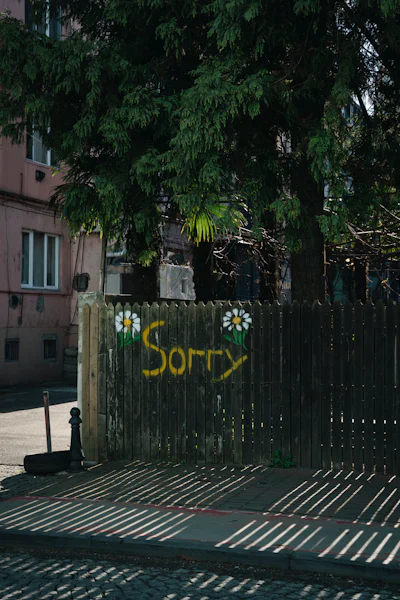
I couldn’t be any sorrier; I really couldn’t. I say this even though I have been apologizing my entire life, and for so many things: being born to a mother who didn’t want me, being smart around men and women who find intelligence in vagina owning persons intimidating, terrifying, awful, inappropriate, wrong, against God’s plan, as well as apologizing for being right, for being wrong, for being the quickest, for not being the quickest, for being born female, for not being born female and submissive, for being assertive, for not being assertive enough or in such a way as to make others comfortable with my assertiveness, for seeking public office, for seeking public office while female, for working too hard while in office, for making others feel less than because I am in charge of their emotions*** (***sarcasm), for being sarcastic, for having a filthy mouth, for having a sense of humor, for being fucking angry AF, which is also not approved of in my model* (*female), for dressing like I dress, for being human. Jesus H. Christ, I am so sorry!
Recently, however, I have started to reconsider my apology tour of a life (I do try not to apologize before giving an opinion while woman-ing, but old habits and training are damnably hard to break), acknowledging that I do, in fact, have something to apologize for. Huh? Yes, I have something real and profound for which I need to apologize, and this realization came to me after seeing (I think, it could’ve been something else, so sue me) the film American Fiction, which was based on the novel of the same name by Percival Everett. A very good film, btw, but as I don’t know for sure that it was the source of this idea, this lightbulb moment…
In a nutshell, whoever the character was said this (and I paraphrase), ‘when smart people pretend they’re not smart, or downplay their intelligence, hiding their thoughts, song and dancing their way through a conversation instead of speaking up, correcting the record, or sharing their actual insights and beliefs, they’re being inauthentic, and this inauthenticity is a form of condescension or gaslighting, like well, they know what’s really going on but you don’t want to know, or hear it, and probably wouldn’t understand anyway, so I’ma gonna keep my mouth shut and walk away.’
Oh my. I felt so seen. As I heard this, I flashed to a moment in The Crown, when Abdul Nassar confronts Anthony Eden, who has been flattering Nassar as a soldier and hero, as if he himself were in awe of the other man, so unworthy, not a heroic type or soldier himself. Which humility was patently untrue, Eden was a storied and decorated hero of the First World War. Nassar – no fool, and a student of history including that of that same war – knew differently, correctly accusing Eden of both deceit and condescension. Oh my. Have I been condescending? Have I been gaslighting people by pretending to be less intelligent than I am? By not revealing what I know, instead playing the fool, or at least the whacky funny lady I occasionally lapse into against my own good sense. Why yes, yes, I have. The only caveat to all of this, and to the start of my official apology tour, is that I have been punished so many times for being smart while also being female (although, because smart, never female/feminine enough), can you blame me? Can I blame myself? Uh, a little, yes, sure, why not? But perhaps I’ve also been being punished for being, actually being for reals, now, inauthentic, for hiding or trying to hide, apologizing for my schmarts, for not being as assertive as I should or could be, perhaps, given my actual knowledge and capability?
Which came first, the chicken or the egg?
It’s not an easy thing, being human. Not for anyone. I am still struck by the idea that in any way covering what is obvious to most observers (she schmart) or in any way minimizing my Self, my talents and gifts, is a form of deception. Self-deception, mostly. So interesting. Making others feel safe, feel less threatened, is what I thought I was doing – but – what if, instead, I was being a patronizing cow? Hey, anything is possible. And, I’m sorry. Sheesh.
All Apologies
What else should I be?
All apologies
What else could I say?
Everyone is gay
What else could I write?
I don’t have the right
What else should I be?
All apologies
In the sun
In the sun, I feel as one
In the sun
In the sun
Married
Buried
I wish I was like you
Easily amused
Find my nest of salt
Everything is my fault
I’ll take all the blame
Aqua sea foam shame
Sunburn freezer burn
Choking on the ashes of her enemy
In the sun
In the sun, I feel as one
In the sun
In the sun
Married
Married
Married
Buried
Yeah, yeah, yeah, yeah
All in all is all we are
All in all is all we are
All in all is all we are
All in all is all we are
All in all is all we are
All in all is all we are
All in all is all we are
All in all is all we are
All in all is all we are
All in all is all we are
All in all is all we are
All in all is all we are
All in all is all we are
All in all is all we are
All in all is all we are
All in all is all we are
All in all is all we are
All in all is all we are
All in all is all we are
All in all is all we are
~Kurt Cobain
Aug 15, 2024
*from her essay collection ‘Recollections of My Non-Existence’, and worth reading – the collection and this extract. Enjoy(?).
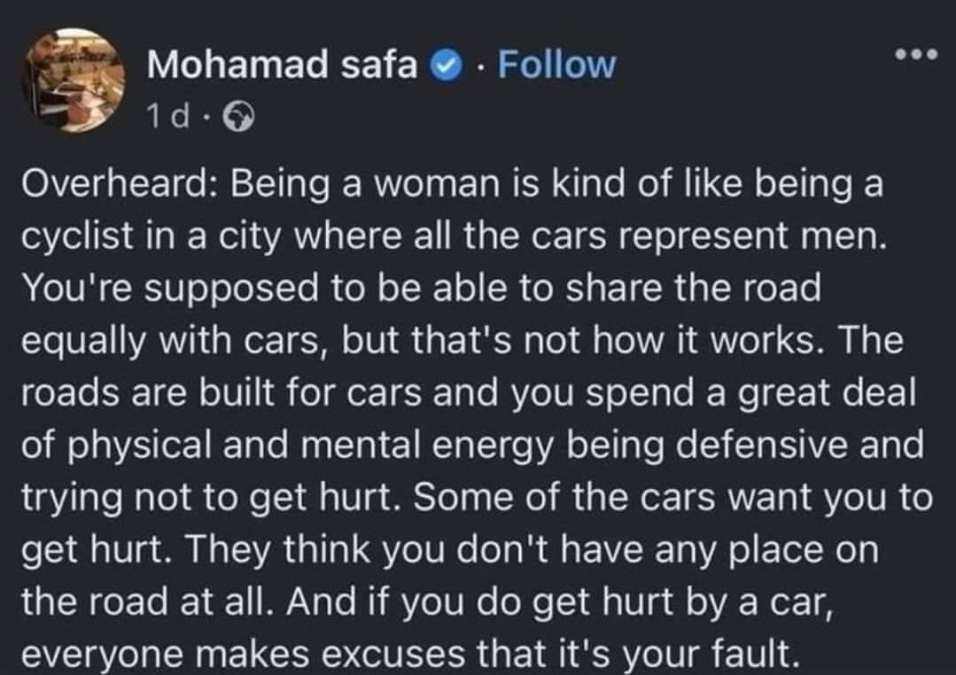
It felt ubiquitous then. It still does. You could be harmed a little—by insults and threats that reminded you you were not safe and free and endowed with certain inalienable rights—or more by a rape, or more by a rape-kidnapping-torture-imprisonment-mutilation, more yet by murder, and the possibility of death always hung over the other aggressions. You could be erased a little so that there was less of you, less confidence, less freedom, or your rights could be eroded, your body invaded so that it was less and less yours, you could be rubbed out altogether, and none of those possibilities seemed particularly remote. All the worst things that happened to other women because they were women could happen to you because you were a woman. Even if you weren’t killed, something in you was, your sense of freedom, equality, confidence.
My friend Heather Smith remarked to me recently that young women are urged to “never stop picturing their murder.” From childhood onward, we were instructed to not do things—not go here, not work there, not go out at this hour or talk to those people or wear this dress or drink this drink or partake of adventure, independence, solitude; refraining was the only form of safety offered from the slaughter. During those years at the end of my teens and the beginning of my twenties, I was constantly sexually harassed on the street and sometimes elsewhere, though harassed doesn’t convey the menace that was often present.
The former Marine David J. Morris, author of a book on post-traumatic stress disorder, notes that the disorder is far more common and far more rarely addressed among rape survivors than combat veterans. He wrote me, “The science on the subject is pretty clear: according to the New England Journal of Medicine, rape is about four times more likely to result in diagnosable PTSD than combat. Think about that for a moment—being raped is four times more psychologically disturbing than going off to a war and being shot at and blown up. And because there are currently no enduring cultural narratives that allow women to look upon their survival as somehow heroic or honorable, the potential for enduring damage is even greater.”
In war the people who try to kill you are usually on the other side. In femicide, they’re husbands, boyfriends, friends, friends of friends, guys on the street, guys at work, guys at the party or the dorm, and, the week I write this, the guy who called a Lyft and stabbed the pregnant driver to death and the guy who went into a bank and shot five women and the guy who shot the young woman who took him in when his parents kicked him out, to name a few examples of the carnage that made it into the news. Morris calls PTSD “living at the whim of your worst memories.” But he also suggests that war, as an atmosphere in which you live in fear of attack, mangling, annihilation, and in which people around you suffer those afflictions, can traumatize you even if you are physically untouched, and the fears can follow you long after what gave rise to them. Mostly when people write about the trauma of gender violence, it’s described as one awful, exceptional event or relationship, as though you suddenly fell into the water, but what if you’re swimming through it your whole life, and there is no dry land in sight?
I felt hemmed in, hunted. Over and over, women and girls were attacked not for what they’d done but because they were at hand when a man wished to—to punish is the word that comes to mind, though for what might linger as a question. Not for who but for what they were. We were. But really for who he was, a man who had the desire and believed he had the right to harm women. To demonstrate that his power was as boundless as her powerlessness. In the arts, the torture and death of a beautiful woman or a young woman or both was forever being portrayed as erotic, exciting, satisfying, so despite the insistence by politicians and news media that the violent crimes were the acts of outliers, the desire was enshrined in the films of Alfred Hitchcock, Brian De Palma, David Lynch, in so many horror movies, so many other films and novels and then video games and graphic novels where a murder in lurid detail or a dead female body was a standard plot device and an aesthetic object. Her annihilation was his realization. For the intended audience, it was apparently erotic, because in life women kept getting murdered in the course of sex crimes, and the fear of assault, of rape, was also a fear of violent death.
Which was a reminder that I was, we were, not the intended audience for so much art, including the stuff lauded as masterpieces and upheld as canonical. Sometimes the male protagonists protected women, particularly beautiful young white women, from other men, and protector was one face of their power, but destroyer was still the other face, and either one put your fate in their hands. They protected what was theirs to protect or destroy, and sometimes the plot was about his grief that he’d failed to protect, or his revenge against other men, and sometimes he destroyed her himself, and the story was still about him.
She was dead even before she was a corpse; she was a surface, a satellite, an accessory. In comics, the violent death of a woman as a plot device in a story focused on a man was so common that women coined a term for it, fridging, after the 1999 website Women in Refrigerators documenting the plethora of gruesome endings for female characters. In the video gaming world, young women who criticized the misogyny in video games were for years harassed with doxing and death and rape threats. Some, after grisly and detailed threats of harm, had to leave their homes and take extraordinary security precautions; that is, they had to disappear. Protecting women from online surveillance, threats, and harassment became an avocation for feminist cybersecurity experts.
That men on the margins should be punished for sexual violence, especially against white women, and that privileged and powerful men should not reinforces a hierarchy of relative value. It’s one in which what is being protected is not women per se, but who has property rights over which women (which was explicit in earlier laws that treated rape as trespass or damage of another man’s property and, into the 1980s in the USA, that reserved a husband’s right to rape his wife, and that almost never punished white men for raping women of color).
Feminists of an earlier era insisted that rape is about power, not erotic pleasure, though there are men for whom their own power or a woman’s powerlessness is the most erotic thing imaginable. For some women too, so we learn that our helplessness and peril is erotic, and accept or reject or struggle with the sense of self and stories that come with them. Jacqueline Rose wrote in 2018, “Sexual harassment is the great male performative, the act through which a man aims to convince his target not only that he is the one with the power—which is true—but also that his power and his sexuality are one and the same thing.”
Though each incident I experienced was treated as somehow isolated and deviant, there were countless incidents, and they were of the status quo, not against or outside it. Talking about it made people uncomfortable, and mostly they responded by telling me what I was doing wrong. Some men told me they wished someone would sexually harass them, because they seemed to be unable to imagine it as anything but pleasant invitations from attractive people. No one was offering the help of recognizing what I was experiencing and agreeing that I had the right to be safe and free.
It was a kind of collective gaslighting. To live in a war that no one around me would acknowledge as a war—I am tempted to say that it made me crazy, but women are so often accused of being crazy, as a way of undermining their capacity to bear witness and the reality of what they testify to. Besides, in these cases, crazy is often a euphemism for unbearable suffering. So it didn’t make me crazy; it made me unbearably anxious, preoccupied, indignant, and exhausted.

Aug 14, 2024
*I will, occasionally, refer to someone as having ‘more hair than wit’ an insult I’ve stolen from Georgette Heyer, my favorite author (if I have a favorite), but invariably when I do – I get a look of incomprehension, because it’s an old form, a subtle statement of another person’s lack of quickness or intelligence, and not everyone follows. Plus, as a person without much hair, and a lot of wit, it hits close to my feels…here are a few more in that vein, from and earlier time, when a slicing, dicing wit was a groovy and more common social skill…nowadays, it’s “I’m done” or the ubiquitous “Fuck you”. Or, simply, “Asshole.” Sigh. Summer laziness inspires me to use other people’s words here more often, along with short bursts of my own…so sue me. Happy Hump Day 😉
George Bernard Shaw to Winston Churchill: “I am enclosing two tickets to the first night of my new play; bring a friend, if you have one.” – Winston Churchill, in response: “Cannot possibly attend first night, I will attend the second…If there is one.”
A member of Parliament to Disraeli: “Sir, you will either die on the gallows, or of some unspeakable disease.” “That depends, Sir,” said Disraeli, “whether I embrace your policies or your mistress.”
“He had delusions of adequacy.” – Walter Kerr (but about whom?! ok I googled it, Kerr was of course a long-time Broadway theatre critic, and it was in 1951 re: an actor named Robinson, who is best – and most commonly – forgotten)
“I have never killed a man, but I have read many obituaries with great pleasure.” – Clarence Darrow (possibly my favorite ever…and still waiting to read a few…)
“He has never been known to use a word that might send a reader to the dictionary.” – William Faulkner (about Ernest Hemingway)
“Jealousy is all the fun you think they had.” – Erica Jong
“Thank you for sending me a copy of your book; I’ll waste no time reading it.” – Moses Hadas (although whether he actually said this, or who said it first, is in dispute. those who impose on others – other writers and publishers – with their new, unknown yet – they insist – brilliant manuscripts have been getting this response for several centuries, if not more)
“I didn’t attend the funeral, but I sent a nice letter saying I approved of it.” – Mark Twain
“Their pooled emotions wouldn’t fill a teaspoon” – Dorothy Parker
“He has no enemies, but is intensely disliked by his friends..” – Oscar Wilde
“I feel so miserable without you; it’s almost like having you here.” – Stephen Bishop
“He is a self-made man and worships his creator.” – Henry Clapp re: Horace Greeley
“I’ve just learned about his illness. Let’s hope it’s nothing trivial.” – Irvin S. Cobb
“If a guy is put off by you being a feminist, you need to ask yourself how put off you are by someone who doesn’t believe in equality for women.” – Laura Bates (sneaking this one in, as it’s not really an insult, per se, but – think about it, anyhoo)
“He is not only dull himself; he is the cause of dullness in others.” – Samuel Johnson
“He is simply a shiver looking for a spine to run up.” – Paul Keating
“Very few people possess true artistic ability. It is therefore both unseemly and unproductive to irritate the situation by making an effort. If you have a burning, restless urge to write or paint, simply eat something sweet and the feeling will pass.” – Fran Lebowitz
“In order to avoid being called a flirt, she always yielded easily.” – Charles, Count Talleyrand
“He loves nature in spite of what it did to him.” – Forrest Tucker
“His mother should have thrown him away and kept the stork.” – Mae West
“Some cause happiness wherever they go; others, whenever they go.” – Oscar Wilde
“He uses statistics as a drunken man uses lamp-posts… For support rather than illumination.” – Andrew Lang
“He has Van Gogh’s ear for music.” – Billy Wilder
“I’ve had a perfectly wonderful evening. But this wasn’t it.” – Groucho Marx.
“The beginning of Canadian cultural nationalism was not ‘Am I really that oppressed?’ It was ‘Am I really that boring?'” – Margaret Atwood
“He has all the virtues I dislike and none of the vices I admire.” – Winston Churchill

Aug 13, 2024
*a continuation from yesterday, thanks for reading!!
Interesting too to realize, many years later, that she was a mirror of my younger sister’s resentment and jealousy, whose grievances against me were based as well on jealousy, envy, and our respective successes – or a lack thereof – in the world, in high school, which we somehow, all of us, collectively never get over, do we?
Finally, Josephina enrolled our mutual neighbor, Carolyn S., another resident I had always got along with, in her war on me. Carolyn lived on my right and was not an owner; she sublet her apartment from a landlord who owned about ten units in the building, one Solomon R. of Brooklyn. She was an opera singer and often out of town, occasions I looked forward to (I really prayed for her career to go well, purely for selfish reasons, and with deep sincerity!) as it meant I would be spared the hour or more long intrusion of the inescapable sound of her singing various scales. Listening to anyone vocalize scales can be, I think, equated with Chinese water torture or other forms of deeply maddening aural disturbances like car alarms, wailing sirens, or that ice cream ding-a-ling tune of my nightmares. I generally left my apartment during these hour-long sessions to walk my dogs, do errands in the neighborhood or, last resort, I put headphones on when Carolyn vocalized, but hey, I never complained because that – noises specific and general – are all a part of having neighbors in New York. Buck up, you can take it.
Carolyn and Josephina, bonded over my perfidious person and ways after Carolyn left town for work purposes and I noticed that she was subletting her sublet, a nifty way to save or possibly even make money. The problem was that this was illegal and in violation of our co-op rules. This habit of hers occurred during the time when I was president of the board and, as a result, I found it impossible to ignore her flagrant flouting of the rules and law; after all, it was happening right next door. Did she think I wouldn’t notice? And, adding insult to injury, she sublet very short term, month to month, to other singers, meaning that her going out of town was not a gratifying time for me re: relief from her goddamned scales. The sub-sub-letters vocalized just as she did only they’d do it at 7 or 8 a.m. or 6p.m. or 7p.m. (she was pretty regular at 4-5p.m.) and dammit I was pissed. How to win friends and influence people, by Moj Mueller. I turned her in.
Once she returned from a job out of town in the midst of this ganging up upon me by them both and turned on her stereo, gorgeous music, to a level that made it impossible for me to hear what was going on, on my TV (Masterpiece Theatre, The Cazelets). I knocked on her door then pounded on it when she didn’t respond; she opened it with a knife in hand, a knife pointed directly at my face. Initially I froze, but then said, ‘Uh, please turn the music down, Carolyn.’ She slammed the door in my face and we screamed at one another through the door for a few moments. Then she called the cops. ‘You gotta try and get along’ the cop said; ‘I’ll certainly try’, I responded, ‘hey, I didn’t call you, she did.’ Carolyn’s main complaint about me as far as I knew at this point was the occasional barking of my dogs, to which I responded during one of our heated encounters with ‘well, at least they don’t bark for an hour every fucking day!’
When I spoke to a friend of hers in the building, she said Carolyn had felt threatened by me, a dyke, knocking on her door at night. Uh, I’m not a dyke and even if I were what the fuck was she doing with a knife in her hand? Are you sure you’re not a dyke? (Can you imagine my head exploding, peeps?) Yes, I’m sure and I still don’t see what difference that would make (and by the way, you’re an idiot, which I left unsaid.) This woman, not unlike my mother in her appearance (fat with a bad perm), was a union member and public sector worker. I had respected her previous to this incident and back and forth bullshit. Light bulb moment, moments, realizing I was, as in childhood, surrounded on both sides of my hallway by intense, irrational hostility and no one, not even the sensible Bonnie, Carolyn’s friend, also on the co-op board, was able to see my position except through the light of her own prejudices and fears, her own projections, although Bonnie’s husband sure did. I should have mentioned that, how handsome, charming Cee Otis would confirm my non-dyke, non-whatever (monster?) status.
My mom’s answer to my sister’s acts of hostility toward me was to shrug and go back to her Harlequin romance; she was generally so hostile to me herself, I don’t think she took their constant petty tyrannies very seriously; why would she? And so, the day I stood there after both neighbors spent some venom by screaming at me, I finally, finally got it: sense and logic and good neighborly behavior for years (once, my younger sister and I had been close) were nothing to the stain of a grudge held tight in an unhappy woman’s fist, the fist of my neighbor Josephina, my neighbor Carolyn, and on and on.
When I first left the city I imagined I would seek a house, a home, at the end of a dirt road, neighbor-less, isolated, not unlike the farmhouse where I spent so many years of my childhood. And then the first winter I spent upstate was long and hard, with many feet, not inches, of snow. And through that first winter and year I experienced the good neighbors of a rural town, people who do for you because they just do, expecting nothing except some of the same, if you can, in return. I bought a house next to another family of six, like my own family of origin, like the Gronekes, but so different in temperament, in all ways. Their house is ramshackle, the porch half falling down and I don’t care, I don’t care about any of it, because they are kind, they are helpful, they have wonderful kids, they don’t know, in my experience, what resentment means, or envy, and I am free of the past, finally, and the hallway in which I grew up is dark, disappeared into the farthest recesses of my memory, no longer where I live.
*yes, my neighbors upstate were terrific, until I decided to sell and move to a house that’d been in my family for more than a century, part of a long-standing dream of mine. At the news that I was putting my house in the market they lost their fucking minds. He started sending me threatening emails, that my shed/garage (over 80 years in situ) was on his property (he’d been living next door for about 20 years), as was my fully-permitted carport, which permitting process – required because it was within 6′ of his property line – he’d been invited to participate in along with his lovely (not) wife. They did not show, oops! They were terrific neighbors and humans, really – but they were also hoarders, and change of any kind, including losing a neighbor who never once in 15 years complained about the lack of any basic clean-up or other maintenance on their home, property, or lawn, was scary. Sigh!
Aug 12, 2024
*this piece – posted in 2 parts – was begun in 2010, and worked on irregularly – abandoned, really – except for an occasional return then – ugh, I hate this stuff, but neighbors matter, we all have them at one time or another, so why not share? Thanks for being here, and for reading.
New York is a city of neighbors, where an awareness of what and who is living next door for most of its residents, excluding the well-insulated two-foot thick walls of the rich, is a given. I left New York in 2002 for many reasons, none of which had anything to do with not loving the city, that glorious, white-hot mother of invention; no, I loved and love NYC, whose diversity and depth I miss to this day, twenty-one years later. My leaving did have something to do with my neighbors, two of whom showed me such consistent hostility I finally thought, ‘wait a second, I don’t have to put up with this shit!’ as well as a realization that I had grown up with two other kinds of neighbor hostility: my sisters. Humans repeat what they know until (I lived in New York City, remember, where therapy is compulsory), increasingly damaged by the repetition of unhealthy patterns at last becomes too much to bear, humans learns to do better, to break the behavioral chains that bind us.
My sisters and I all lived on the same hallway in the old Victorian farmhouse in New Kingston, N.Y. where our father was born in the master bedroom, which farmhouse my dad, unbeknownst to my mother, purchased in 1967 from his older brother. This was a low point in their marriage as my mother hated the isolated, mouse-infested (not really, but imagination is powerful thing), challenging to keep clean place and felt, furthermore, betrayed by the lack of consultation in his childhood home becoming their new family home. That summer we moved in and one of the perks, for me, was having my own room for the first time in my life as I had always previously shared with my younger sister.
My older sister Polly, very much the family princess as well as my mom’s absolute favorite, had of course been given first choice of a room to have as her own, taking our cousin JoAnn’s old bedroom with its built-in desk and set of drawers. My brother, mom decided, would have the room off the back stairs, appropriately separate from his sisters, and close to the back stairway. My younger sister Peg took the middle room on the hallway having choice number 2 or 3 depending on how you looked at it and I was left with the unpainted, never lived-in, lacking a closet room at the end of the hall. This room had another quirk with which I became familiar over the next ten years (I was eight when we moved to the farmhouse): the door did not entirely shut and therefore also did not lock. My dad did once shave down the top of the door, allowing it to close fully and be locked (guaranteed privacy, at last!) but it grew or warped again, and although I asked him to plane it down once more, he never got around to it. Now I wonder why the hell I didn’t do it myself or insist on getting it done, or simply added a shiv to the floor, except I didn’t know then what a shiv was. And, by the time the room was finally painted and lived in, I was very well versed in not asking for things, in not being a bother.
And so, a light-bulb moment for me all those year later when I realized the two doors I shared a hall with in my upper west side co-op were a recreation of that dark, narrow hallway from childhood. While my door in New York did shut fully and lock, deadbolt included, potentially dealing on a daily basis every single time I stepped outside my space with hateful women was not what I signed up for, needed, wanted, or deserved. They were a team, you see, my neighbors, in hating me.
I had been co-op president for almost nine years and the person whose door was on my immediate left, Josephine G. (she was Venezuelan and felt herself superior to other Caribbean and Hispanic immigrants), was perennially two to six months behind in her maintenance payments to the co-op. This meant that the managing agent would, on a regular basis, send her certified letters requesting payment, levying fines and late fees, on behalf of the board referencing her constant state of arrears; at the bottom of each letter was a cc: to me, M. Mueller, her neighbor. It became an extremely unpleasant game, seeing if I could avoid running into her in the halls as one of her ways of handling her issues was to scream expletives at me, using the fact that I owned dog as an excuse for expressions of hostility. Josephina did have a legitimate fear of dogs, a fear I did everything to accommodate and assuage, but until she was able to buy her apartment (for one dollar, due to a default on the part of her investor/landlord, who refinanced and disappeared with the cash) we’d always had a decent, even friendly, relationship. I had actually employed her daughter C. for years, taking her on a trip upstate to look at colleges, but, eventually, the arrears issue became an excuse for her to attack me on a regular basis.
Her husband, whatever TF his name was, was an alcoholic, you see; she had a lot of stress. Voila, attack that bitch next door. But, I do get it, how provocative my presence was to her in other ways, co-op business aside. When I bought my apartment, I was a SWF of thirty-one, and Josephine was a rental tenant next door in an apartment approximately the same size as mine. She lived in this apartment with her husband, an unlicensed, uninsured contractor with less than stellar work habits, and their four children. I had always had concerns about our respective situations and their potential to be awkward, to say the least, yet until the year she bought and began immediately getting behind on her maintenance payments, we were pretty friendly. I had them all over for dinner, they helped me out a couple of times when I needed sugar, eggs, that kind of thing. This changed within the first year that she owned and continued even after I left the co-op board as Josephina knew how to hold a grudge. Several times I screamed right back at her, having had enough, and realizing that my calmly saying, simply, ‘pay your bills and your problems will go away’ was not working, so why not go for it!! Once when I came back into the building after a screaming bout with her, the entire female component of the Groenke family was there to heap abuse on me, yippee!
