What to do, what to do, what to do…about my friend K. We’ve known one another for over a decade, and we don’t see one another very often, but ugh. I love her, and want her to be happy or at least content – but, the truth is, I just can’t stand her.
Argh.
Of course I can stand her, mostly, sorta? At the same time I strategize around how and when and for how much time I can stand her because – well, because her negativity is a tsunami of bleak and bleaker, a dark and stormy tidal wave that has been washing over me (or trying to) for several years now. It’s un-fun. It’s a drag. It’s heavy going and lifting. Life is hard, I agree, but oh my god, girlfriend, lighten the fuck up, already! There is also so much beauty and goodness in the world. If it’s that bad…change it, change your circumstances, or ask for help, I can help, I’ve offered time and again – or just – stop!
Stop, Moj. Just stop Deep breaths.
Even strategizing, I end up wanting to slash my wrists after I’ve talked to K. on the phone. Which talks happen only when I have fully prepared myself for the litany of woes, girding my loins for dealing with her stream of bad news and negativity; those chats happen less and less frequently as the weeks and months pass because the consistency of the negativity, and her inability to accept ANY help, or make any moves to change her circumstances, has shut me down.
It makes me feel bad, disloyal, and a bit shitty – but not as shitty as spending time with her.
Oh dear.
She is old. Her house is falling down around her head. She can’t find anyone to do the work she needs done. She has a ferret or a family of same that have made their way into her kitchen. Mice and mouse droppings are everywhere. Her home is in the middle of nowhere, and the very good offer she had for it a handful of years ago went away as she delayed and delayed and delayed moving out to a safer, more efficient home or an apartment in the village nearby, where nothing she saw met her exacting standards. She can’t cook (other than reheating in a microwave) or use her washer and dryer because ferrets and mice and who knows what else have taken over and destroyed her electrical appliances. She needs to update her essential documents but refuses to do the work required. She asked me to help her with that part of the constellation of issues she is facing, and then delayed and delayed and delayed and changed her mind, and I just can’t.
I won’t.
Lately I simply listen for as long as I can stand it, and then I say, ‘Gosh, I have to get going, K. That all sounds rough, but I’m sure you’ll figure it out. Let me know if I can do anything, and you take care. Love you!’
“I weep because you cannot save people. You can only love them. You can’t transform them, you can only console them.” – Anaïs Nin
*a poem from srwpoetry, which I found on the interweb, and which I share with you because it’s what we do, on occasion, weekends mostly because ‘dem ‘dere days of rest matter! srwpoetry is Sian Wilmot, a London-based British writer and teacher who started posting her poetry on Tumblr over a decade ago. She now posts regularly across social media as @srwpoetry and her book ‘The Butterfly Effect (and other poems)’ is available on Amazon. for more on Wilmot, https://srwpoetry.com
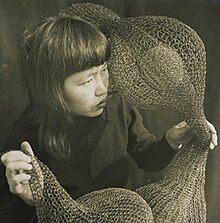
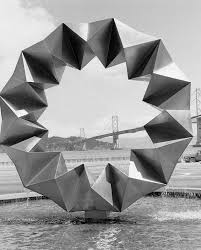
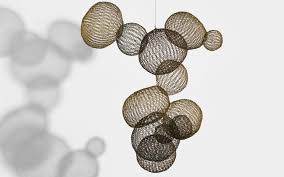
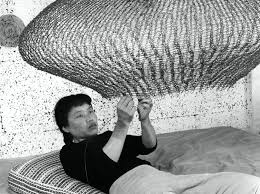
Again, glad you asked. Asawa was a 20th c. Japanese-American sculptor who adopted a wire-crocheting technique she had observed in Mexico to create intricate abstract wire sculptures for which she primarily became known. She created her first representational work in 1968, a mermaid fountain in San Francisco’s Ghirardelli Square that has become a famous landmark in that city. She went on to design other public fountains throughout the city, becoming known at the “fountain lady.” There are worse nicknames, eh?
Asawa, a California native, was interested in art very early in life, and, ironically, she was encouraged by her third grade teacher to create her own artwork, receiving first prize in a school arts competition in 1939 for her piece about what makes someone American. Which is another reason I am interested in talking up the talented Ms. Asawa. Because here we are AGAIN, folks.
During WWII, Asawa was interned with her family first at the Santa Anita racetrack and later at the Rohwer War Relocation Center in Arkansas. While for most a devastating and harrowing experience, Asawa first learned to draw from three Disney Studios animators who were also interned at the racetrack, where stalls generally used for horse were tuned into holding pens for entire families (classic racist America, right there, I wonder what Uncle Walt thought, or did, if anything about his interned animators?). Asawa said in 1994: “I hold no hostilities for what happened; I blame no one. Sometimes good comes through adversity. I would not be who I am today had it not been for the internment, and I like who I am.”
That right there is what I call mental health, resiliency, and forgiveness, y’all.
After the war Asawa trained and was considering going into public school education, but was advised against it, as the recent conflict put her in danger given negative sentiments toward the Japanese people despite the fact that she was BORN IN AMERICA. Deep breaths. That said, this too Asawa later characterized as a blessing, as it pushed her toward following her bliss, and what would ultimately become her very successful career as an artist, instead of stepping into mid-century ‘get a good job with a pension’ expectations (teaching).
Later in her life, Asawa, who died in 2013 at age 87, became a passionate advocate for arts education, helping to found a public arts high school, which was renamed in her honor the Ruth Asawa San Francisco School of the Arts in 2010.
*My progressive column for the month of June, with my thanks for being here, reading, and following along. Thank you. This column is also available for purchase (but why would you do that?!) at thedailystar.com 🙂
What we don’t know or haven’t experienced often challenges us, knocking us off our rockers a bit; it might even scare us. We tend to avoid what scares us, which – when we’re children – might be new kinds of food, or an abandoned building down the street. We each have a ‘normal’ setting, and unless we do the work of trying new things, meeting new people, and traveling the world, our understanding of normal might be quite small, or narrow.
It’s a little embarrassing to admit, but even after 2 years in college – in a theatre program, no less – I still thought that the self-identified ‘gay’ men and women around me were just going through a phase, were seeking attention or notoriety, and that eventually they’d straighten out, pun intended. I thought this because I believed, or rather I assumed that, y’know, everyone was like me and my friends, like my parents and their friends, and the vast majority of the people I knew. Nope. Not everyone.
And then, during our sophomore year of college at different schools, my best friend from childhood came out to me. I always knew there was something off about him dating whatshername in high school! So, I was right! I love being right (who doesn’t), and I loved this man, my friend; the idea that he was less than, or not as dear to me from one moment to the next because he was gay never even occurred to me. Why would it?
Exposure to those who were not entirely like me expanded what I was taught as a child: that in this country everyone was equal, guaranteed by law, even if a perfect equality under the law eluded us (still does). My parents had also stressed that while we might be luckier than some of our neighbors, we were not better than anyone, and no one was better than us, or anyone else. Decency and fairness were core American values, and as a child, fairness – even if I witnessed instances of unfairness daily – struck a deep chord.
During the years after college, I learned how my best friend and many of my gay or lesbian peers had been shunned, abandoned, or even beaten by family members, all for simply being who they were; this was shocking to me, clearly wrong, and frankly stupid. Why would anyone think you could shame or beat ‘the gay’ out of another person? Could you beat ‘the straight’ out of Tom Brady? Or that Mormon Ballerina broad? Plus, hitting or beating anyone, any other person, is wrong, especially one’s own child.
The AIDs pandemic, years of cruelty and indifference to the suffering of other humans, also solidified what for me has always been about decency and fairness. Somebody’s gay? So what!? Somebody’s trans? So what?! I met my first trans-woman when I was 25; she cut my hair for a decade that included her transition. Unless you’re talking about someone I’m dating, I don’t care what’s in their pantaloons, or how they’re shacking up. As to what bathroom anyone uses? It’s none of my business! I’m also constantly astonished by how many varieties of why, when, how, in what form and where other human beings pursue happiness.
The current Supreme Court (we’ll know later this month), in potentially allowing parents to ‘opt out’ of school lessons that occasionally include books about same sex couples, gender queer and trans Americans, is further opening the door to unfairness and more cruelty, as well as to authoritarianism. Same sex couples, gender queer and trans humans exist; denying that is denying reality, and denying reality is directly out of the authoritarian playbook. George Orwell, 1984, “The Party told you to reject the evidence of your eyes and ears. It was their final, most essential command.”
The You-Know-Who administration has withdrawn $800 million in grants funding studies into various health-related outcomes and issues in gay, lesbian and queer communities, constituting more punishment for our fellow Americans who have done nothing wrong other than exist within a minority population in a time when the GOP has demonized those specific minorities in order to consolidate power.
My high school bestie died of AIDs in 1993. He has been gone longer than he was alive. The ever-present pain of losing him, and other friends, so early in our lives has made me a fierce advocate for those whom others would cheerfully crucify on the mistaken belief that they – their party, theirreligion, their belief system, color, sexuality, gender… represent ‘better’ humans, or ‘superior’ Americans. Gay and trans and all kinds of different people exist; trans humans are the teeny, tiniest slice of us; demonizing them, or any other minority, is wrong. Decency and fairness need to make a comeback as bedrock American principles, and values.
One of my besties has had a facelift. She described it as ‘truly weird’, and we had an extended back and forth about it, because she hadn’t wanted to tell me (she lives on the left coast), due to her fear that I would judge her, and harshly. I had a few moments of – hm – how to say it? Anger? Slight upset, rather. Yes, slight upset that she would ever think, my best, best friend, that I would be such an asshole as to judge her for doing what she needed and wanted to do for herself, to herself, in order to meet her own needs and desires.
That said, would I ever have a facelift? Fuck no. Voluntarily go under the knife, ever, for any reason? Fuck no, hell no, no way – not ever!! Also, do I really and truly believe in bodily autonomy for everyone? Hell yes, I do, and that includes my friend getting a facelift. You do you, girlfriend! With my absolutely blessing and support. In fact, as she struggled to tell me what she had done several weeks previously, saying, ‘I have something to tell you that you’re not going to like’, I thought, but did not voice, ‘You’ve had a facelift, haven’t you?’ Because, y’see, I’ve met my friend.; I know her. I knew her mother (slightly), too, and she (her mom) had two facelifts (at least). My friend has already been dipping into light plastics (filler, Botox, skin peels, and the rest) for over a decade. So, no, I’m not surprised.
My darling friend works in a very public facing business in Southern California, which means the pressure is real and everywhere; she lives around and in a culture that prizes outer appearances to a shocking and debilitating degree. Shocking and debilitating to me. To me. I’m not sure I could do it, and I am so glad I don’t have to: live in that world. Her mother-in-law has had at least one facelift, as have many if not all of the very, almost exclusively (a statistical impossibility) blond women around her, and – yuppers – a few of the men as well. She, my bestie, has also had not one but two boob jobs. Two because the first implants solidified in her chest, and had to be removed. We were already BFFs by then.
Here’s the other thing about my BFF, I know the back story – not all of it because we never know it all – because when she described the pain of her first boob job (and why do male docs always insist ‘this won’t hurt a bit!’?), I asked: why would you do that to yourself? Why did you? Well, she explained, given her dad took off when she was three, her entire existence up to about age thirty (the first boob job was age 23-24) was about how to both attract and keep men in her life. Ah. That makes total sense.
And, we were both actresses. That business, the business of show, is a meat grinder. Every single time I see an actress who is still working at over forty-years of age, I say a prayer for her because she needs and deserves it. I confess I also look for the obvious scars, the nips and tucks that, in less skilled hands or simply because of facial structure or hairlines, are apparent to the knowledgeable naked eye. It is almost impossible to live and work in that business and not have ‘work done’; that includes newscasters.
There was a long-time foreign affairs reporter on PBS who had so much filler injected and such intense work done as she naturally aged – including a facelift or two – that she no longer had any facial expressions, none at all. It was weird and disconcerting. And, the pressure is real, my friends (See Call My Agent, season one, for more context).
I reminded my BFF of the 1985 film Brazil, which had a darkly hilarious through line of plastic surgery, and we both laughed, remembering it. She said, she would have to see it again; it had been a favorite film of both partners during her first marriage. That movie’s story line had a profound effect on me, because of its gob smacking ‘domino effect from hell’ plastic surgery twists and turns; there is no fucking way I would ever set even my left pinky toe down that road. Nope. Add to that a documentary I stumbled across in my thirties that showed what a facelift actually entails… OH HELL NO. I couldn’t watch the entire thing. Nope.
Bodily autonomy is either for everyone (yes, please) or no one (fuck no). I am struck by the thought that women have less or more rights depending on which state they live in, while men have equal rights regardless of their residence. I am struck by the thought that the trans discussion is endlessly about trans women and trans women in women’s sports, not ever trans men or trans men’s participation in athletics. The causal assumptions made by the dominant culture and discussion hit me where I live. I am struck, too, always, daily, by the obsession we have in this world over women’s clothing, women’s hair styles, women’s choices, women’s rest rooms!
The patriarchy is exhausting. It requires too little and too much of us, of all of us regardless of gender. It harms all of us, women and girls most of all.
When I asked my mother at age twelve did she think I was pretty, she said ‘well, you’re not beautiful like your sisters, but you have personality and that will attract men’, I had two equal reactions. One was hurt and dismay, ‘I’m not beautiful?!!’ The other was ‘Why is this about men? How and where did they get involved? Why are my looks – which belong to me, right? Why’re they suddenly about men?’
I had so much to learn, but, and, however, I was not wrong. My looks, my body, my choices – are mine, belonging to me and me alone.
Our inner critics are the real judges we fear, not our loving friends. Our inner critics are the lens through which we have been trained to view ourselves and our choices, and for all of history the inner lens was created by and designed to serve the needs and wants of men, white men predominantly. That is changing, but ohmigawdess, not nearly fast enough.
I will see my friend this summer, and yes, I am a little nervous about it. We can read the most subtle signs from those we know well on even surgically altered faces; we can read those reactions, can we not? Still and all, she is and always has been beautiful to me inside and out, mostly because she is whip smart and funny AF, generous of spirit, loving and kind. She is also moving back to the east coast to spend more time with her grandchildren, who call her ‘Lovie’, not grandma (never!!) on the long road of the unfolding story of this individual human I so love.
Lovie.
For now, let’s celebrate having the choice, the choices, to do what we need and want to do for and to ourselves while doing the work of expanding those rights and choices for others. Let’s celebrate and elevate and refine the viewpoint and lens of the only critic and cheerleader that truly matters: each and every individual one of us.