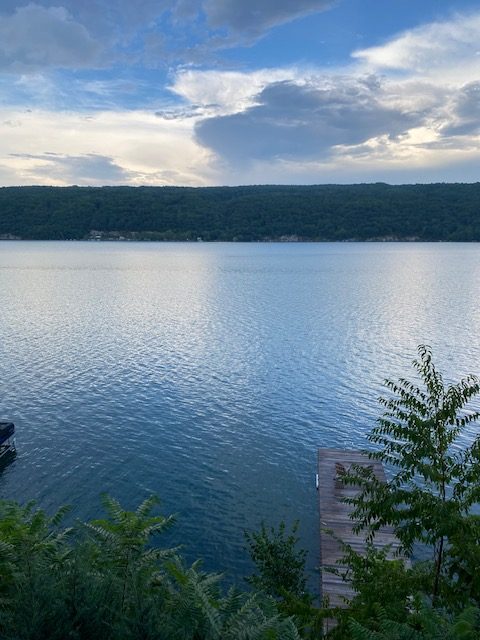
A child looking at ruins grows younger but cold and wants to wake to a new name I have been younger in October than in all the months of spring walnut and may leaves the color of shoulders at the end of summer a month that has been to the mountain and become light there the long grass lies pointing uphill even in death for a reason that none of us knows and the wren laughs in the early shade now come again shining glance in your good time naked air late morning my love is for lightness of touch foot feather the day is yet one more yellow leaf and without turning I kiss the light by an old well on the last of the month gathering wild rose hips in the sun
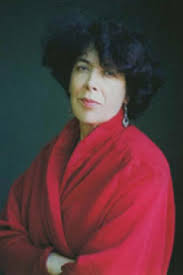
*TGIF and Happy Halloween. I went to a Halloween costume party last weekend as a raging female, which means I went as myself 😉 the above is from American poet W.S. Merwin, who, along with writing poetry, was an environmentalist who spent the latter half of his life in Hawaii, where he was reforesting a former pineapple plantation with native plants. Born in NYC, he spent much of his childhood in PA, where his love for nature was learned firsthand: “What turned me into an environmentalist, on my eleventh birthday, was seeing the first strip mine.” His wiki page is linked here: https://en.wikipedia.org/wiki/W._S._Merwin
Another of Hoagland’s poems (he died in 2018), The Change created a bit of controversy, I found out by reading more about him. What, I wonder – do you make of it?It’s also from his 2003 collection What Narcissism Means To Me. Personally, I think he encapsulates the moment of realization and change (long overdue) quite well, 5 years prior to Obama’s election, when the new presidential dummy he mentions is Bush 2. Still, with every breakthrough and change we have backlash like the one we’re living through now. Sigh. What simple, innocent times they were. Maybe?
The Change
The season turned like the page of a glossy fashion magazine.
In the park the daffodils came up
and in the parking lot, the new car models were on parade.
Sometimes I think that nothing really changes—
The young girls show the latest crop of tummies,
and the new president proves that he’s a dummy.
But remember the tennis match we watched that year?
Right before our eyes
some tough little European blonde
pitted against that big black girl from Alabama,
cornrowed hair and Zulu bangles on her arms,
some outrageous name like Vondella Aphrodite—
We were just walking past the lounge
and got sucked in by the screen above the bar,
and pretty soon
we started to care about who won,
putting ourselves into each whacked return
as the volleys went back and forth and back
like some contest between
the old world and the new,
and you loved her complicated hair
and her to-hell-with-everybody stare,
and I,
I couldn’t help wanting
the white girl to come out on top,
because she was one of my kind, my tribe,
with her pale eyes and thin lips
and because the black girl was so big
and so black,
so unintimidated,
hitting the ball like she was driving the Emancipation Proclamation
down Abraham Lincoln’s throat,
like she wasn’t asking anyone’s permission.
There are moments when history
passes you so close
you can smell its breath,
you can reach your hand out
and touch it on its flank,
and I don’t watch all that much Masterpiece Theatre,
but I could feel the end of an era there
in front of those bleachers full of people
in their Sunday tennis-watching clothes
as that black girl wore down her opponent
then kicked her ass good
then thumped her once more for good measure
and stood up on the red clay court
holding her racket over her head like a guitar.
And the little pink judge
had to climb up on a box
to put the ribbon on her neck,
still managing to smile into the camera flash,
even though everything was changing
and in fact, everything had already changed—
Poof, remember? It was the twentieth century almost gone,
we were there,
and when we went to put it back where it belonged,
it was past us
and we were changed.
Never heard of her. Him? Her. Born in 1936 into French colonial Algeria, Assia was a novelist, documentary filmmaker, and feminist trailblazer whose work gave voice to the women native to her country. The first North African woman elected to the French Academy, she wrote over twenty books; she also worked as a translator, including her own novels, which were read all over the globe. And, yeah, I never heard of her. She died in 2015, and was often mentioned as a Nobel Prize contender – but how often does the accepted canon include female voices, let alone those of north African origin? Not often enough.
Her first novel was published in 1957; her last in 2008. You can read more about Djebar at the wiki link below. The first quote below is what caught my interest, and led me down the rabbit hole of who dat?! There is ever enough time for the books and films and humans I long to read, and know. But. There is time – at least enough to run down a few rabbits.
In Djebar own words:
“I write to shatter the silence that surrounds the lives of women like a prison.”
“How shall I find the strength to tear off my veil unless I have to use it to bandage the running sore nearby from which words exude?”
“Writing in a foreign language* – has brought me to the cries of the women silently rebelling in my youth, to my own true origins.” (*French)
“Speaking of oneself in a language other than that of the elders is indeed to unveil oneself, not only to emerge from childhood but to leave it, never to return. Such incidental unveiling is tantamount to stripping oneself naked, as the demotic Arabic dialect emphasizes. But this stripping naked, when expressed in the language of the former conquerer (who for more than a century could lay his hands on everything save women’s bodies), this stripping naked takes us back oddly enough to the plundering of the preceding century. When the body is not embalmed by ritual lamentations, it is like a scarecrow decked in rags and tatters. The battle-cries of our ancestors, unhorsed in long-forgotten combats, re-echo across the years; accompanied by the dirges of the mourning-women who watched them die.”
“Sometimes fear grips me that these fragile moments of life will fade away. It seems that I write against erasure.”
“But my sole ambition in writing is constantly to travel to fresh pastures and replenish my water skins with an inexhaustible silence.”
File under Worth Noting: The USA is on the CIVICUS Monitor watchlist, added in March 2025 due to what the organization described as a decline in civic freedoms under the Trump administration. This was in response to actions that the group stated could “severely impact constitutional freedoms of peaceful assembly, expression, and association”.
The watchlist includes countries with faltering civic freedoms.
Reasons for inclusion: The CIVICUS Monitor cited actions such as restrictions on peaceful protests, executive orders perceived as undermining democratic norms, and restructuring of federal agencies like USAID.
Civic freedom rating: The USA’s civic freedom rating was downgraded to “narrowed” as a result of these actions. As of July 2025, the watchlist also included Kenya, El Salvador, Indonesia, Serbia, and Turkey.
Watching the East Wing of the White House being demolished was different from watching the events of January 6th, the ‘love fest’ also inspired by Orange Moosilini, but it felt similarly: a hollow in the pit of my stomach, a sadness, bemusement, worry, anxiety, fear battling it out with hope that we – the majority of us – will prevail and defeat this drip, drip, drip of madness.
And yes, I did think, well, he has a point about tents and big events – except, do it the right way, with permits and historical features preserved, with input from someone other than within the golden bubble. And, this thought also occurred to me: I live in a place where, on a regular basis, I attend weddings and anniversary parties in tents all the time. Holding big events outside is a relatable, American thing. How often is a ballroom really required? Ask Charles Rex, maybe, before trashing the beauty of a century-plus old building that does not belong to you, you fcking narcissitic nightmare?
The shutdown continues. Russell Vought and Pete Hegseth and Stephen Miller and Jerome David and other vicious white male minions are running the show, or so it seems, and the offer of $130 million from ‘a friend’ of the current POTUS to pay US service personnel is but a minor blip on the news, despite it coming to $100 per individual, and being wholly illegal. FFS. Are we watching the end of the American Empire? The American experiment?
Mike Johnson refuses to swear in a duly elected rep from New Mexico. The ‘Department of War’ is amassing troops and ships in the Caribbean, where more boats have been blown up as if killing people were a video game, a sport, without any justification other than vague claims of drug trafficking. We might invade a sovereign nation, Venezuela, because – oil? Because – drugs? Because communism or socialism or both? Fentanyl – by the way – does not come from Venezuela; it’s ingredients originate in China, is produced and cooked (?) in Mexico, from whence it gets into the U.S. Also, historically, the best way to unite the people of any nation is for another, bigger and more powerful country to invade militarily – but hey, what do I know?
Let’s hope we don’t, all, find out. I am hardly one to wave the flag or wear it, but I do love this complex mess of a place, the US of A; I want the grand, bold, challenging experiment in diverse democracy to continue – for a least another 250 years. Holding my breath. Letting go.
When my grandparents retired from farming, they bought a small, 3 bedroom house newly built outside the rural village, not far from Main Street shops and the business that – a few years later – their youngest son, my dad – would purchase. On Cemetery Road, the house – named The Knoll by my gramps – was tiny, only around 1100 square feet; it had a single yellow and white tiled bathroom and short galley kitchen, all on one level, perfect for their encroaching old age. It also included a small spare bedroom at the back east facing corner that was continually filled with sunlight. This made it perfect for an artist’s studio in which my grandfather, who took a correspondence course in oil painting, could finally achieve his lifelong dream deferred.
This was their first Christmas Card, sent out to family and friends.
I spent a lot of time in that house, especially after my grandfather’s death, when – at nineteen – I was asked to stay with my grandmother for the first few months, as I had in my earlier teenaged years when gramps had abdominal surgery. It never occurred to me to question this use of my time and energy as a bandage on grandma’s loss and loneliness; it was a given, as I was her namesake and his favorite grandchild at the time (I bowled well, and yes, it was pretty much that simple). Plus, my mother wanted me out of the house, as often and as much as was plausibly possible, and I so wanted and would do anything to both avoid and please my un-please-able mother.
My grandfather’s death occurred two days after I returned from a year abroad, and all I wanted to do was be home, and in my own bedroom, but in the face of jet-lag and the overwhelming shock of his death, plus my desire to please, what could I say, or ask for? He was supposed to outlive her; he was the younger of the two. He also was and had been a dominating force in all of our lives; how was his absence possible? They had been married 59 years, and she was a loyal farm wife, but I knew there was relief for her in his dying, even if she would never, ever criticize the guy. I loved him, I loved them both, but what a tyrant he was to my darling grandmother.
The first things I brought into the house during both extended stays were butter, bacon, and donuts. He had been convinced these items, among her favorites, were the cause of her health issues, and had been denying her both for ages. She had shingles, a virus, which even then I knew had no connection at all to bacon, donuts, or butter, probably because my dad said so, and he knew everything (or so I believed).
She and I had a lot of fun, being ‘bad’, eating the forbidden fruit. Her loyalty to the old man was admirable, but she was almost 88 years-old when he passed, and 85 during that earlier surgical event, so please, can we just eat the bacon, have the donuts, slather our toast with butter, topping all with eggs cooked in yet more butter?! Yes we can.
Recently the house was offered for sale, and – curious as well as looking for a new project – I made an appointment for a walk through. I knew it would be a mess inside; the lawn – uncut for months with a rusty Jeep crookedly left in the high grass despite a garage being less than 10 feet away – told me so. The current owners had inherited it from the elderly woman who purchased it from my dad in 1990, but I knew they had ‘issues’, and that the house was in a sorry state because I had visited them, and the house, five years earlier before the Covid shut down. I stopped by to gift them with an engraving stamp my grandfather had made of the house, which he used to create stationary. I also had several sheets of the stationary, which I additionally presented. Why not? I didn’t need these items, and the house was theirs, after all.
He would not fully open the door, but I saw enough to know they were struggling, and that the house was slipping into disrepair. There were bags and bags of empty bottles of booze at the door both inside and out. The stone patio had been replaced by a deck with a ramp for their mother/mother-in-law, and weeds had taken over much of that space. I felt bad for them, but I didn’t know them, and they were adults, independent and able to make their own decisions. Right?
My walk-through of the mostly, not entirely empty house was depressing. There was still one room (my father’s short-lived bedroom in the 1950s, and mine in the ’80s) filled with junk; black mold was present on all of the interior doors and especially around the fireplace, due to water rot where it had visibly separated from the back wall. Most of the 10+ acre property my grands had owned had been sold to NYC, and the garage was also filled with junk, thus the Jeep on the front lawn, I guess. The well and septic were not guaranteed as working, and were said to be cross-contaminated, nor was the heating system guaranteed, newly-ish installed (within the last five years) but never used.
Cash offers only. I let someone else make the first bid, telling the realtor I was interested only if that deal fell through. It won’t. Desire for a project, sentiment and a wish to save what was once a sweet house in a terrific spot, cannot beat sound business sense. Still, what a shame. That sweet house, filled with the scent of my gram’s sachets and lavender, wood smoke, and my grandfather’s cologne, is long gone.