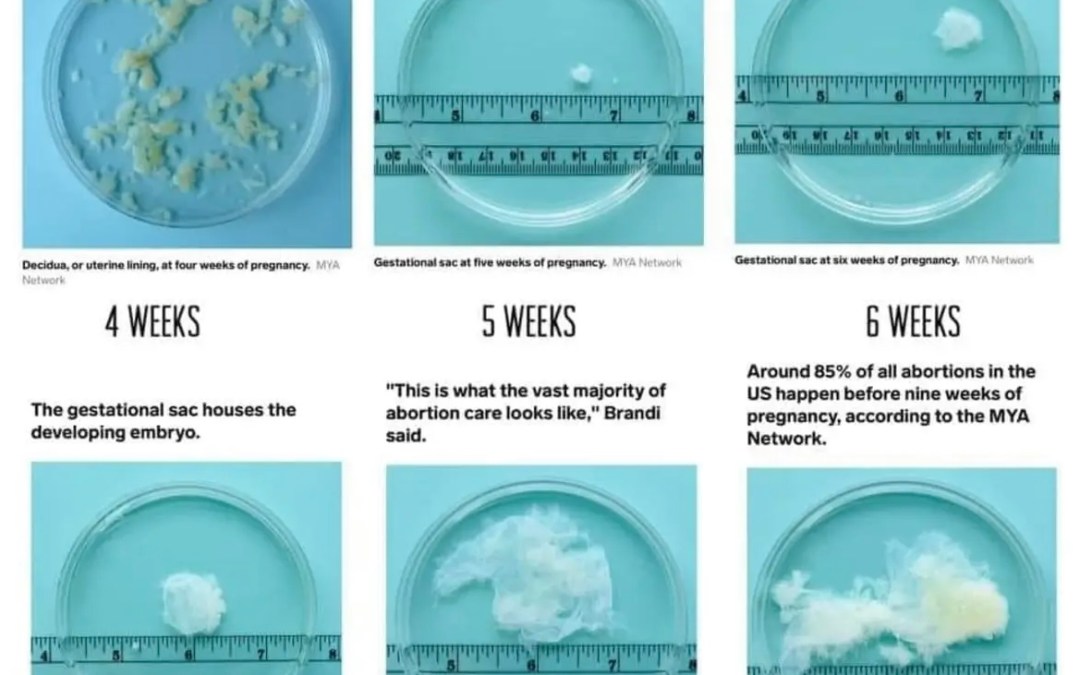
*from NPR and their reporter Selena Simmons-Duffin and entitled 4 surprising facts re: abortion since Roe was overturned 4 years ago on June 24th, 2022. But I would argue that these results are hardly surprising to anyone who is paying attention. Women, as Shirley Chisholm said, will always need abortions and have always had them, but the real (and only) question is whether those abortions will be safe, or not. Banning abortion makes women and girls less safe, and it places burdens on a huge swath of the population, especially poor women living in care deserts, and all women and girls who have the misfortune to live in the southern U.S. or solid red states like Utah. That these punitive anti-woman/anti-choice laws exist in mostly former Jim Crow states should also not surprise anyone. Also, for the record, Sam Alito and Clarence Thomas are total dicks, whose (knock wood) soon-to-be demises I anticipate with glee. From NPR:
It’s been four years since the Supreme Court overturned Roe v. Wade, ending the constitutional right to abortion.
“Roe was egregiously wrong from the start,” Justice Samuel Alito wrote in Dobbs opinion on June 24, 2022. “And far from bringing about a national settlement of the abortion issue, Roe and Caseyhave enflamed debate and deepened division.”
Reversing Roe didn’t calm debate or heal division. A confusing patchwork of state laws began to take shape hours after the Supreme Court ruled — which was, perhaps, predictable. States had passed “trigger laws,” ready to restrict abortion as soon as the high court allowed.
But other developments have been surprising, including the role of the internet and the mail in increasing access to abortion, even in those very same states. This year, voters will again consider ballot measures to protect or restrict abortion access across the country. Dramatic stories of medical care denied to pregnant patients continue to unfold across the country.
Here are four things to know about the state of abortion access in America today.
1. The number of abortions continues to rise
You might have guessed that when more than a dozen states banned abortion, there would be fewer abortions happening in those states and that the overall number of abortions would go down.
That’s not what has happened. The number of abortions nationally has increased each year since the national right to abortion was overturned.
Part of the reason is that access has become easier in states that support abortion. Policy changes have allowed more residents of those states to have abortion access without barriers like waiting periods or parental permission requirements. These lowered barriers have helped people who live in restrictive states to travel for care.
“Shield laws” have also emerged as a major force in the abortion access landscape. States that support abortion access have created legal shields to allow clinicians to provide abortion to residents in states with bans, even without patients traveling. Clinicians can prescribe medication abortion via telemedicine — online or over the phone. Pills can then be mailed or picked up at local pharmacies.
That’s led to the surprising fact that the number of abortions in states with bans have actually increased in recent years, as telemedicine abortion has grown. And this has not escaped Justice Alito’s notice.
“What is at stake is the perpetration of a scheme to undermine our decision in Dobbs,” Alito wrote in a recent dissent related to abortion pills, “which restored the right of each state to decide how to regulate abortions within its borders.”
2. Anti-abortion politics have gotten complicated
President Trump is pulled in two directions on the issue of abortion. His appointees to the Supreme Court overturned Roe vs. Wade, a huge victory for conservatives, but he and his administration have become notably quiet on the issue in this midterm year. Why? The coalition that elected Trump in 2024 included independent voters, who support abortion rights.
Meanwhile, anti-abortion politicians and activists want to see more action to restrict abortion, like reviving the Comstock Act. That’s the 19th century law that says you can’t use the mail to send “obscene” materials including pornograpy and “every article or thing designed, adapted, or intended for producing abortion.” If enforced, it could create a de facto national abortion ban without requiring Congress to pass a new law.
Last month, Justice Clarence Thomas asserted in his dissent to the abortion pill case that the Comstock Act was in force and that drug companies manufacturing and distributing FDA approved medications were therefore engaged in a “criminal enterprise.”
And states are also actively pursuing more restrictions, including bills that would charge women who get abortions with homicide. Texas passed a law that allows private citizens to sue out-of-state prescribers of abortion pills for $100,000. Louisiana scheduled mifepristone and misoprostol, the two medications used for abortion, as controlled substances.
Louisiana also is suing the FDA, aiming to force the agency to roll back the rules change that allowed telemedicine access to mifepristone. That case is likely headed for the Supreme Court. If the justices decide the case in Louisiana’s favor then mifepristone would no longer be available via telemedicine nationally. Other lawsuits against mifepristone are also pending.
3. Supporters say abortion pills are “unstoppable”
Abortion rights advocates are pushing beyond the status quo, too. Researchers at University of California San Francisco recently published a study examining the feasibility of making abortion medication available over-the-counter in the U.S., no doctor’s appointment or prescription needed. A Planned Parenthood affiliate started offering abortion medication to patients who aren’t pregnant, to keep at home in case they need it. And telemedicine abortion providers have contingency plans to be able to continue sending misoprostol alone through the mail even if access to mifepristone is restricted.
The post-Roe era has seen some closures of brick-and-mortar reproductive clinics that offer abortion, in part because Republicans in Congress withheld millions of dollars for Planned Parenthood and other organizations that provide abortion in 2025. Efforts to maintain access to in-person abortion care include training more primary care physicians to offer abortion, and turning to health facilities like urgent care clinics to fill in gaps.
In the meantime, the use of medication abortion continues to grow. “Abortion pills are everywhere, they’re safe, they’re effective, and they’re pretty much unstoppable,” Elisa Wells of Plan C, a website about medication abortion, told NPR last month. “The genie is out of the bottle.”
4. Privacy and stigma around abortion are evolving rapidly
Abortion was legal for nearly 50 years under a right to privacy based in the constitution. In the first trimester, according to the majority opinion in Roe, “the abortion decision and its effectuation must be left to the medical judgment of the pregnant woman’s attending physician.”
Ironically, since that right has been revoked, women can have abortions in far more privacy than was possible under Roe. Patients can fill out an online form and have abortion pills delivered to their homes, avoiding protesters that still gather outside some reproductive health clinics. At the same time, people embrace talking freely about the experience, eschewing shame, with hashtags like #ShoutYourAbortion.
Some women who have shared their own painful stories about being denied medically necessary abortion and miscarriage care have become public figures. Samantha Casiano, whose story was first reported by NPR, was pregnant for months knowing that her baby wasn’t going to survive, and went on to testify in court and be featured in a documentary about the consequences of Texas’ abortion ban.
As more and more people have shared their stories, that’s had a snowball effect — it empowers more people to speak out. Kate Cox appealed to the Texas Supreme Court for access to abortion while pregnant. Her picture was in the news as she was living through a pregnancy complication and seeking help. In the end, Texas denied her request, and she traveled out of state for an abortion.
Still, the increasingly online experience of seeking abortion also opens up new privacy issues. Just months after the Dobbs decision, police in Nebraska used Facebook messages to bring felony charges in a successful case gainst a woman who gave her teenage daughter abortion pills. And many Americans track their periods in apps that have raised concerns among privacy experts. (*and should raise concerns among everyone else!)
*It’s that thing when a man can’t talk right now about town business because he’s working on his fantasy baseball league, which – you know, Moj – could make him a lot of money! In other words, it’s not laziness or incompetence (ok, it might also be both of those in that particular case) but more than that, it’s selective responsibility.
The situation comedy show Everybody Loves Raymond did an entire episode on this subject; it was hilarious and, also, deeply unfunny, enraging, and true – although the primary character was more honest about his selective blind spots and manipulation than I believe the vast majority of men are in real life. Ray Romano encouraged his brother to deliberately fail at certain tasks he’d been delegated with regard to his upcoming wedding, as Raymond did around the home, in order to set himself up for getting away with being a lazy putz later on, leading to…”It’s just easier,” says the new Mrs. Romano, “to do it myself.” This results in his wedding invitations saying ‘Clothing Optional‘, a detail that so struck my funny bone, I’ve remembered it all these years later.
Having to manage every detail of the family calendar or a particular set of tasks being done by another adult is another whole job, peeps! The following is from the wonderful, terrible world of the interweb, and a family/couples therapist named Martin Metzmacher. But, it goes much deeper than simple incompetence or selective blindness; it’s selective responsibility, and it is a killer of love and connection, as Metzmacher elucidates: A reader named Katherine wrote this in the comments last week: “Some men are not lacking discipline, responsibility, or capability at all. They are highly responsible – for themselves. They can maintain their own space meticulously. Track their own priorities. Protect their own comfort. Optimize their own energy expenditure with incredible precision. But when it comes to the shared system – the invisible load of family life, emotional labor, long-term household management, anticipating needs – suddenly they become ‘less aware,’ ‘less capable,’ or ‘just not good at noticing.’ That contrast is what breaks trust.” She is right. And she has named something the whole field of couples therapy has been failing to name for thirty years. The damage is not that he doesn’t help. The damage is that he is selectively unable to see, in shared life, the things he sees with perfect clarity in his own. He can track his fantasy football roster across four leagues. He cannot track that the dishwasher needs salt. (*do dishwashers need salt?!!) He can remember every word a colleague said in a meeting three weeks ago. He cannot remember that Thursday is the day the green garbage bin goes out. He can manage his own gym programme with monastic precision. He cannot manage that the kids’ shoes are now two sizes too small. This is not a memory problem. It is not a noticing problem. It is a where-the-attention-belongs problem. His attention belongs to him. Yours belongs to everyone. Another reader, Anneliese, named the trap inside the trap: when you ask, you’re nagging. When you don’t ask, nothing happens. “Stop moving the goal posts,” she wrote. The goal posts have never moved. They have always been: be the only adult holding the household together, and don’t make me uncomfortable about it. And then Dana put words on the thing nobody admits: the help itself is another thing to manage. “Fairies come and save the day,” she wrote. The kind of help that requires you to delegate, supervise, correct, and thank – that is not help. That is a second job dressed as cooperation. Here is what selective responsibility costs: It costs her the ability to rest in her own home. It costs her the belief that she is in a partnership. It costs her, eventually, the love. Because as Katherine wrote – and this is the line I cannot stop repeating – at some point, love is not what runs out first. Capacity does. To the men reading this: the work is not to do more chores. It is to take ownership of one category. End to end. Without prompts. Without performance reviews. One whole system that does not pass through her brain on its way to getting done. To the women: I see you. The exhaustion you are describing is not in your head. You are not asking for help. You are asking to not be the only person tracking the system. Those are different requests, and the second one is the one that doesn’t get heard. And there is a final thing, from a reader named Alicia, that I will leave you with: “Notice how absolutely alone she is even with you in the room.” That is the loneliness most marriages never recover from. Not because love left. Because capacity did.
Wanderer moon smiling a faintly ironical smile at this brilliant, dew-moistened summer morning, a detached sleepily indifferent smile, a wanderer’s smile,- if I should buy a shirt your color and put on a necktie sky-blue where would they carry me?
*a poem from William Carlos Williams,a complex man, working physician, poet and writer, about whom you can read more here. For those less curious, Williams – a native New Jerseyan – grew up in a Spanish speaking home, and worked primarily as a pediatrician and practitioner of general medicine. Born in 1883, Williams tried throughout his writing life to move poetry forward, away from old forms, just as other art forms – painting, music, photography – were doing during his youth and early adulthood. The portrait below is from Man Ray. https://en.wikipedia.org/wiki/William_Carlos_Williams
I mean a match, ready to strike herself against the world that isn’t
this one. I mean luck. I mean a river empty of drowning. I mean an arrow
aimed at an unnamed star.
*a poem from former California Poet Laureate (2018 – 2020), Danusha Laméris, whose website is here https://www.danushalameris.comAll of my BFFs have daughters, and all of these young women are arrows pointing at an unnamed, brilliant star, returning home, brilliant stars that they all, in fact, are…the world is changing. I just finished Soraya Chemaly’s latest, All We Want Is Everything, subtitled How We Dismantle Male Supremacy; it was brilliant, brief, and powerful – the next gens of young women, will, I believe, fulfill the prophecy of the current Dali Lama, who said 30 years ago that western women will save the world. Why western? Because what happens in the U.S. lights or permits the smothering of the light elsewhere, for better and for worse. Right now, we are living through a backlash against progress, against feminism and its gains, against DEI and the forever project of leveling the playing field and everywhere and thing else that has favored, elevated, centered – you name it – white men. White men and men everywhere, it seems, would rather set this world on fire than share power, welcoming in a new and better world order. I remain hopeful; I know the daughters…
I didn’t know this story, and I doubt it would’ve come across my feed if my dear, longtime friend Stephen Robinson weren’t obsessed with Diana Rigg and the British show that helped make her famous, The Avengers, which I admit (don’t tell Stephen), I have never seen, other than in occasional clips posted to social media by my friend. It looks very silly and the male character is played by a man I find pretty unattractive and yes, I am that ridiculous. She, however, is fabulous, but what’s with all the ludicrous sexy kitten costumes she’s being put in, while her male co-star is inevitably suited and tied? Argh. The 60s.
I saw her – with Stephen? – in Medea on Broadway ages ago; it was terrific. But here’s the tale that – beyond her obvious talents and achievements – I did not know that made me love her even more. In 1968, a 27-year-old Ms. Rigg asked for and had a meeting with the producers of The Avengers. She called for the meeting because she had a simple question for them – them being all male: Why am I being paid a fraction of what my male co-star earns?
The guys tell her that’s how it works and that she’s lucky to have the role in what is a massive hit show. Hey, you should be grateful. Nota bene that whenever men or a man tells you you should be grateful for being given this or that (like the right to vote, or, hey you could be living in Saudi Arabia!)) please watch out, and if you’re so inclined, do let me know about it, and I’ll help you bury the body. In the case of Ms. Rigg – she decided to quit the show right then and there. Boom!
The infamous but you should be grateful to be working salary differential? Her dull as ditchwater co-star was taking home £1,000 per week, while the lovely Emma Peel – a.k.a. Diana Rigg – was getting just over £80.
About Emma Peel – if you’re going to cast a powerful smart woman in the role of a powerful smart woman who regularly outwits villains with her impressive intelligence and broad skill set – you’re not only going to inspire women and girls, you’re very likely going to get your ‘be grateful’ nonsense tossed back in your face by a powerful, intelligent woman. Or, you should; there are women – and I totally get this – who would say, I’m changing the playing field for women and girls by being in this role, showing these skills and this wit, thus, it’s worth it. Not Ms. Rigg.
For the next 50 years, abandoning The Avengers did not, as predicted, ruin or end Rigg’s career. She was too talented, and too determined for that; she did theatre in the U.K. and abroad, films. and more TV – including her truly delicious co-star turn on GOT – at the triumphant end of a long, rewarding actor’s journey. Rigg also played the one and only Mrs. James Bond in On Her Majesty’s Secret Service, and for me, personally, George Lazenby was a very hot, very acceptable Bond, especially given he was able to snag the fabulous Diana Rigg!