It was always either the big house, or ‘the farm’; dinner would be at the ‘big house’, grandma and grandpa are coming to us for Thanksgiving and Christmas at ‘the farm’. The little house, the house I live in now, where – when my dad was a boy growing up – the hired hands lived, was a rental, and had been since the nineteen-fifties. It had also been neglected, a lot, updated (badly) in the late sixties (what was with that gawd-awful brown wood paneling, who thought that was attractive, FFS?), and ignored, yet also loved in its own way, because it had always been a part of the larger whole, and was on the road to the big house, where we lived, and where my dad was born in the summer of ’28, a year before the stock market crash of ’29.
The little house is older than the big house, which dates from the 1890s. Part of the little house was a barn moved to the present location in 1820 or ’30 (how?!!). My bedroom is in what would once have been a hay loft; even before I knew the story about the 19th century move, I felt like I was sleeping in a barn, buying cow skins rugs for the floor in tribute to that feeling. Moo. Mooooooo. I used to love tossing myself into the hay mow, a massive two-story room in the barn at the big house, until, when doing so once, I lost a piece of jewelry I loved, having to hunt in a literal hay stack for a diamond baptismal ring I’d been wearing on a chain around my neck after finding it on Margaretville’s Main Street, shining in the dirt.
The cool, white washed milk house was where a hose was fitted every May to run water into our swimming pool; it was the coldest water you could imagine, which meant either the day had to be hot hot hot or, you had to be mad for swimming, which I was, always. The long rows and cement and stone floors, running the length of the first floor of the barn, three-hundred feet at least, sided and split by gutters for manure and slatted wood stands where cows had once been housed, was transformed into a roller-skating rink – we did the work of clearing hay and dirt and leftover manure – for my little sister and me. We were at an age where falling was close enough to the ground not to hurt, or not hurt too much; an age when falling didn’t happen often, if at all, because we were flexible, fearless, free. We could scream and yell and carry on as much as we wanted; the barn was empty except for us and whatever critters were around: mice, swallows, bats, innumerable bugs. The house was thirty yards away. Until I was an adult I didn’t know that barns were always set away from houses, often across a road; this was done in order to keep fires from spreading from one essential building to another. Now I notice this configuration all the time, in rural places. In the case of our house and barn, my dad had the road separating the house and barn filled in during our first year at the farm, because we weren’t farming, there was no essential livestock or equipment in the barn, and his children could, therefore, run mad over a lawn so big it took him several hours to mow, riding along bare chested and in shorts while smoking his pipe.
Behind the barn was a deep slurry wash, over the edge of a cement and stone man-made cliff of sorts, brown and green depths still stinky even though the cows were gone, sold off a handful of years before, when my uncle decided to focus on his career in education. He would become a principal in a high school in the Hudson Valley, selling the big house, little house, barn, shop, garage, apple orchard, pear trees and three-hundred acres to my dad for thirty-thousand dollars, the same price he’d paid my grandfather fifteen years before. Grandpa was furious, because he’d sold with the cows and all the working farm equipment intact, felt that Uncle Bill had broken his word, was ripping both his brother and father off. My dad stepped in and made peace as the two men were about to come to blows; the deal was one he gladly accepted, he said, the money the old man was due would be paid, no one was getting ripped off. The farm where they had all worked so hard stayed in the family. Relax.
There was an old wood sleigh on the second floor of the barn I dreamt of using one day in the deep snow, pulled by horse or a neighbor’s tractor. Other, unusable equipment was left behind, some for cows, some for tilling or cutting hay, but unless you needed rust, it had no purpose. In the old silo space was a small tree that would eventually grow to magnificent heights even while my sibs and I grew; this tree was a source of fascination to me, because I believed it was digesting the remnants of the old grain stores in the same way we were being boosted by our daily multi-vitamins, and sunshine, and fresh air. My dad showed me where the best blackberry patches were, and the part of the woods where his parents had dumped their garbage and old junk, at a great distance from the house, well past where animals or people were meant to trek. He pointed out the foundation of a sap house they hadn’t used, abandoned decades earlier by the previous owner and builder of the farm house, a Mr. Dobsa, who sold to my grandparents in 1921.
The frame of the old pig sty was still standing, almost within sight of the farmhouse; we tried to use it as a place to play, a clubhouse, but it had been used as a dumping ground by our aunt and uncle’s family, and wasn’t very fun, seemed dangerous and too risky, as there was so much broken glass and jagged, rusted tin around. But the woods and hills were full of treasures, I thought, including an ancient tractor abandoned back in the ‘40s after it quit one last time a mile or more from the barn, and was deemed unfixable. The tractor was all rust, it seemed, the rubber tires had mostly cracked and fallen away, way up on the hill, but a few levers still moved as did the steering wheel, and sitting way up on the metal seat gave me a thrill, as I pretended to farm, chug-chug-chugging along.
There was an ancient huge oak tree way up on the mountain across from our house; I used to try and pick it out from the upstairs bathroom window, but the woods there were too dense to see an individual tree. Once our grandfather hiked up to it with us, telling us about a time he and his brothers all met to wrap their arms around it, Bill (grandpa), great-uncles George, Louis and one other whose name I forget. Someone took a photo of the brothers, which I own. Their arms didn’t meet, and neither did mine and my siblings, all four of us straining to grab hands. That tree is still there, a survivor. Grandpa sent us on a treasure hunt for an exotic carved coconut shell he said was left or lost near a spring a good two miles from the house; it had, he said, been used for drinking from the spring and ‘sprang’ from Tahiti, or some other place unimaginably far-away. I don’t think it really existed, but it sure did give the young people something to do, getting us and our noise out of the house for several hours so our elders and betters could talk. Of what, I wonder? Mostly I suspect my grandfather held forth on any subject he felt like expounding upon, with my mother as a foil, disagreeing with the old man whatever the topic.
Once I found a blue Milk of Magnesia bottle in the middle of the woods closest to the big house, no scratches or nicks, and although my dad wasn’t especially impressed by it (his business, a local drug store since 1870, was filled with bottles and other antiques of greater value), I felt it was a thing of beauty, a gift from the wood elves; it started me collecting glass bottles on and off for many years. My dad also recalled filling glass containers from his parent’s day with water, just to see if they would shatter when frozen, or to use for shooting practice with his brother Jay. He gave up any real interest in guns or shooting after my great-uncle Murray came for a visit when he was still a young boy. His maternal Uncle Murray was a NYS champion skeet shooter, and proceeded during the visit to shoot dead everything that moved, including songbirds, and at least one of the barn cats. This made my dad feel sick to his stomach, and turned him off hunting for good, although once and a while he would shoot a woodchuck who was messing in the field, digging too many holes, making it dangerous for his children to romp in, as well as for the men and boys who cut our hay, or harvested apples. He didn’t like doing it.
There are more stories of the farm, the big and little houses, that I could tell, of Christmases where the snow came fast and deep and the power went off, stranding friends who’d come for dinner. We walked them half-way home singing carols, laughing at the sheer wonder of so beautiful a place and time, and a plunge into darkness that wasn’t frightening at all, lit by the snow below and stars above. I could write of the many hours I spent in the woods, hiding from my mother, from my sisters and from myself, and the slurry over which our family teetered, always; of men who drove up the road looking for my older sister, drunk as skunks in the front seats of their low-slung sixtie’s sedans; of drunk driving into snow banks and on the way to the fireman’s carnival; of endless parties during summer days serving Aunt Gette’s punch to the adults on trays, drinking it, too, instantly drunk it was that strong, and that good, but that was okay, getting a little hammered on punch as a kid, because we weren’t going anywhere. We were home.
*this piece is from 2011. All of my dogs have Lou as their middle names, this is because a. one of my dear childhood friends had Lou as her middle name, after her dad, which I thought was very cool and enviable, and b. because of Petticoat Junction, a very bad TV show where all three sisters in the show had ‘Joe’ as their middle name after their guardian, Uncle Joe. I watched PJ during the covid lockdown – it was awful, just awful, but I loved it as a young child, and still have the annoying theme song in my head, word for word! Thanks for reading.
In December of 1996 I adopted two dogs from the CACC (Center for Animal Care and Control) in New York City. One was a yellow lab puppy I named Betty who had been adopted previously but whoever her owners were (complete jerks) took her home but were unable to housebreak her. As an antidote she was starved and given no water prior to being dumped back into the shelter. I had her housebroken in three days; she was a brilliant and adorable dog who fit and surpassed the stereotype of the ‘always hungry dog’, taking it to new heights. She died in 2006, cancer of the throat and mouth forcing me to have her put down, a bitter diagnosis for such a happy, galloping gourmand.
The other dog I adopted that day I named Alma, Alma for soul, its Spanish meaning, and soul because she was all white, and very beautiful, despite her illness. She was very sick, very vulnerable, when I brought her home. CACC in 1996 (it has since changed its policy), was a kill shelter; they held animal for forty-eight hours only, and that day I was there for two of those precious, fleeting forty-eight hours crying – sobbing – the entire time. The tears started the moment the receptionist asked me if I had ever had another dog and if so, what happened to it? My darling Lottie Lou Miller at that moment had been gone for twenty-two months after eleven fabulous years together. She was a doll and I miss her still, as I do my honey bear, Betty Lou. So yes, I cried my eyes out.
There were at least forty dogs at CACC that day and their anxiety was palpable. At least six were Dalmatians, gorgeous dogs but completely unsuited to city life unless adopted by a long-distance runner or biker who was willing to have these beautiful athletes meant to be working dogs at his or her side during workouts. I chose Alma that day because she was a German Shepard mix, which I preferred, and despite the obvious signs that she was ill. She was the only one of the dogs there that didn’t rise to greet me, barking like mad. I had to coax and finally pull her out of the cage to take her for a walk around the fenced-in yard behind the shelter. I’d decided I must adopt two dogs because I had always felt guilty leaving Lottie at home, alone and because I just couldn’t choose one, only one, given their situation. I felt a little like Styron’s Sophie, making up her mind which child would live and which would die. My tears were endless. The receptionist, hearing my request after I’d spent an hour or more thinking what would I do, what could I do, picking out two dogs, said they didn’t allow the adoption of more than one dog – for good reason, it was a completely insane notion, but my tears and persistence eventually wore them down. And they loved animals too; I saw this and used it against them, saying, ‘If I don’t take them both what are the chances the other one will be put down tomorrow? One hundred percent, right? So….’ They caved.
One of the conditions they set for me to take Alma and Betty together was that I walk them out in the fenced-in area to check for compatibility; I did so and they were fine, mostly because Betty was elated and a doll, as always, and Alma was much too weak to object to any other dog or anything else. She clung to my side, as she would for the next four months whenever and wherever we went; I was her port in a storm. It was very endearing.
I took them home that day and for the following six weeks I slept very little and was a cranky, exhausted bitch. But. They gave me a reason to get out of bed and so much joy, something I needed. I’d been depressed, the lingering after effects of the end of another bad relationship in 1994. Because I loved dogs I felt it was a good time to get one and get back to a regular routine of walking and being unconditionally loved by a Zen master canine, or two. Dogs always teach us who we are, at our core, and Alma was a very challenging dog, once she healed her ills. She was weak and continued to have diarrhea (they’d warned me at the shelter) for six very long weeks after I brought her home, going through two courses of anti-worm pills; she’d been a street dog found in the Bronx, was about 9 months old, they had also said. If we weren’t outside making a stinking mess, she slept or ate and not much more.
Once healthy, she showed another painful side effect of her old street life: she would lunge at any man, particularly any who approached aggressively (runners and fast walkers) and if they had a baseball bat, umbrella or anything like a tool with which to hit her, she went insane, with fear, not aggression although certainly I am sure it looked like pure aggression. And if the man in question were drunk or high she also lunged, straining my arm; she was able to sense inebriation from as much as twenty or even thirty feet away. I would approach said man to apologize only to realize, getting close up, that he reeked of booze or pot or was clearly high on some drug or other. Good girl! Alma also licked incessantly, something the trainer I hired told me was a sign that as a puppy she had not been allowed to mouth everything in her world, as children and dogs do, using their mouths as a way to learn about the world, an anxiety calming behavior, inborn. Poor baby. This was something she grew out of eventually, but the lunging at men habit took a lot longer, and her fear of covered motorcycles, loud noises, sudden anything persists to this day, except her hearing is going, which helps.
She keeps falling, you see, the impetus for this piece about her, my knowledge that her days, after 15 years together, are numbered. She falls and can’t get up, freaking out, flailing and straining. Her hips and back legs are weak; she has trouble standing to do her ‘business’ and her eyes are going along with her other senses although she still eats well and, for the most part, seems in good spirits. She will be with me to the very end, until she loses interest in her food and can’t get around. She had a rough start in life but I am determined to give her a graceful, knock-wood, pain-free end, an end I hope we can put off for months and months. When she goes she will leave me behind her as well as her much younger by seven years – or is that forty-nine? – brother, Zooey Lou Miller, who has been, as if he recognizes her weakness, a bit of a dick head to her of late, giving the old girl a hard time. Can’t blame him entirely, as she is so very slow and our walks have been shortened of late to accommodate her; no wonder he has bratty ants in his pants, but still.
Alma, Alma Lou Miller, I love you and have loved you for all of almost fifteen years; yes, loved you despite my regrettable bursts of temper when we were city dwellers and you had several truly disgusting habits of which I shall say no more. Sweet baby girl, darling little angel dog, the dog who has always been so good, felt so safe and was so sweet around kids and all children and vulnerable people, my soul on four feet.
Several years ago I had the great good fortune to travel to India for a family wedding and – to see the country and it’s people. It was a grueling trip in many ways; the flights there and back again were long and arduous. I clearly recall hoping, somewhere over the North Atlantic on the return flight, that the turbulence we were experiencing would lead to a crash, because I so longed to get OUT OF THAT TIN CAN. Have I ever mentioned I suffer from claustrophobia? Well, now you know. And, on the way there, my seat companion spent the entire journey coughing up a lung; subsequently I was sick with a cold (hers, the cow!) the entire trip, my nose dripping like an s.o.b., but, and, however, India was sublime and everyone should go, or be as lucky as to go and have the hosts we had. My niece’s new-in-laws, the Gandhis (no known, direct relation, it’s a very common last name) took us everywhere and treated us royally; they also almost killed us, or me, at least, in trying to show us as much of India in fourteen days as they could manage. INDIA IS BIG. Imagine trying to show anyone the breadth of the U.S. in two weeks, hopping planes every other day, or loading into various vans for a nice five hour drive to get to another plane or spot we had to see! Exhausting. Exhilarating. Amazing. A blessing, all around. My niece is happily married, fast forward a few years adding two gorgeous children, and one day I intend to use my ever-increasing spice inventory the way Indian cooks do, to great and healthy effect.
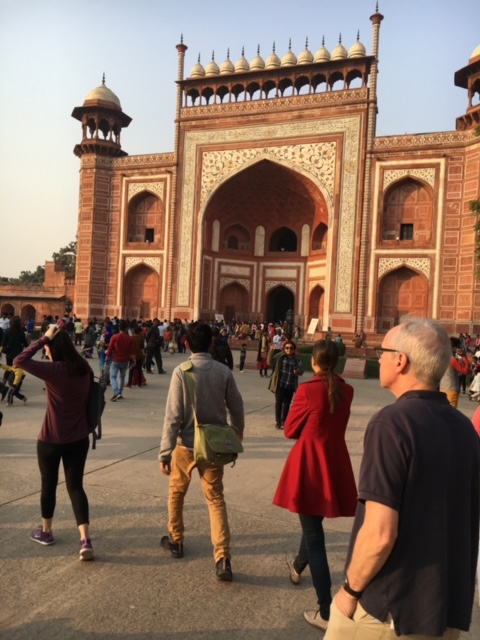
I don’t take a lot of pictures, ever, and so don’t have many to share, but this I will say, and share: the message I have received as an American is that the poverty and filth in India would be overwhelming. It was not. It was dirty, it is clearly a crowded country in parts; so is America, in parts. And, to my upstate NY eyes, while I saw poverty, I didn’t see the isolation and, specifically, winter hardship I witness daily locally (I was there December into January, the most temperate time of year) , and throughout the northeast. The people seemed, to me, during my teeny, brief viewing of the country, pretty happy and very friendly. While we were in Gujarat State, where the wedding was held, foreign visitors are less common, and a crowd of kids surrounded our party, wondering at us, in a completely engaging and charming way. We saw Kerala State, Tamil Nadu State, the cities of Delhi, Mumbai, and Kolkata, and in the state of Uttar Pradesh, in Agra, we saw the Taj Mahal, which is so beautiful it is truly surreal. I was also pleased to see that the vast majority of tourists viewing World Heritage Site were Indians, because that’s the way my brain works. Local goodies for local peeps first, while I was touristing myself. LOL. Contradictory? So sue me.
The food is amazing, the country vast, the religion and dialects and languages numerous. The bazaars inexpensive and colorful, the spice markets overwhelming and if only, if only one could get to a spice market every year, or every month! Heavenly. But. Reality intrudes. I received only a taste, and want to go back to study yoga. They invented it, after all! The beaches are nice, too, I hear. #LuckyAF #IndiaLove
*the couple clearly posing for a camera – were not of my party but were clearly on tour; seeing them there in this photo cracks me up every time.
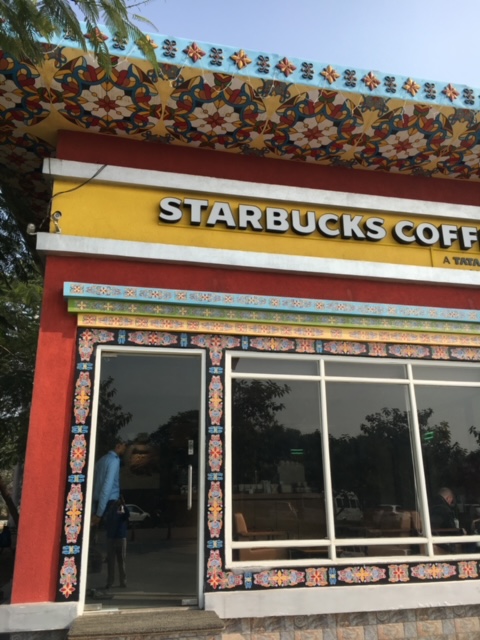
*What can I say, they had TEA, or chai (when you ask for chai tea, you’re asking for tea tea), and plenty of napkins for my runny nose, on the road to Agra, and what a blessing! The whole bathroom thing is a bit of a challenge in India, but – get over yourself, and I did!
*This piece is from somewheres around 2007 or ’08, not sure as I switched up computers at around that time, and my recording keeping is, well, incomplete to say the least. I would add to this archival rant that the United States is, along with New Zealand, the only country in the world that allows direct to consumer marketing of drugs i.e.rather than leaving the decisions to physicians regarding what drugs are needed or will work for their patients, patients are instead being sold drugs directly by advertising campaigns that cost billions of dollars per year, including Pharma companies bringing docs on board in what I can only call pyramid schemes, rewarding them for prescribing a new drug with bonuses and trips to Las Vegas and etc. Yick.
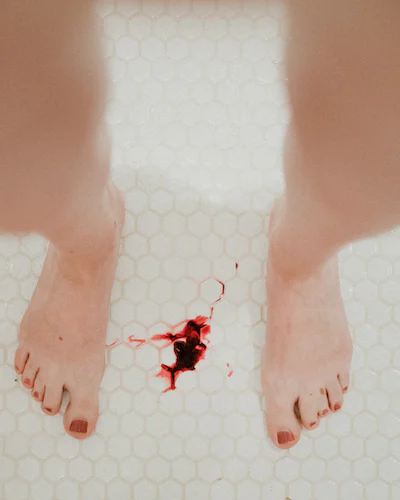
When was it decided that our (women’s) menstrual periods were a ‘disease” that needed treatment? Is this the natural outcome of a culture and its love of the brand-spanking syndrome, such as pre-menstrual syndrome? As a female I can tell you there were many, many months when I wanted to kill someone or when tears, true tears of sadness, deep sadness, overwhelmed me, reducing me to a sodden mess, homicidal and teary responses to my normal life that would disappear the moment I got my period. And, once I got my period, the irrational search for why, why, why do I feel so blue, so murderous, would suddenly be answered. This happened not monthly but regularly enough that I should not have had to search for an answer, but there y’go. It crept up so stealthily and, to paraphrase my fave author in the world, Georgette Heyer, wanting to kill another member of the human race is very understandable, even natural, as is, you have got to agree, being occasionally overwhelmed by tears,given the sad, sad state of the world. Still, is being pre-menstrual a syndrome that needs medical interventions? Men commit most of the murders in the world; if women aren’t actually killing anyone due to PMS, do we need to treat it or understand it, finding natural cures like taking a week off work, or getting a massage?
But really, we the people aren’t in love with ‘the syndrome’, any syndrome, finding and naming new ones on a regular basis, our drug companies are. Ah the drug companies. Am I the only one who thinks that they are, along with the oil companies, the evil empires of the 21st. century? To be fair I have to say I was fed and clothed, albeit indirectly, by drugs and therefore drug companies until approximately my twenty-first birthday; my dad was a pharmacist in what seem now to be the calm, reasonable, and quiet pre-intensive drug advertisingyears, doing well in a business that has seen explosive growth in the last few decades. That having been said, oh oh oh I wish they would shut the eff up and go away. Look I get it, we live in a capitalistic society where even our religions live and breathe the big buck, promoting themselves like t he money-hungry tarts they are, but I swear 90% of all TV commercials nowadays promote drugs, drugs and more drugs and it’s driving me nuts (there’s a drug for that, too!).
One of these ads says ‘why have twelve messy periods when you can have only one?’ Gosh, that sounds great! Except, maybe, um, our bodies need to have periods, as in we need to flush out impurities that gather in our reproductive systems, you know the system that’s been working for women for like, I dunno, three hundred thousand years or so. Plus, what happens to all those eggs that are not, on a monthly basis, dropping? Each woman is born with a certain amount of eggs in her ovaries and each individual woman, depending on how may pregnancies she has, which interrupt the monthly egg drop routine, has, ultimately, to drop all of those danged eggs! When the eggs are getting down to the final dozen or so, less hormones are produced by the body and the fabulous process of peri-menopause begins until at last, no eggs drop for one year plus one month at which point there are, clearly, no eggs to drop and one has achieved menopause (soon to be designated a disease as well, I am sure). Got it?
Anyhoo, what I wanna know is what happens to all of those eggs? The ones they don’t allow to drop by drugging our young women into a state of period free bliss (‘I feel so fresh!’ these blissed out young women exclaim in the ad).Do those unused eggs stay where they are only to stampede out once you give up the new drug (as you must, if you want to get pregnant and etc.) that will free you of those messy periods that are so super inconvenient to and your equally inconvenienced and, dare I say, immature boyfriends or husbands? Or, do these inconvenient eggs get zapped, destroyed, done away with, kaput, and if so by what exactly? SHOW ME THE EGGS!!! What have you done with all of the extra eggs?!!!
Sigh.
All this to say that our periods, no matter how inconvenient or messy or even painful they may be, should not be taken for granted or dismissed – drugged into submission – so easily. Our bodies have developed over those thousands of years and work damned well excepting those times when we humans find brand spanking new ways to mistreat them, abusing them with drugs, alcohol, stress, too much food and etc. Our bodies have intelligence and if in the modern world we cannot deal with the slight inconvenience of something so natural as a menstrual period, what the hell is next? We want, it sometimes seems, to drug away our humanness, our every ache and pain, our tears, our vulnerability – we want to be always young, always fresh, always happy, always free, none of which is possible or even, if you’re asking me, desirable.
Yet the drugs and drug ads keep coming. Am I the only one who has had it? I have a vow with a friend that we won’t be on any drugs until we’re at least 80 (it used to be 70, but we’re getting older fast so the number had to rise), yet I know many, most prescription drugs are vital, necessary, life saving and good. Maybe too it’s the money involved that bothers me, the money spent on advertising instead of on finding cures, kind of like the money raised and spent on political campaigns instead of on vital services or helping those less fortunate. Arg. Show me the eggs!!!
Like most peeps I suppose I’ve seen a beaver dam or two in my life, right? Once at least. Maybe, from afar. But mostly what I have seen and know about these industrious lil’ suckers is from books and TV. Were they featured in the Little House series of books? We didn’t get that channel, so I never saw the TV series. I’m really not sure, but I do remember being fascinated by the way they lived. I loved swimming and still do, so much, especially in fresh water; the idea of life spent in rivers and streams seemed idyllic, although I have never been able to imagine myself gnawing down a literal tree. Anyhoo, there’s a beaver pack – family? – group? – down the road just a little bit, and, when I am out walking my dog, signs of their hard work abound. I love it. You go, nabes! To me, this – they way they live and work and build – is amazing. Simple, beautiful, amazing. What teeth they have. What jaws! What persistence!