
Mar 31, 2026
Huh? Sherri Finkbine? Never heard of her. Or, rather, I had but then I forgot and at the time (20? 30? years ago) I was busy. Busier. Plus, we forget stuff, including even important She-roes like Ms. Finkbine, in part because we’re not taught about such She-roes, and they’re not celebrated. You won’t find a statue in Arizona of Ms. Finkbine, but maybe one day there will be.
Here, in part, is the story of Ms. Finkbine, and why I hope to remember her this time around, along with all ah yaz, because she lived through hell so that we could have and do and be better, and because we’re up against – still – a determined group of religious zealots who want to turn the clock back to a day when women and girls had many fewer rights, in this case to medical care, abortion care. Abortions ARE HEALTHCARE. Disagree with that? Then don’t have one, but better yet, MEN: keep your dicks in your pants.
So. Sherri Finkbine. Better known as “Miss Sherri”, a host of a franchised children’s TV show, Romper Room, filmed in Phoenix, AZ. That matters because in 1962, when this story starts, a TV lady who dealt with kids had to be – or seem to be – pure as the driven snow. Recent outrage over Ms. Rachel supporting and caring about children in Gaza – so consistent with her message of love for children everywhere – is a reminder of how everything old is new again, but I disgress.
Finkbine and her husband Robert, a high school history teacher, became a news sensation when she sought abortion care after having taken a nausea control drug her husband had purchased while on a field trip in Europe. Finkbine was unaware that the pills contained thalidomide, which was just on the cusp of being exposed as a danger to developing fetuses, having caused thousands of permanently, profoundly disabled children to be born, or to be born and shortly thereafter die, throughout Europe. If they survived to the point of being born, that is. The drug was not ever made available in the U.S., and thank goodness for that.
Once Finkbine realized what she’d ingested during her early pregnancy, she wanted to publicize the danger of thalidomide, contacting The Arizona Republic seeking their assistance in so doing. She was promised anonymity, but – well, y’know how these anti-women jerks behave (badly) – leading to her identity her identity being revealed. Speaking of everything old is new again, following that expose, she was on the receiving end of multiple violent threats. So called “pro-life” types making death threats is one that always gets me, y’know?
Due to the known dangers of thalidomide, Finkbine’s OB/GYN asked for a court order to proceed with the abortion. If you have ever had an unwanted pregnancy, the ticking time bomb inside you is deafening; it makes me laugh and enrages me in almost equal measure to imagine men having to wait for any type of healthcare, and what a shitstorm there would be if that unlikely scenario ever happened.
After legal and administrative nonsense and delays from both the courts and her local hospital, Finkbine sought abortion care in Japan where they were turned away, despite abortion being a very common procedure in Japan. She eventually ended up in Sweden, where abortion was legal; in August of 1962 she received the needed care that terminated her pregnancy.
Sherri Finkbine lost her job because of the controversy, because of course she did. She was a married mother trying her best to inform the public of the very real dangers of a drug that wasn’t tested on actual pregnant women – in fact there were zero clinical trials for the drug, zero – prior to it being prescribed to tens of thousands of expectant mothers. Ah, the patriarchy! Ah, conscienceless capitalism!
Did widespread knowledge of Finkbine’s ordeal move the needle on abortion care and rights in America? It did. Also, think about it, for a moment. What class of Americans traveled to Europe in the late 1950s? Who else might also have been exposed to Thalidomide? The halls of power are filled with secrets, even more so in 1957, or ’58 or ’59 than they are now. After wide-spread publicity regarding her ordeal, slightly over 50% of Americans thought she’d done the right thing. Hey. It’s a start.
From wiki: The Swedish obstetrician who performed the abortion told Finkbine that the fetus had no legs and only one arm and would not have survived. It was too badly deformed to be identified as a boy or a girl.

Mar 30, 2026
*My progressive opinion column for the month of March, published in the regional newspaper for which I write March 14th, and posted here on a bit of a lag because – oh, just because. Thanks for being here, and for following along.
It should surprise no one that from birth to age 18 and beyond, I was sexually assaulted on more than a dozen occasions. These incidents, while hardly incidental, ranged from stalking, groping, and molestation to outright rape. But, why say it’s unsurprising? How can that be? Because the sad truth is that every 68 seconds an American (9 out of 10 are female) is sexually assaulted, an average likely based in underreporting. Every 9 minutes, that American is a child.
Two of the sexual assaults happened the summer after I graduated high school; both men were married with small children, former teachers and coaches of mine. I thought of them as old men, which they weren’t but perception is (almost) everything. I also thought I was safe in their company because they were old, married, had kids, (one even attended my church), but most of all because I trusted adults to not sexualize or sexually assault me, despite all previous evidence to the contrary. Crazy, right? Less crazy, in truth, than a dangerous combination of naivete and societal training; female children especially are taught to trust adults, as well as to be nice, polite, and even – dangerously – compliant.
That naivete meant I also felt protected by my laser-like focus on the big haired, bellbottom-jeans wearing boys my age or very near it. Why would these old men ever imagine I was interested in them? Couldn’t they see I was just a kid, even if I was 18 and done with high school?
As it turns out, men have strong imaginations when it comes to their own desires and fantasies, along with equally robust feelings of entitlement, and very little in the way of impulse control. But, sure, not all men!
My childhood did, however, prepare me for adult life in Gordon Gekko’s NYC as well as back home again in the Catskills, where on a regular basis I was cat-called, flashed, and propositioned by men, as well as followed, harassed, and assaulted. But again, not all men! Why bring this up during Women’s History month? Because this is my history, and the history of 1 in every 5 women in the U.S. who are raped or sexually assaulted in their lifetimes. Reported assaults, that is – remembering that every 68 seconds figure – as it’s probably more like 50% of all women and girls experience sexual assault or rape in their lifetimes, or other less violent trespasses on our daily lives, bodies, and personhoods.
Not all men, but always men; all men need to do better, change their behavior, holding one another accountable; all men need to stop being so rape-y, so entitled, so selfish, so cruel. All men need to be better humans. A vital reframing of sexual violence making it clear that it is men who need to change their thinking and behavior, not women, is being led in this moment of transition by France’s Gisele Pelicot; she refuses to be ashamed; she didn’t commit the heinous acts of her ex-husband and at least 52 other men, all of whom who raped and abused her while she was drugged unconscious. Pelicot insists we put the shame and blame where it belongs: on the men who commit these acts.
In a world where elderly women keep their long-deceased husbands names in the phone book as a form of protection, let’s finally acknowledge the problem is and always has been men. If men are committing crimes – and there are now at least 2 Pelicot copy-cat cases being prosecuted in Britain and Germany – we need to hold men accountable, not women, and women certainly shouldn’t be ashamed when victimized. The shame belongs to and with the perpetrators, 98% of whom in instances of sexual violence are men. Men.
Rape, sexual assault, stalking and gender-based harassment are all rooted in a desire to assert power, not the power of desire. As long as we blame women for the acts of men (‘how can Hillary lead our nation, if she couldn’t keep Bill faithful!?!’), we’re failing true accountability as well as teaching our children what to do and expect. We all love to get away with ‘it’, don’t we? Heck, if he can do this and become president, lead a law firm, company, or be a cabinet secretary, why can’t any man? And if, as a girl, you see men wink at one another while objectifying girls and women or getting away with acts of sexual harassment and violence, you might shrink yourself, and your ambition, to survive that ugly narrative and reality.
Let’s get angry instead. Let’s vote and promote and celebrate and support more women in positions of power. Let’s make and change history, while acknowledging another oft hidden truth: women are better humans than men. But, sure, not all women…
Mar 29, 2026
Two girls discover
the secret of life
in a sudden line of
poetry.
I who don’t know the
secret wrote
the line. They
told me
(through a third person)
they had found it
but not what it was
not even
what line it was. No doubt
by now, more than a week
later, they have forgotten
the secret,
the line, the name of
the poem. I love them
for finding what
I can’t find,
and for loving me
for the line I wrote,
and for forgetting it
so that
a thousand times, till death
finds them, they may
discover it again, in other
lines
in other
happenings. And for
wanting to know it,
for
assuming there is
such a secret, yes,
for that
most of all.
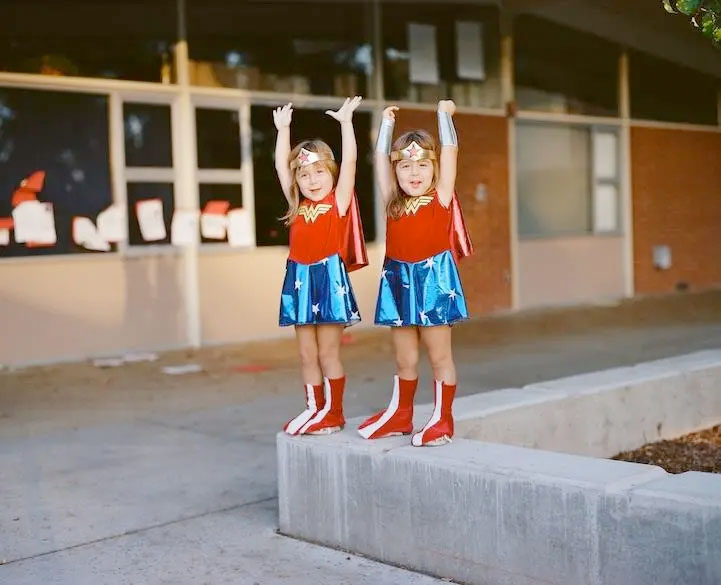
*a poem by Denise Levertov from her collection ‘O Taste and See: New Poems’, 1964 although, the older I get, the less I know I know, and the fewer secrets I have and hold. What’s the big deal, so I did this (regrets, I’ve got a few, but then again, too few to mention) absolutely idiotic thing, and then I did it again (this primarily pertains to men-things) but oh what fun. What lessons! What a hilarious ride. And, watching little girls discover the world, whoever they are, wherever they live, is glorious. Heartbreaking. Life.

Mar 28, 2026
Fall in love and stay in love. Explode.
Don’t intellectualize.
Get passionate about ideas.
Cram your head full of images.
Stay in the library.
Stay off the internet and all that crap.
Read all the great books.
Read all the great poetry.
See all the great films.
Fill your life with metaphors.
And then explode.
*I agree, even if – beyond the prolific, explosive output of this mostly but not always sci-fi writer (I don’t read sci-fi, the world is weird AF already without adding more to it) – his politics were gross, a real hot mess. He loved Ronnie Reagan, proclaiming him the greatest president of his long lifetime, but of course he did: they were midwestern born white men and age contemporaries who made a lot of money, gaining wide-acclaim, in the entertainment industry. Bradbury was also a fan of George W. Bush, who does look better and better with each passing day of Orange POS but – all that bad thinking and voting and speaking and donating and promoting of creepy politicians aside, an interesting human, and a terrific quote. https://en.wikipedia.org/wiki/Ray_Bradbury

Mar 27, 2026
*My January submission for a quarterly arts ‘zine published regionally. Will they use it? Only time will tell. It will come out in April, or May? Fingers x’ed.
As a kid, I spent five consecutive summer fortnights at a sleepover camp called Skanatati outside Sherburne, N.Y. During two of those years, there was, in another unit, a girl who was badly burned, missing parts of several fingers on her right and left hands, as well as being heavily scarred up her left arm and on that side of her face and neck; her left ear lobe was gone; her left leg, visible in shorts, was also marked.
It was hard not to stare, even when we’d been asked and told not to; we were kids, 6 to 12-year-olds, grade and middle-schoolers. She was used to the scrutiny, you could tell, steadily staring anyone down who looked for too long, closely surrounded at all times by other girls her age from their mutual home town. They knew her story, which I never learned.
Once, however, we were each standing on two separate lines facing one another. A game? An outing? I can’t recall. We looked at one another long and hard; I couldn’t look away, wondering what had happened to her, as all of us did, I suppose. But neither could she stop looking at me; we were trapped by one another’s gaze. Her steady scrutiny didn’t embarrass or shame me; it mostly served to show her strength, or so I thought and felt at the time. I don’t know what she saw, staring at me. Someone without scars, I suppose.
Her eyes were brown, and, looking at her in that moment, I saw a house engulfed in flame, a bedroom on fire. I heard her screams, and those of her family, heard too the windows shatter, humans trying to escape, felt the rush of air, wondering when help would arrive, wondering too would she, would they, survive this, and these terrible burns? Does overwhelming physical pain block out and override normal thought? It must.
I also remember thinking that she had evidence, real visual evidence of what had happened to her, in the myriad scars covering so much of her body. I thought, then and now, that in a way she was lucky; I wondered, then and now, what it must be like to have proof, proof of fire or anything else that might leave a mark.
I can’t remember the first time my mother told me I had ruined her life by being born, but we were living in the Church St. house, which means that it was when I was 6 or 7 years-old, a year or two before I was sent off to camp. We moved away the summer I turned 8. But I already knew that my mother didn’t like me; it was the bedeviling puzzle of my daily existence. But anyway, she was wrong; I didn’t ruin her life, I merely came along at a time when she had other plans, plans that included returning to work, to life, to having her own money – not bottle-feeding a newborn while recovering from yet another surgery.
My arrival destroyed her hope, which is a kind of ruination, because a new baby and 3rd C-section in 4 years knocked her out of the future she’d envisioned literally, logistically, and figuratively. Figuratively? Yes, because during her pregnancy and after my birth she saw no future life for herself as she had imagined it. That dream was dead, buried amidst an endless cycle of mind-numbing household chores and a body that had, time and again, betrayed her.
Her doctors instructed her not to have another child, or at least to not risk it for 3-years at the very least, but she fell pregnant again the following March, when I was 8-months old. She was 32, a good, obedient Catholic; practicing or using any form of birth control was out of the question whatever her personal desires might have been. Tracking her cycle? Cold-shouldering my dad? Don’t make me laugh.
Her much-adored husband worked 7 days a week, volunteering at the local hospital several nights as well, filling prescriptions; they were both ‘life members’ of the small rural hospital in town; this sacrifice on both their parts was a way to pitch in, do good, be upstanding. Left alone with their children for hours at a time, she was exhausted, played-out, bored, and terribly lonely. She began to bake and eat entire layer cakes between the time we were put to bed and my father’s arrival home. She looked around, seeking a target for her rage and grief. She found one close at hand.
A scapegoat is a person who is blamed for the wrong-doings, mistakes or faults of others, especially for reasons of expediency. But what does it require, the effort of passing blame and burden while trying to break another human being? Physical harm is good, but she wasn’t a physical person, not really, and bruises give the game away. Her husband was also tenderhearted, very much so.
Typical of my ability to enrage her, the last time she swatted me as a young child I refused to cry, ‘What is wrong with you? Why are you not crying?’ I told her that I had decided never to cry again when she hit me. Her face turned a deeper shade of red. She was sweating in the tiny bedroom I shared with my younger sister. Defiant children – especially defiant girls – get locked away; the last time she threatened to institutionalize me I was 16. That day it was because I simply would not stop behaving like an unruly, willful adolescent, which is exactly what I was, along with many other qualities, good and bad.
My refusal to bend or break throughout my childhood, or at the very least to conform to her outdated 19th century expectations, was yet another reason for her to rail against ‘your child’, as she named me to my father, ‘not mine’. Making me his was another piece of the puzzle that was our relationship and the complicated, brilliant, deeply neurotic woman that was my mother.
She could be quick, like a black bear, her heavy hand lashing out ‘whap!’ But mostly it was her words that scarred me; language was her calling and chosen art form, and with well-aimed words she tried to twist, intimidate, and scare me; she tried to make me small. I was her cross to bear, sharper than a serpent’s tooth, the ruination of her life, the greatest mistake she’d ever made, and her biggest regret.
About the same age she first began to tell me that I had ruined her life, she said that one day I would replace her, marrying my father, becoming his 2nd wife. She knew that, like her mother, she would die young. My father already, she insisted, loved me more than he did her, me and my perfect nose, my blue eyes, my sense of humor just like his. Finally, when I was thirteen, I said to her in response to this bat-shit crazy nonsense, ‘Mom, I don’t think that’s legal in New York. Maybe Alabama?’ Speaking of fire, I could practically see the hot air streaming out of her ears at that one. She stormed out of the room. How dare I interrupt whatever the hell that was, her fugue state of looney.
My father told me to ignore her, to spend more time in my room. He could joke her out of it; I could not. Don’t poke the bear. But how could I not? I love poking bears. On his death bed, he apologized for not doing more to protect me from my mother. Too little, too late. But not nothing. She’d been dead 3 years by then. Dead but not missed, not by me at any rate. Putting her into an institution – a nursing home – at the end of her life was a deliciously painful and perfect irony for which I am thankful, even if the entire process almost killed me. The universe has such a strange sense of timing, and humor, don’t you think? For me, at least.
When I was in my twenties, my mother called me in NYC one morning from her hairdresser’s. They were discussing the book Mommy Dearest, which had just come out in trade paperback form, and of course her hairdresser ate it up, reporting out to my mother. She wanted my assurances that I would never write about her, betray her and our family, revealing a level of self-awareness I had not thought she possessed.
I don’t even own a typewriter, mom, but I won’t promise not to write about you. Leave me alone.
I hung up, returning to my day.
My mother gave me language, a love of words and literature – gifts for which I am eternally grateful. I also inherited her love of reading, and learning. But I survived her largely because I inherited my father’s sense of humor, which has saved me more than once. It helped me make light of the invisible, palpable scars she burned into me.
