Intolerances, not intolerance; there is a difference, and today, for me, was a day to get rid of a few intolerances because they were making me nuts. I bought a new cell phone; mine was five plus years old (I have no idea if that’s a long life or short) but the truth is, it wouldn’t start unless it was plugged in, it wouldn’t call out or take calls unless put I first it in airplane mode, counted to ten or more, and then took it out of airplane mode. And I was getting voicemails from friends over ten hours after they called, only to see that they had done so when I was sitting in my house reading, phone in my lap, but with no ringy-dingy through to me – utterly maddening.
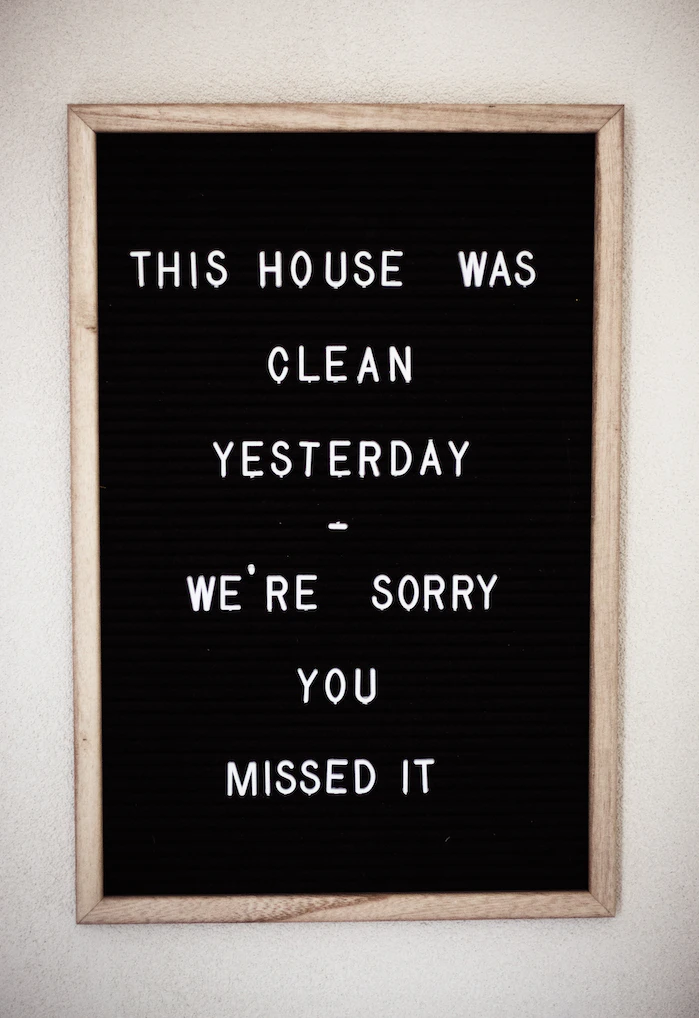
The classic example of an intolerance is the newel post at the bottom of the stairs in George and Mary Bailey’s house in the classic film It’s A Wonderful Life: the danged thing comes off every time George puts his hand on it, and he hasn’t had the time to fix it. It infuriates him, adding to his sense of frustration overall. Windows that don’t shut, a light bulb that flickers, a faucet that drips, a feature on your phone or computer you can’t work or figure out but need to use, a rug whose edge trips you regularly, a pile of files that need putting away cluttering up a space, a toilet that won’t stop running, a dog that keeps barking every time my neighbor’s housesitting brother takes a walk at five a.m. – all of these are intolerances, and worse, they’re distractions. Distractions make getting more essential things done harder. Get it fixed, clean it up, change the light bulb, buy the new phone, pay those bills, make the call, fix the toilet! Keep the dog in the bedroom in the morning with the door closed for a change, until you wake up naturally and the early a.m. walk is over… brilliant (today was my first day trying that, it worked perfectly, YAY)!! Dust and dirt are intolerances of mine; when I leave my house cleaning for too long, it distracts and irritates me to no end. And then, I attack the problem and voila! A clean house equals joy in Mudville. Interesting, that word attack. Well, I never said I enjoyed cleaning.
Another intolerance: not having a fenced in yard for my dog. So! Today I also made a call – with my new, fully functioning cell phone – to an invisible fence company. Diego the Large Dog wants to be outside all the time; makes sense, half of his breed is Pyrenees Mt. dog, a breed who primarily live outdoors, guarding sheep. So, okay, let’s figure this out because even as much as my neighbor likes Diego, he does not want him there all the time. And then there’s me and my outside meter. I am not a mountain dog, and, after many years of living in various under-heated, no a.c. houses and apartments, set up in my wee casa deliberately to be as comfy and cozy as it could possibly be in all seasons (central heat and air, what a blessing!), and – after a nasty bout with Lyme, I won’t be joining Diego the Dog outside all the danged time. Hey, I just loooove being outdoors, only – in smaller doses. Let’s see if this shock fence will work as a compromise. I’gotta at least try.
When I write, daily, I feel that I have accomplished what I need to do for that day. It makes me itchy if I spend a day without having written. I also need, daily, to read, at least fifty pages. At least. This also means that after my one or two or three hours of writing and reading (or more!), I then – having accomplished my core needs, goals?, values! – I can clean, pay bills, weed whack, shovel snow – do the stuff of life – with relief and greater ease. One less thing on the to-do list, one less intolerable irritant, distraction, and pain in me arse. 🙂
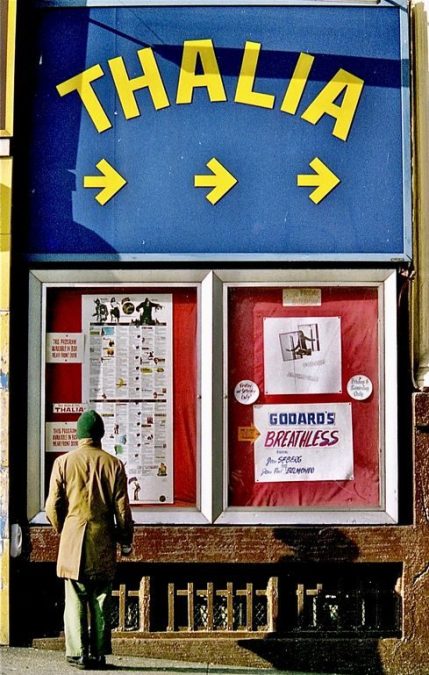
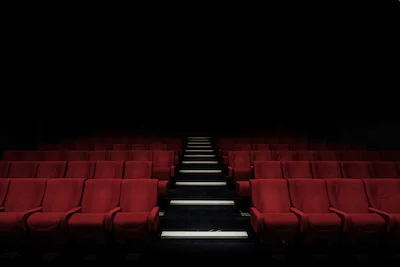
There used to be so many classic movie houses in New York City, and it’s heartbreaking to think they’re gone; movie houses that specialized in showing films from Hollywood’s silent, golden, and post-golden ages of cinema, and I visited them all. I can’t remember the names, but the ones I patronized were on East 12th? 13th? Off of Second Avenue, another on 57th near Broadway, still another close(ish) to Lincoln Center, the Film Forum on Houston (still there, yay!), and another on the east side in the mid-sixties, or seventies (it was a loooong time ago). 100th Street and broadway, briefly. Even the cinema on 107th and Broadway used to, occasionally, show old flicks. But the Thalia, kinda sorta in my upper west side neighborhood, was my favorite go-to, yes, because it was close, but also because it had a great line-up, was oddly shaped – long and narrow, the screen was higher than the seats, the floor was shaped like a squashed v, tilted down, and then up, if that makes sense, which was perfect for settling in to indulge my love for movies during many afternoons and evenings. Double features? My favorite. Themed months, days and nights? Perfect, I’m in, and who cares what’s going outside in the ‘real world’.
I just found this tidbit about the Thalia on Wiki, which fascinates me: ‘The Thalia Theater was built by the experienced theater architect Raymond Irrera, and his novice assistant, Ben Schlanger. Schlanger introduced numerous innovations, including the “reverse parabolic” design for the floor.’ Now, looking to understand whatever the heck a reverse parabolic floor is, I found this, from the NYT in 1993 (y’know, I love the internet, occasionally): ‘The Art Moderne styling of the interior — indirect lighting, streamlined walls, ribbed columns — is deft, but the notable feature is the dip in the middle of the auditorium. This was Schlanger’s idea, a complicated “parabolic reversed floor” he developed because the traditional live theater auditorium was not suited for viewing the flat movie screen. A patron could sit straight in her chair, instead of bending back or forward, in the front or back of the room. There were other improvements, especially a lighted, silver-leafed frame around the screen, which Schlanger felt reduced eyestrain.’ Who knew?!
At the glorious Thalia, I saw a series of Bergman films – which I loved, even while I’d been hesitant initially, because I’d seen Cries and Whispers in college, and ohmigawdess, what a movie!!! I went with my cousin, but she fell asleep mid-way through; I was outraged! Turns out, peeps, she fainted. She fainted. I was also introduced by the Thalia and other theatres to Preston Sturges, Joel McCrea (hubba hubba), films from Argentina, China, Germany, India, Spain, France, and Italy; the films of Billy Wilder, Hitchcock, Varda, Peckinpah, Kubrick, Litvak, Sirk, Kirosawa, Lubitsch, the later films of Bette Davis and Joan Crawford, the complete films of of Frank Capra, Astaire and Rogers dancing through the 1930s, Gary Cooper, Judy, Mickey, Dietrich, Grant, both Hepburns, Garbo, Jean Arthur – and on and on and on. And of course, whenever they showed Gable pictures, I was there, giggling and swooning, as women and girls had over the King since – well, since long before I was thought of, let alone born.
The Thalia, unlike the cinema near Lincoln Center, the others in the east village and elsewhere, was safe, safer – and I’m not sure why. Did they screen attendees, I wonder, was the neighborhood safer? Those options are doubtful in the extreme? Maybe that tilted floor made things feel less safe for creepers? And by safer, I mean that in the Thalia, which I inevitably visited alone, I was never flashed, or had a dude sit next to me and try something equally unwanted and nauseating, which mattered, improving my viewing experience by a lot, as you might imagine.
I love the movies. I love them. I resent the bad ones, although there are those that are so bad, they’re almost funny. I used to suffer mightily with insomnia, and – on those occasions I might stay up all night watching old films on TV. Once, around four a.m. in the morning, I stumbled across one of the most incredible pieces of dreck ever put on screen: Chubasco. Starring Susan Strasberg, and her then husband Christopher Jones (a James Dean wanna-be if I ever saw one) whom she divorced the year the film came out, the totally over-the-top opening scene features Strasberg running down the beach, screaming as she falls to her knees, ‘Chubasco!!’ (the title character’s name), and from there it gets sillier and worse. Chubasco is a troubled young man, and her dad doesn’t want him anywhere near his daughter, but ultimately, Chubasco redeems his loutish, lip-curling behavior by demonstrating a much-needed gift for spotting – tuna. That’s right folks, Chubasco wins the girl and his dad by spotting schools of tuna on the high seas. And, I’ve never forgotten it. What an utter piece of crap; it was so bad it made me laugh out loud.
Bergman films remain among the most powerful and memorable I have ever viewed. And, Sullivan’s Travels, with its message of the life-saving grace of comedy, is one I can watch over and over again, along with Sturges’ Palm Beach Story and The Lady Eve, and if you’ve never seen 1944’s The Miracle at Morgan’s Creek, I cannot recommend it highly enough. It’s not shown often on cable, which I assume, perhaps wrongly, is due to the story line: a ‘miraculous’ pregnancy in wartime, the result of a very wild night out before the boys get shipped overseas, but I have almost never laughed that hard before or since in my life. One of the many things I loved about living in NYC was having that experience, laughter or tears, collectively, in a packed theatre. Field of Dreams was one – Burt Lancaster’s final film, and what a great role – where the tears flowed freely; A Fish Called Wanda was a hoot and a holler, at least five hundred of us literally screaming with laughter, not an empty seat in the house. There is power in numbers. Movie popcorn is good, too. And then there was Arachnophobia, which I went to at a theatre off Union Square with two friends. Another fried who’d done good was in it, Kathy Kinney, and hey, I don’t love spiders but it’s a comedy, a dramady, a worst. I spent a good third of the film, me and about twenty-five percent of the rest of that packed house, either crawling under my seat, or screaming at the back of the house, refusing to look. Fun, fun.
The Thalia closed – unbelievably – in 1987, but the Lincoln Center Film Center lives on, as does the Houston Street Film Forum, and there’s cable TV’s TCM. Max, the artist formerly known as HBO, has a lot of old flicks in its archive, and quite frankly, although I do love the collective experience, being able to stay home, pop some popcorn, and hang with old friends (movies) is pretty great. I was so happy when a big movie theatre opened on 84th St. and Broadway; it has six screens currently, I think it used to have sixteen? A lot. I went there many times, including in 1993 to see the Michael Douglas film, Falling Down, which was the absolute perfect movie for the story I’m going to share with you now. I went alone, as per usual, and watched as forty or maybe fifty people dribbled into the large space, including the actor Lisa Pellikan and her then-husband, actor Bruce Davison. They sat about twenty rows ahead of where I was, in the middle middle – center seat in the middle right of the house, not too close, not too far from the screen. I felt as if I were being observed, and turned around to check out the sparsely peopled space. I noticed a white dude with glasses and a trench coat about twenty rows behind me, but hey, I ain’t Batgirl, maybe he wasn’t focusing on me, even if I did feel like I had a spotlight on the back of my head. Oh, come on, Moj, you’re being paranoid. Stop it.
Falling Down is a film about a man, played by Douglas, who loses it while stuck in traffic, abandons his car, going ‘postal’ to take general matters – the daily frustrations of human life, piled on top of several personal challenges (divorce, a restraining order by his ex-wife, losing his job) – into his own hands. This leads to a string of effective yet only semi-believable violent incidents, including his suicide by cop, a term that refers to criminals committing suicide, in essence, by forcing cops to shoot them to protect themselves or protect and save others. The film is not funny, though often shocking in such a way as to make you laugh, is deeply provocative, and was actually a real downer. And – during it – I too took matters into my own hands, causing the entire audience to jump in their seats right at a climatic moment. But how? Well, let me explain.
Just before the film began, Mr. Trench coat moved to sit one seat away from me in my row, and my hackles rose accordingly. I decided to confront him, saying, ‘Why did you move? I saw you sitting in the back, why move’. ‘Better view,’ he responded. ‘Better view? You have two people sitting in front of you! That’s a better view?’. ‘Better view,’ he repeated. Now, I could have moved, but why the fuck should I? This when I was no longer the young woman who, when I had penis after penis exposed to me in movie theatres, in the park, waiting for the bus, on buses, in windows as I passed by, etc., would leave the theatre, park, or bus stop. I was no longer the twenty-something from rural upstate New York, a girl/woman who thought she could assist men in being better humans by reasoning with them, using logic and pleas for decency when they harassed me on the street. Nope. That girl was long gone, dead and buried. But, I let it, and Mister Better View, go, his fucking choice, right?, remained in my carefully selected spot and continued chomping on my medium bucket with butter, because butter makes everything better, even instinctual please-Gawdess not-this-shit-again-moments in public spaces.
So, there we were, at a climatic point in the film when I realized Mr. Better View was not only staring at my profile, he was about to climax himself. Actually, no, that’s inaccurate; his undersized dick was as limp as a cooked piece of penne, and I did what any woman would do in that situation: I punched him in the chest. This is did with my right fist, striking out horizontally from my seat, screaming, ‘Get your dick back in your pants and get the fuck out of here’, which caused the general seat jump of my (our?) fellow moviegoers, and, as he ran up the aisle, trench coat flapping, attempting to zip his pants, I screamed after him, ‘And get some fucking therapy, you asshole!’, because it was important to show that I knew he needed help. Least I could do, right?
After the film ended, several of my fellow attendees asked what the hell happened; their initial impression was that I had lost my mind, and my shit. Nope, not at all. I gently corrected them, saying that I simply responded appropriately to inappropriate stimuli, and then, I went on my way home, feeling a little like – oh I don’t know – an old movie queen? No. And who knows what those women, and girls, had to go through to get where they got to, y’know? Sigh. Job well done, them, and me with Mr. Better View, regardless.
Yesterday I had no power until noon, and when I went to swim laps in the afternoon, the road to get to the recreation center and pool was closed in both directions in order for the county road crews to re-paint traffic lines; yesterday was also the fifth day my neighbor’s brother, who is house sitting while the nabe is away, has gone for a walk at five a.m., passing my house twice, coming and going, clearly threatening my very large dog, who actually manages to bark for twenty minutes straight ~ isn’t he amazing!?! These little things made for a frustrating day over all yesterday, but – despite having no power, I was able – thanks to my gas stove – to have my cuppa tea in the a.m., as well as make myself some oatmeal. So relax, already; your non-walking neighbor will be back soon, and the pool is open tomorrow. And, there was, it being summer, plenty of light by which to read, and read I did. I got 100pgs into Emma Clines The Guest, which is very good, a tad anxiety producing, and very much of this age. And, it’s excellent, a page turner, for which I am always grateful – no matter how much I wonder if a good book is allowing me to put off, and keeping me from, my own writing projects, which it is, but – c’mon, a girl has got to read, especially when the power is out! Cline’s previous novel, The Girls, based on the Manson cult and subsequent murders, is also excellent. I remember those murders, the trial, and shock of it all. What a weird time, and how anyone could have followed Charles Manson is beyond me, but – they did. Any port in a storm, I guess?
Moloka’i is another book I finished this week, and it’s stuck with me, a bruise on my heart, although ultimately it’s a book about love and beauty and family and more love. And, Hawaii. Written in 2003, how is it possible I never heard of it, especially as I was working as a librarian starting in 2004?? A friend recommended it, and again I am grateful, even if I was weeping (already?!) by page 80 (yes, already), for crying out loud. Alan Brennert, the author, won an Emmy for L.A. Law, a show I saw rarely, as I was going through one of my several Amish phases when it was on, as in no TV. But what a breadth of talent that shows. Even better, reading it made me decide that a trip to Hawaii is in order; why the heck not? Winter, ’23 – ’24, here I come. Go? Go.
The world, despite its many small challenges (for me), is so beautiful. Its’ summer, let’s get out in it.
*I was without power all night, and until about ten minutes ago after a crashing storm last evening; it fascinates me to be reminded (again) how dependent on power, and the internet, I am, we all are, and how lucky. Thank you, NYSEG crew…
This past weekend, listening to a political pod, which I do for fun (self-identified political nerd-gurl overthissaway), I actually learned something, a new term. When I learn something, anything, especially if it resonates as true, and profound or profoundly commonsensical, it makes me happy. I was making cilantro chutney, listening while rinsing and chopping and weeding out the bad bits, pausing occasionally to blend; the speakers were the pod’s host, Dahlia Lithwick, and her guest, Anatchenker Asorio, who is a communications expert. Their conversation was primarily concerned with the one-year anniversary of Dobbs, as well as the ways in which Democrats need to and can more successfully message about abortion, health care, and book bans, among other issues.
Anat’s use of the term system justification, which she went on to explain the meaning of, thrilled me; given definition, context, and examples, the term and its meaning felt both true and right. System justification. Here’s a short definition from 2012, published by the American Psychological Association, from a paper authored by J.T. Jost and J. van der Toom: ‘according to system justification theory, people are motivated (to varying degrees depending upon situational and dispositional factors) to defend, bolster, and justify prevailing social, economic, and political arrangements (i.e., the status quo). System justification motivation is theorized to manifest itself in a number of different ways (e.g., in terms of stereotyping, ideology, attribution), to occur implicitly (i.e., non-consciously) as well as explicitly, and to serve underlying epistemic, existential, and relational needs.’
Anat also explained in the interview that (surprise!), conservatives are much more likely to exhibit system justification as they are – understandably – attached to institutionalized, systemic, and historic norms that benefit their position, or their perceived position, in the hierarchy. Ahem, at the top of the hierarchy, that is. An example: the manner in which many Republicans minimize the riots on January 6th of 2020, but have maximized the protests by people of color and allies after the death of George Floyd while in police custody. One riot is seen as understandable, or at least excusable, not a big deal, blowing off steam, a few bad eggs; the other as dangerous civil unrest at its worst. People who practice system justification look away from injustices baked into the system and the effects thereof because a. it doesn’t impact their lives; they don’t know anyone in the criminal justice system; they live in bubbles of whiteness and/or privilege, b. it supports their existing biases and prejudices; they can’t understand why ‘these people’ don’t simply comply with the cops when pulled over; have never, ever been stopped regularly for ‘driving while white’, or in any way targeted by law enforcement including in their homes, c. everything will be fine, there is order to the universe, things’ll be okay; people just need to calm down, the man/woman/child the police just murdered was a well-known thief or was doing something provocative/stupid/why was he/she even there; no one I know personally has ever faced life threatening or any other kind of major impact as a result of our funny/just fooling around/kid stuff/typical/boys will be boys/ high-jinks/misdemeanors.
Why change the system when it’s working as it was designed, benefiting those occupying the space at the top, who are overwhelmingly free of the consequences of that system, and even when consequences hit the very privileged, they very are very often minimized by the system. A prime example, one that immediately sprang to my mind while listening to the podcast, was the sentencing of convicted rapist Brock Turner. Turner, as you may recall, was caught by two exchange students raping an unconscious woman next to a dumpster on the campus of Stanford University. The judge, a Stanford grad one could reasonably assume was a teensy bit sympathetic to a ranked collegiate swimmer at Stanford, was later recalled; this recall came about in reaction to his having adopted the minimum sentence in the case. In his pre-sentencing statement, the judge does mention the victim, Jane Doe but spends most of his time justifying his choice to be lenient (and I cannot recommend Jane Doe’s/Chanel Miller’s memoir, Know My Name, highly enough, a book that is so, sooo much more than a memoir). The judge found that in his personal opinion Brock Turner was a good guy, was credibly a decent chap, basically (I will link his entire ruling at the end of this blog post) a guy of good character who had a little too much to drink, but still was a smart, personable young man who had never been arrested for any crime previously, and whose elementary school chum, a girl, vouched for him so – let’s not get carried away, eh? This despite the fact that, unlike in so many rape cases, the vast majority of which never see the inside of a courtroom, there were witnesses, his victim went immediately to the police where the photographic evidence clearly depicted a violent assault, not boozy sex gone wrong, and so much more. Yes, Turner is a registered sex offender, a status he’ll keep for life, and he now goes as Allen Turner because – infamous, and, hey, it sucks to be you, dude. Try not raping, try not being so rapey. And try, Judge Persky, try not to practice systemic justification by giving an astonishingly light sentence to a young white male who attended your alma mater, and while there, as a freshman, violently assaulted a vulnerable young woman.
System justification asks rape victims why they were out in public after dark, or drinking, instead of asking why men rape, or why so many rapes are unreported and so few reported rapes lead to convictions. System justification tells us George Floyd was trying to pass off a counterfeit bill, that Sandra Bland was difficult and ‘non-compliant’ with her arresting officer, that Tamir Rice was carrying what looked like a gun and thus, bang bang you’re dead, you’re all dead. Tamir Rice would’ve been nineteen years old this week, July 25th; he was twelve when he was killed.
We must stop justifying the ways in which the system treats black and brown human beings, treats victims of sexual assault, instead asking how do we create and maintain police departments and investigative units wherein explicit and implicit biases are deeply understood and fought tooth and nail, where de-escalation, and reconciliation, are taught, required, and are the standard whatever the alleged crime, whoever is accused of committing it, in whatever neighborhood. Instead of perpetuating a system that denies the majority of rape victims the support and justice they need and deserve, a system that often blames them for their own sexual assaults, let’s work to identify and prosecute rapists, raise our boys and girls to understand consent, while raising boys who won’t rape. Let’s start by testing the hundreds of thousands of rape kits that languish in storage all over this country. Let’s talk about power, which is what this is all about, who has it, and who doesn’t, and who doesn’t want to give it up, no matter how many Americans – male and female – are sexually assaulted, no matter how many Americans of color die as a result of traffic stops – traffic stops, for playing in a park, with a toy gun, for having too much to drink on an empty stomach at a party also attended by a rapist.
Don’t justify the system, challenge it, change it.
*This is an excerpt from a novella I have began ages ago, part of a series of fictionalized versions of the lives of teachers I had in school as a child, observed there, and around the village, and heard about from both my parents – during my small town, rural upbringing. Thanks for reading.
When Evaline was born, in January of 1902, she often thought if only she had been born a boy; then, she believed her life would have been an easier and happier one, closer to her actual desires and aspirations. She had been smarter than the boys in her class, in the one room schoolhouse where she started her education, and later at the small brick and limestone high school she attended, only blocks from her family’s business. She had known all at once as a young girl, after a visit to the doctor needing stitches in her knee, that medicine was where her interest lay; she been climbing a tree on a dare, and a branch had broken under even her slight six-year-old weight; that dare would change her life as a child, set her on a course of study she had hopes of fulfilling beyond her family, and town. She was fascinated, watching the doctor swab and draw and knit her skin together with the special needle and thread, and later was equally absorbed by the clarity of the science behind it all; the idea of finding solutions to problems by making right what had gone wrong in the body due to infection, disease, habit, or injury, was terribly exciting. And she saw how the doctor was treated, so deferentially, by her mother, and by his nurse, all crisp and clean in white. She’d never seen her mother act quite that way before, and as for the nurse – she was specially trained, her mother said so, to assist the doctor. The bottles and vials, the shining steel bowls and white porcelain, the glass front gleaming white metal cabinet filled with bottles in green and brown as well as the well-crafted tools of the medical trade – all these enthralled her, as did the rolls of cotton and gauze. What a wonderful world to work in, moving confidently about in a white coat, wearing a stethoscope, shaking thermometers, drawing blood.
As she grew she read about doctors and nurses in books taken from the library, as well as in a few magazines borrowed from the rack in her parent’s store. She looked carefully, riveted, at each detail of the layers of human anatomy, sketched out in multiple colors laid on thin plastic – skin, muscles, organs, bones – in the local library and again in science classes at the high school. Lovely. Everything fit, everything worked together, in silent, companionable concert, until it didn’t, and then, in steps the doctor, all-knowing, all-seeing; she alone knows how to fix, to cure.
Her older sister, Lavinia, the quiet one (she would never climb a tree, no matter how you begged her to join in the fun), was also very bright and had done well in school. She was, at fifteen, already planning on going on to Albany Normal College for Teachers; she wanted to work with children, marry and have a family of her own. She loved baby-sitting, making extra money throughout her teens by helping neighbors out. Evaline, at thirteen, thought her sister was a fool; teaching, especially in the younger grades, was not much more than babysitting in her eyes; she didn’t care for children, refusing to watch the neighbors’ kids no matter how much money, or how many treats, were offered, maddening her mother and father, who ran a successful grocery in the prosperous town of Catskill, N.Y., and who ideally wanted their girls to settle, and stay close by. It wasn’t that they needed the money, even after moving out of the apartment over the business into a house on Orchard Street, but it showed a willful stubbornness in their second daughter, an unfeminine lack of interest in being of help, of which they did not approve. If only, they often thought, they had been able to have a boy. Their third and youngest daughter, born seven years after Evaline, had been their last chance at having a son, a son to inherit the business and carry the family name. They named this late child Georgina, for if she had been born the hoped for boy she would have been George, George Junior. Georgina was not as good in school as her sisters, although Lavinia, the future teacher, spent hours playing at instructing her in the basics, first in their spacious apartment above the store, and later sitting at the dining room in their new home. Georgina was boring and not very bright, in Evaline’s opinion; Georgina would make someone a fine wife one day.
Evaline waited until the Thanksgiving holiday prior to her high school graduation to tell her parents of her plan to study medicine. She wanted to be a Doctor, she told them proudly, a surgeon perhaps, working with the most interesting, challenging patients, dealing perhaps with cancer, about which so much was as yet unknown in 1919, and other cases, too, profound injuries fractures, tumors, ruptures, strokes. We need doctors, she said, the war showed us that, proved it, and we need new researchers; the entire field of medicine, she told them, was filled with possibilities. Later she would cringe at the memory of her joyful confidence that day, announcing her plans.
Evaline had been at the top of her class every year, receiving perfect marks in biology and chemistry. Her teacher for Chemistry, Mr. Reed, told her, not entirely without disapproval, that she was the brightest student he had ever had, by far. She replied, simply, with a slight smile, ‘I know’, watching his thin-lipped mouth tighten with displeasure as she had seen it tighten every year she excelled in his class, especially that first year, when in labs she out-performed her male peers despite being given a seat in the back, and all the worst equipment. Why, he’d once asked her, was she even taking advanced science her first year in high school? Because I want to learn, and I love it, don’t you? That had shut him up. She wasn’t sure if she disliked Mr. Reed or if she appreciated him for all he had taught her, even if it felt, at times, that it was against his will. Sometimes she wished her life were less complicated, that she were more easily satisfied like her sister Lavvy, whom she loved so much and yet, still, somewhat despised.
Evaline had a beau, in the upper grades, a nice boy from a good local family with less ambitious plans for his life than hers. His grandparents were local farmers, but he was a village boy; his father had begun a successful farm supply store, and they had another new house on a similar tree-lined block in town. She’d liked his look and selected him, once, at a school formal, when a ‘Sadie Hawkin’s’ dance was played. He’d been stiff and red-faced, but she knew he was smart, and she might as well show everyone, including Mr. Reed in his role as chaperone, that she could waltz with the best of them. Before the next formal was held at their school, she invited him as her date (he was very shy, which she both liked and thought was stupid and a waste of time), telling him where he to pick her up, and at what time. His parents were members of her parents’ church, a plus, and Bill was one of their four sons, all of whom were known as hard workers, and good with their heads as well as their hands. Evie didn’t think she would marry, medicine being as demanding as it was, but she also believed it was important, especially given her parents antiquated outlook, to have a contingency plan.
They originally met over the flame of a simple test in Mr. Reed’s Sophomore level chemistry class, but there was no flame in her for him, not really. He was nice, deferring to her in all the steps that needed to be done to make the required chemical reaction occur. She couldn’t imagine ever marrying him, or anyone, ever – and definitely not before she had finished medical school. Still, it was nice to have someone in her life, someone to walk out with, to talk to after church or at church dinners and dances, even if her parents made too much of it, encouraging her in her so-called interest in that ‘nice young man’.
Her parents were not happy that Thanksgiving, hearing of her grand plans; they did not agree with Evie that medical school was the right place for her, a good future, or even possible. Girls and women did not become doctors, they said; this was, to them, a known fact, an absolute. Their daughter would not be a doctor; the idea was ridiculous, almost repulsive; she saw the look that passed between them, as if she had released a bad, filthy smell into their well-appointed living room. Evaline told them things had changed, railing at them, frustrated and angry, said that they were being old-fashioned, that Marie Curie was a scientist, a Nobel prize-winner and wife, from years and years and years ago, and that girls could do whatever boys did and even possibly do it better. They told her to calm down, to behave, and that they would speak of it again, after some consideration. Her parent’s always deliberated things slowly, moving in a block, although her father and his opinions, Evaline knew this, ruled.