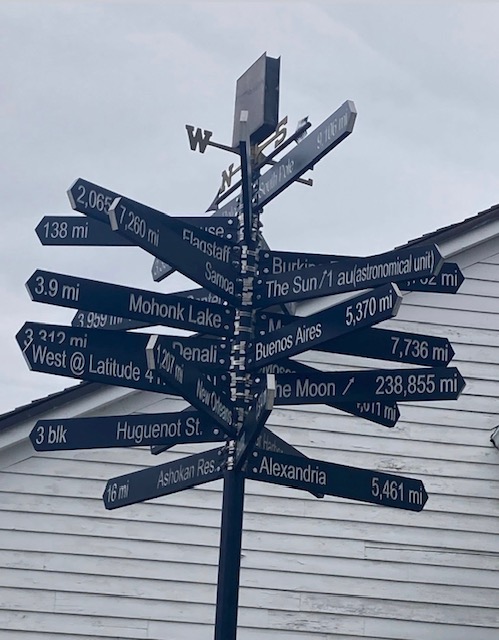
*Jack Kerouac, from On the Road, which I must’ve read. I must have? Maybe. I have zero recollection and am, quite frankly, not enamored of the 1950s white male experience, but this – especially as we start a new circle round the sun, was attractive, intriguing. Maybe I’ll have to pick up that book again. So many books, so little time… a good problem to have. Another Kerouac quote I like, “Better to sleep in an uncomfortable bed free, than sleep in a comfortable bed unfree.” Always.
*This is from NPR, under the headline: Fewer characters on TV had abortions this year — and more stories reinforced shame. ARGH. Written by Neda Ulaby. I did not know such a report (Annual Abortion Onscreen, linked below in the article) exists, but I am glad it does. Abortion is healthcare. Abortion saves lives. The idea that women should be ashamed or traumatized by abortion is bullshit, is sexism, is the patriarchy hijacking the true narratives by and of women and girls obtaining necessary healthcare. Are some women traumatized by abortion? Sure. Especially within conservative cultures, religions and in places where getting an abortion might mean they neglect your needed healthcare until it’s either too late to save your life, or the fetus – wanted or not – or your reproductive organs. Grrrrrrrrrr…. the article:
Storylines about abortion and conversations about it showed up on television 65 times this year, on prestigious dramas like The Pitt and Call the Midwife, on reality shows such as W.A.G.s to Riches and Love is Blind and on lowbrow animated comedies like Family Guy and South Park. That’s about the same as last year. In 2024, TV shows featured 66 such plot lines.
But in the past few years, there’s been a significant drop in the number of characters who actually went through with an abortion. 37% obtained an abortion in 2025, a 14% decline since 2023.
That’s according to the annual Abortion Onscreen report. It comes from Advancing New Standards in Reproductive Health, a research program on abortion and reproductive health based at the University of California San Francisco.
“I think there still is a lot of stigma, even in allegedly liberal Hollywood,” says researcher Steph Herold. She says the report, which has come out for about a decade, reflects a profound lack of accurate representation of abortion use in America. For example, she points to research showing that about 60% of real life Americans who seek an abortion deal with some sort of barrier.
“But only about a third of people who are characters on screen face any kind of barrier to abortion,” Herold said. “Whether it was not being able to come up with the cost of the abortion, not having somebody to watch their kids or cover for them at work, having to deal with clinics that are miles away, or in other states having insurance that wouldn’t cover the cost.” Most TV shows in 2025 depicting women struggling to get abortions focused on legal obstacles in the past and present.
On TV, 80% of characters seeking abortions are upper or middle class, but in real life, most abortion patients struggle to make ends meet. “This [disparity] obscures the role that poverty plays in obstructing access to abortion, and perhaps explains why we so rarely see plotlines in which characters wrestle with financial barriers to abortion access,” the study says.
This year, a teenager on The Pitt sought abortion pills to end her pregnancy — one of only three stories depicting medication abortion out of 65 plotlines about abortion this year. That’s another disparity between representation on-screen and real-world numbers: research shows that abortion pills account for the majority of abortions in the U.S. Another difference: only 8% of people seeking abortion on TV are parents. In real life, most abortion patients have at least one child.
It is unrealistic, says Herold, to expect TV to perfectly reflect current abortion use in the U.S., but she said she was disappointed by certain trends. Fewer characters this year received emotional support around their abortions, and more shows, she said, including Chicago Med, 1923, Breathless and Secrets We Keep featured plotlines that emphasized shame and stigma around abortions, especially because of religion. These storylines, the report says, “both obscure the diversity of religious observance among people having abortions, portraying religious patients as exclusively Christian, and also only associating religion with prohibiting abortion, instead of being a meaningful or supportive part of someone’s abortion decision-making and experience.”
But even though abortion has long been a hot-button political issue, Herold says millions of Americans have had some sort of experience with abortions. “Whether it’s having one themselves or helping a daughter or a friend,” she said, adding that stories that reflect a diversity of abortion experiences will be familiar to many viewers.
One bright spot, she added, was that television is doing a better job of reflecting the racial realities of abortion. A slight majority of characters in abortion plot lines are people of color — and although they are by far the majority of abortion seekers in real life, this marks a notable improvement from a decade ago, when TV shows more often portrayed woman seeking abortion as wealthy and white.
From Greg Iles’s novel Southern Man: I watched in disbelief as businessmen voted for a repeat bankrupt, laborers for a boss infamous for stiffing his workers, evangelicals for a se- rial adulterer, women for an admitted sexual assaulter, patriots for a draft dodger who would sell his country’s secrets for trivial gain, educated men for an ignoramus. But they did so with fierce gladness in their hearts. Because what their chosen one had done was open Pandora’s box – yes, the old one, filled with the ancient calamities of race hatred and rage and cruelty and bloodlust and infinite greed – and tell them that these things were the remedy for all their grievances, that all their anger was justified, and most important: None of what ailed them was their own fault – or ever had been.
They took to that like infants to a honeyed tit.
I haven’t ever read one of Greg Iles’s books, but I may have to now, because the statement above is so right on, I could not love it more. You-Know-Who (Orange Menace) gives permission to racists, to sexists, to homophobes and transphobes, to those who hate Muslims, to xenophobes or anyone who is not white, Christian, and – centrally – like them. He gives permission to immature boy-ohs who have lived their entire lives imagining they’re on the top of the heap ‘alphas’ because they were born American, white, and male. He gives permission to our worst selves and instincts.
He gives permissiand to hate experts and expertise, to deny science and election results, the news, to look down on and belittle female reporters, overweight people, the disabled, the poor and anyone who does not superficially fit in his ‘nice countries filled with blonds’ box.
Iles, who died in 2025, was born and raised – and went to college – in Mississippi, so I’m imagining he knows of what, and who, he speaks re: southern men. Southern Man was his final novel, published in 2024.
I have to admit, I don’t read Iles – or Grisham or Turow or Sandford or Patterson or…. a whole host of male writers of mystery and thriller because inevitably it’s women getting killed, and brilliant but troubled (yet still impossible for women to resist sexually) male detectives, ex-detectives, police or whatevers solving the insolvable. No thank you. BO-ring! I tried Sandford briefly when I was seeing a man who loved his stuff, but omg, no. But. Maybe, maybe I’ll pick up Southern Man and see what I see… Maybe.
In the mean time, let’s defeat the small-minded minority of us who are racists, misogynists, transphobes and homophobes, xenophobes and those who hate both Muslims and Jews, as well as hating the poor, refugees, migrants and anyone who is not like them. Yes, let’s.
*I didn’t know or had forgot that December 10th, now past, was International Human Rights Day. Seems quaint, almost, to have such a day in such a messy, unfair, dangerous and conflicted – conflict ridden – world. Yet – if we don’t declare our values, and what we aspire to be and do, aren’t we the poorer for it? If we don’t seek personally, and collectively to be and do better – stating goals, and hopes and dreams – we’re failing a basic test of humanity, which is to aspire, to improve, to grow and to learn.
The following is from one of my many follows in Social Media, A Mighty Girl, which you can check out at https://www.amightygirl.com
December 10th marks International Human Rights Day, commemorating the adoption of the Universal Declaration of Human Rights in 1948. But this year, the Trump administration is fundamentally rewriting America’s long-standing understanding of human rights — erasing protections for the vulnerable while rebranding far-right priorities as human rights.
For nearly 50 years, the State Department’s Country Reports on Human Rights Practices have documented abuses in countries around the world. Starting with a drastically revised version released in August, followed by new directives released last month for future reports, the Trump administration has removed entire categories of abuses including women’s rights violations, LGBTQ+ persecution, racial and ethnic discrimination, government corruption, harsh prison conditions, political prisoner abuse, and freedom of assembly restrictions. At the same time, the administration instructed U.S. diplomats worldwide to begin reporting on countries’ diversity policies, abortion access laws, gender-affirming care, migration facilitation, and European hate speech laws, labeling these as “human rights infringements.”
This represents an unprecedented politicization of what had been a relatively consistent and credible assessment of global human rights conditions used by Congress, courts, asylum seekers, and human rights defenders worldwide. As Sarah Yager of Human Rights Watch warned: “The State Department’s human rights report has long provided a strong, if too frequently ignored, basis for US support for the global human rights movement. The Trump administration has now turned much of the report into a weapon that makes autocrats seem more palatable and minimizes the human rights abuses happening in those places.”
The changes come through official guidance sent to all U.S. embassies and consulates, instructing diplomats to “streamline” reports by stripping them down to only what is legally required and aligning them with Trump’s executive orders rather than international human rights standards. The administration frames its approach around “natural rights” that are “given to us by God, our creator” — a theological reimagining that conveniently lets the administration decide which rights are real. Unsurprisingly, the ones that make the cut align perfectly with far-right Christian political priorities, while protections for women, LGBTQ+ people, and minorities are discarded.
This marks an abandonment of the universal human rights framework the United States helped build after World War II, when Eleanor Roosevelt chaired the committee that drafted the Universal Declaration of Human Rights. As Amanda Klasing of Amnesty International USA put it: “This shift away from universal human rights towards elusive and undefined ‘natural rights’ will cause real harm to women, LGBTQ+ people, immigrants, religious minorities, and other marginalized groups around the world.”
The administration didn’t stop at rewriting the reports — it also withdrew the United States from the UN’s Universal Periodic Review in August 2025, becoming the first country in history to refuse participation in this peer review process that all 193 UN member states are required to undergo. Even when Trump withdrew from the Human Rights Council during his first term in 2018, the U.S. still participated in the review. Now, America’s seat sits empty. As Jamil Dakwar of the ACLU stated: “This move is a chilling attempt to evade accountability, setting a terrible precedent that would only embolden dictators and autocrats.”
The August 2025 report revealed how these changes play out in practice — systematically whitewashing abuses by Trump allies while amplifying criticism of adversaries. The Israel section was slashed by over 80%, with no mention of mass displacement in Gaza, the use of starvation as a weapon of war, or the more than 61,000 deaths (*12/25 numbers, that have only increased) that human rights experts say amount to war crimes and acts of genocide. El Salvador, which the U.S. paid $6 million to house deportees in a notorious mega-prison where torture and extrajudicial killings have been documented, was assessed to have seen “no credible reports of significant human rights abuses.” Hungary’s report struck out the corruption section entirely and removed documentation of Viktor Orbán’s crackdown on civil society and LGBTQ+ people; Trump has called the autocrat, now in his 15th year in power, “a great man and a great leader.”
The pattern is unmistakable. Last month, Trump welcomed Saudi Crown Prince Mohammed bin Salman to the White House and scolded a reporter who asked about the murder and dismemberment of journalist Jamal Khashoggi, saying “You don’t have to embarrass our guest by asking a question like that” — despite the CIA’s conclusion that the crown prince personally approved the killing. The administration has deepened ties with authoritarian leaders while State Department reports now claim the UK, France, and Germany have “backslid” on human rights due to their hate speech laws.
The consequences extend far beyond diplomatic messaging. Asylum courts rely on these reports to assess whether individuals can safely return to their home countries; with entire categories of abuse erased and friendly autocrats whitewashed, refugees face deportation to places where they may be tortured or killed. Congress uses these reports for decisions about foreign aid and arms sales. Human rights defenders in repressive countries have relied on U.S. documentation to lend credibility to their cause. All of this is now compromised. As Phil Lynch, executive director of the International Service for Human Rights, summed it up: “Under Trump, the U.S. is rapidly becoming a human rights pariah.”
On this Human Rights Day, the United States is no longer the imperfect but committed defender of universal rights it once claimed to be. It has become the first country in history to rewrite human rights to mean their opposite and to refuse international scrutiny of its own increasingly questionable record. The message to autocrats worldwide is clear: America is not just looking away — the Trump administration is cheering you on.
She was my mother’s eldest sister, and her favorite, named after their mother, Pauline. She had been – it was said – a standout basketball player at Waterville High, which astonished me as a kid. Really? Aunt Polly? She was also a good student, but then all of the Byrnes’ 12 children did well in school. All? Mostly all. She was born in 1913; my mother 15 years later in 1928. For this reason, Polly helped raise my mother, developing a bond between them that lasted all their lives.
Polly want off to Albany Normal College, where she studied to be a teacher; a Latin professor she loved would – years later – inspire my mother to take and teach Latin herself, Julia something. I can’t remember her name, only that she swept my mother away into a deep love of language and academia, as she had, years before, my aunt. She went to Tennessee after college, to nanny a child, a family? I don’t know those details but I do know that while there she met and fell in love with my Uncle Hubert. He was a good old boy originally from Nashville, but they settled in Memphis.
She played bridge at the masters’ level and wore cat’s eye glasses like a lot of women did in the ’50s and ’60s, and shirts that matched her husbands in pattern and style. People – couples – did that then, much more than they do now.
Sometime when I was a child, or even perhaps before I was born, there was a terrible automobile accident; Aunt Polly was nearly killed; her eyesight, balance and depth perception never returned, but she lived. I know this because my mother spoke of it, spoke of why her sister didn’t drive, why her glasses were so thick, why she covered up more, even in summer, why she had that scar on her neck, why each step she took it was as if her foot, hovering there momentarily, was looking for a safe place to land – because it was, she was.
Whatever her physical challenges, she was adored by my mother, and by her husband. She had 2 children, Paul and Mary, but everyone knew Mary was adopted, even if it was never spoken of, out-loud, in smoky rooms where little pitchers like myself had big ears.
Whatever her challenges, she was one of the most loving people I ever knew, unfailingly kind to me, always, taking the part of the ‘neglected middle child’ (her words), even while she was the eldest girl, even while I knew my mother – having named her own eldest daughter after her sister, and their mother – would have been fine if aunt Polly had ignored me completely. It meant something, Aunt Polly coming occasionally to my defense, it was a check on my mother’s spite. It was important to my mother that others not, ever, see the side of her personality she showed me all the time, especially those she loved, and needed to think well of her, like her beloved older sister.
Hubert, who was born 9 years before his wife, died 9 years before she did, almost to the day, in 1989. In her last decade, Aunt Polly remained as soft and kind as she had ever been, but her mind began to fail, as well as what sight had been left to her. Hubert had kept her going, grounded, protected, guided, needed, loved. She lived for a few years in the Catskills near my mother, in a private assisted living situation, then was moved back down south close to her daughter, but the details escape me, although I know there were issues, complications, trouble – all the stuff of ‘end of life’, when letting go. My mother outlived her elder, favorite sister by another gap of 9 years, also almost to the day, her own mind having slipped into darkness, her own steps and forward movement hampered by doubt, and fear.