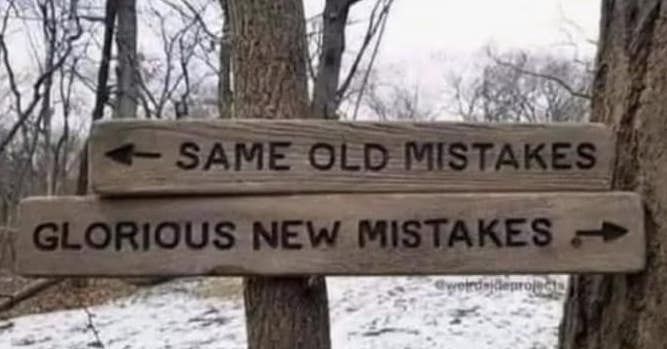
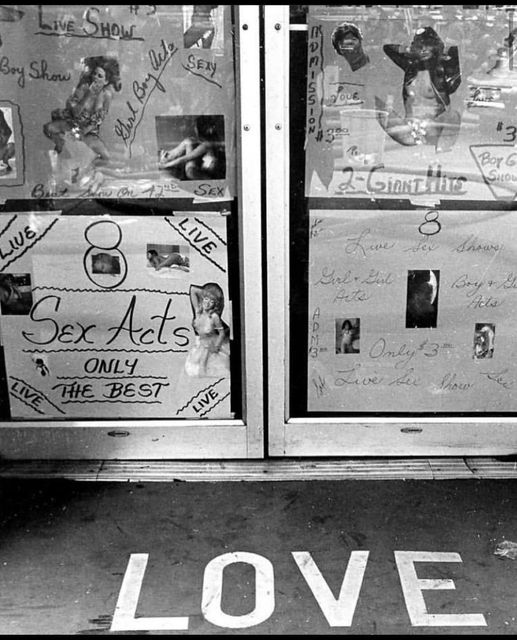
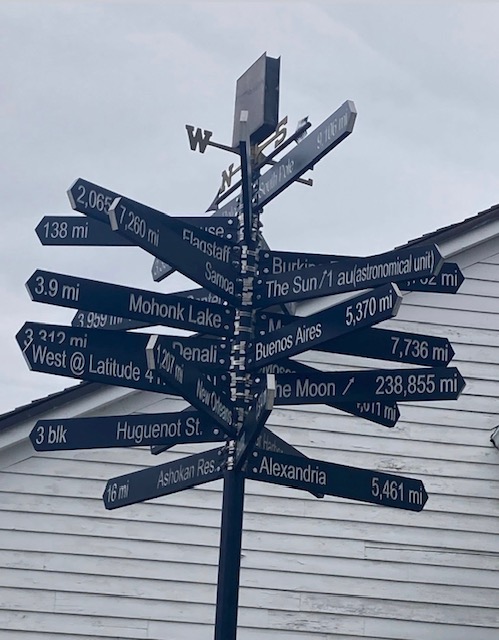
Another door opens. Another year ends, another begins. What will this new year bring? We can only guess. Curiosity is a good thing, nothing is for sure, after all, even that we’ll make it to next year’s New Year’s Eve…What, after all, is behind door number one? Door number two? Door number three? And which path, which door, which thoughts and habits and feelings will you choose? The older I get, the less I realize I know about anything. This fills me with glee, actually, although I generally believe ignorance is not bliss – but this understanding is different;. it is humility in light of life’s great mysteries, which are many, and fragrant. Eventually our choices narrow. Or not, depending on the level of our courage.
This year, every year and every day of it, may the whole world know peace, and healing. Which door will you take? Which direction? Which city, plain, town or hamlet?
Which color will you wear, or be? What direction will you take? Or will you play possum, staying right where you are, supine, barely breathing? Will you jump? Fall? Stand your ground? Have a ball? Fingers x’ed you enjoy every minute…HNY, peeps. <3
*another poem from Lucille Clifton – an upstate NY poet andso much more whose work I have published here previously; that I wasn’t familiar with this poem is astonishing but there y’go. First seen in print in Good Woman: Poems anda Memoir 1969-1980More about Clifton below…
i am running into a new year.
and the old years blow back
like a wind
that i catch in my hair
like strong fingers like
all my old promises and
it will be hard to let go
of what i said to myself
about myself
when i was sixteen and
twenty-six and thirty-six
even thirty-six but
i am running into a new year
and i beg what i love and
i leave to forgive me
*From the Poetry Foundation: Lucille Clifton was born in 1936 in DePew, Erie County, and grew up in Buffalo. She studied at Howard University before transferring to SUNY Fredonia, near her hometown.
She was discovered as a poet by Langston Hughes (via Ishmael Reed, who shared her poems), and Hughes published Clifton’s poetry in his highly influential anthology, The Poetry of the Negro (1970). In 1988, Clifton became the first author to have two books of poetry named finalists for one year’s Pulitzer Prize.
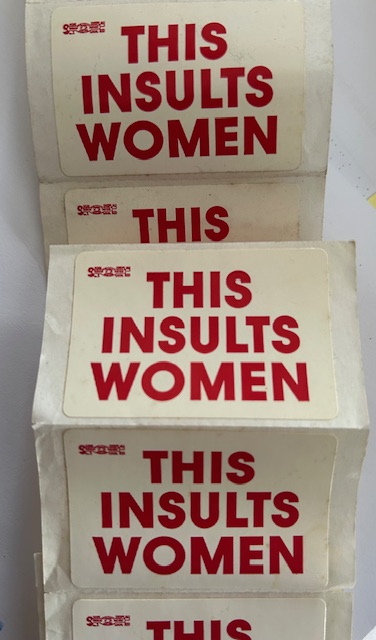
*And in front of, from the internet, and I am so glad I found it, not only because I can share it with you but because RIGHT ON, and once more (one thousand times more) for those in the back …and once again from me, a worthy quote from psychiatrist Robert spritzer, ‘Heterosexuality isn’t ‘normal’, it’s simply more common.’ I’ll add to that that homosexuality or bi-sexuality or asexuality aren’t in any way abnormal – they’re simply just not as common as heterosexuality. Onward… From Josh Weed, who is the same Josh Weed you can find and follow on Substack. I mean, I’m 98% sure it’s the same dude…
“I am a gay man who was raised in a heteronormative world. A part of this world I have always been baffled by is modesty culture. The main premise of ‘modesty’ culture is that women need to dress in a way that doesn’t provoke a sexual response in men. Which is insane. I think it is absolutely crazy that a man can look at a woman and say ‘I think you should wear something else because seeing your skin makes me feel aroused. And that arousal is strong and I haven’t learned how to appropriately manage it. So please change your clothes.
This is BONKERS. Especially when men then start to claim that a woman is worth more if they dress a certain way. As if covering flesh somehow earns a woman value, all because it doesn’t evoke a sexual response in men. And then, if a woman DOESN’T do this? Well, now a man has the right to chastise a woman, call her names, say she is slutty and wicked. All because he is having a sexual response. Newsflash: women’s worth is STATIC. It is inviolable. It doesn’t change with what she does or doesn’t wear. It doesn’t change with sex.”
And a man’s sexuality is HIS OWN RESPONSIBILITY. Wanna known I know this? It’s because in my whole life I have never told another man how to dress even though a man’s body arouses me. I have never told a man he should put his shirt on on a hot daywhen he is on a summer run. I have never demanded modesty from a guy. I have never expected men to stop wearing loose basketball shorts just because they might be revealing to me and turn me on.
In fact, I have had, my entire life, been in situations where men take all their clothes off right in front of me (locker rooms, etc.). And guess what? Even though I have felt aroused, I have never EVER blamed another man for that arousal. My arousal is about ME. Not him” Weed emphasized. “I have never assaulted another man for this. I have never raped another man for this. I have never claimed a man was ‘asking for it’ A person’s worth is static, inviolable, and begins the day they are born as a baby until the day they die. Clothes do not change this.
And a man’s arousal is his own damn responsibility. It is NOT the responsibility of the body that evokes that arousal. Ever. Straight men blaming women for their own sexual responses degrades women. And it disempowers men. It excuses them from taking ownership of their own bodies. And it allows them to build fury towards what they covet. It’s dangerous. It leads to assault. It IS rape culture. My four daughters deserve better than this. They deserve to be safe. They deserve to wear what feels good to them on a summer day.
I didn’t know him well; we weren’t friends. He was born when I was a teenager and while I knew his parental units, they were a decade older than I was, still are; he was a baby bump I saw, a toddler who ran around dinners, poolside parties, and picnics much more than he was ever, to me, a living, breathing adult human. Whenever I ran into him as an adult, which was rarely, we inevitably spent time catching up, but he would rarely meet my eyes. He died in November, too young, only 50, and while it was not a surprise, it surprised me, it angered me, it gave me another chance to remember those days and wonder what could have saved him. Certainly not I.
We cannot save people, we can only love them. I didn’t know him well enough to love him, but I once knew his father and mother very well, and I knew a lot about this man, their son, because of those relationships; they shared with me – his dad especially – details of their lives and the life of their now dead son, and I want to get it out of me, out of my head, and out of my heart which aches for him because I know these specific, heart-punching facts.
The marriage was already over, but – why not have another child, maybe that’ll patch things up, make us make it work. This was a bad idea, he knew it at the time, the dad, but he wanted to be a good Catholic. This decision was one that Brendan suffered for; how could anyone unwanted, used as glue, not suffer for it? His brother, several years older, was a wanted child, born into a new marriage and more hopeful relationship; timing is everything. His older brother was smart, athletic, popular, slim and charismatic; he looked like, even sounded like, a much more attractive version of his dad.
Brendan, however, was born into the last gasps of the marriage, even if no one would say it aloud; he was born into chaos and mess. His dad already knew he’d made a terrible mistake, marrying the first girlfriend he’d ever had. He was a virgin, so was she. So what, but he’d come to realize that he was trapped, for, she, Brendan’s mother, would never give him a divorce. She was a devout and committed Catholic, stubborn, and a shopaholic. She only ever read magazines. She was clumsy. Her habits had come to disgust him. He took to drink; it was the 70s.
Brendan was smart, and sensitive. He was a good student, but lacked the easy charm and wit of his sibling; he even looked like his mother’s side of the family, was a lumpy, chunky kid, feeling the disdain of his father sharply, an extension of his dad’s ever growing dislike of and animus toward the boy’s mother, his very clunky, clumsy Catholic wife. Brendan was her child, her baby. The older boy was his dad’s. Fine.
Sometime in the early 1980s Brendan was molested numerous times by an older boy, a teenager. His father told me this a decade or more later in the timeline. Brendan’s dad, my former friend for this and many other reasons, was drinking heavily during this period, before getting sober and moving out, finally asking for the divorce he’d long wanted. He spoke sharply to the teenager who had abused his younger son, but did not insist on therapy, or any other form of intervention for his child. He was, had been for years, fcuking everything that moved, traveling into PA for his Master’s and an eventual PHD., determinedly skirt chasing even after he finally got sober, living out the teenaged fun years he’d never had, adventures galore! If his youngest child was suffering, well, aren’t we all? He’ll be fine.
Only he wasn’t. Brendan was an intelligent, empathetic guy, obtaining a Bachelors at a SUNY college not far from our mutual hometown, but he was also a depressive, as are many men and women who are sexually abused as children. His marriage, such a hopeful sign, broke up not too long after it started; he struggled to see his young daughter, struggled too to find work that would accommodate his increasing number of illnesses, mood swings, and bouts of depression. A serious case of the blues landed him in a psych unit in his early 30s where lithium was prescribed. It helped him somewhat, but it also blew out his kidneys.
His life for the last 15+ years was a struggle, his health precarious; he threatened to skip his dialysis appointments, a choice that would kill him, creating constant anxiety and drama for everyone who cared about him. He experienced more depression, more failures, went on permanent disability, found a girlfriend whose background, life, and appearance horrified his father, received lots of interventions by and help from his enabling mother and exhausted and resentful dad (buying him a used car, giving him security deposit money, driving him to appointments 90 miles away, paying for healthcare and psychiatrists and more), who perhaps could have saved himself (saved themselves) a lot of trouble and pain and possibly even his son’s life if he had simply taken care of his kid at the time he was abused or in the years that followed, during Brendan’s middle and high school years.
But what do I know? It’s easy to judge someone, anyone, from the vantage point of a very different life and set of experiences. I didn’t attend the funeral. I sent a note to his mom, who has moved away to live near her surviving child, her eldest. His dad and I are not in relationship. He looked the other way while his peers were abusing my peers and many others at my alma mater over three decades. He sexualized me for years in a way that made me deeply uncomfortable, including in front of my parents, whose frozen faces in light of his being completely inappropriate instructed me, a female child, on how valueless I really was, or might be, if I stood for it, as they stood for it, frozen in the conventions of their day during the rapidly changing social mores of 1972 and 1973 and beyond. I let it go, of course I did, because that’s what children do in the face of adults behaving badly, right? Not any more.
Brendan was one of the saddest men I ever knew. His body finally failed him, gave up the ghost, and he is finally, finally at peace.
*My submission for a local arts newspaper/’zine, to which I have been contributing on a regular basis for almost 2 years ~ how time flies. Life is good. The prompt for the ‘zine this time around was ‘The Big Picture in Small Towns’ did I hit it, or oops?! Let’s see if they publish! Regardless, thanks for being here, and for reading.
In Swing Low, an imagined memoir of her father’s life dealing with family dysfunction and bi-polar disorder in rural Canada, Miriam Toews wrote, “It’s nearly impossible to break news in a small town. Some might say that’s part of a small town’s charm, and some might not.” If they’re gossiping about you, a former friend once told me, at least they’re leaving everyone else alone. He said this to make me feel better. It didn’t work, but I appreciated the thought.
My mother always said that the local hospital and school were gossip central in our rural area, not that every individual working in either place were a part of that circuit of news, speculation, and outright nonsense, but many were, and a core group of constant chatterers existed in both places. My dad said the worst gossips in town were men at their places of business, at the local greasy spoon, at poker games, and at Fire Department meetings. They were both right.
My dad’s job as a druggist, however, required absolute discretion, a standard to which he was unerringly faithful; my mother taught part-time at the school, half-days, thus she was never part of the core group, and, crucially, she wasn’t ‘from here’; what had happened, who fathered whom or betrayed which wife or girlfriend 30 or 50 years prior seemed immaterial.
Mom’s hairdresser, however, lived and died by the power of being ‘in the know’; this woman was a diligent member of another core group of small-town news disseminators. In many rural places, the barber who trims your beard, sides, or flat-top and the lady who gives you that regularly scheduled permanent wave very often act in the role of trusted confidante, a brimming fountain and recipient of gossip.
But that’s zooming in, the small picture. Bigger picture, small towns survive on surviving. What other choice is there? Where else would you have small town folks go? Many born in rural hamlets do leave, settling in the ‘burbs, and even – a hardy few – migrate to a city here or there across this vast country, but most stick where they are planted, inheriting businesses and homes, land, ways of life; all of this can be hard to shake or refuse, even if, once upon a time, you wanted to.
New blood enters stage left for reasons both clear and not so much; running away or toward something or someone as well as having big fish dreams of swimming large in tiny ponds. These new folks are often eager to do the kind of jobs others (‘the locals’) have exhausted or walked away from: low-paying or volunteer positions especially, serving on boards, committees, and auxiliaries performing the almost lost art of civic duty. These new folks are easy prey for those who – on the surface among the rural populace – appear to be upstanding citizens.
But really, truly, most small towns survive on the previously planted’s willingness to surrender, often blindly, to the familiar grid incasing multiple generations of their family, a grid made of the girders and beams of duty, tradition, and obligation. This corset-like form encourages and enforces stasis, lateral moves, and occasional bursts of despair in late-night rural darkness, despair tempered by glasses of distilled ‘joy’, or by food, gossip, ‘fooling around’ – or any of the band-aids for boredom and misery laid upon wounds everywhere humanity exists.
Happier, healthier people, wherever they live, including small towns – whether they’re new blood or old guard – have purpose, imbue their lives with meaning, providing their chosen communities with stabilizing ballast.
Small towns are not the idyllic bastions of apple pie, flags, family values and white steepled churches they are often held up to be. There is an aspect of that, for sure – and rural hamlets are often very beautiful, chockablock with good humans who far outnumber the bad, or seriously flawed. Yet, as in every place humanity exists, so does profound human pain, hurt, harm, error, and evil. This is old news.
Yet it can be harder in tiny towns for the harmful error of those residents, the bad apples, to be deemed newsworthy, to be acknowledged, seen or outed, and for evil to be called what it is, because we like his wife, she’s in our book club, we know his kids, our kids are friends with his! He was my teacher, my coach, my neighbor, my pastor, a customer of my dad’s, a member of my church, my priest. We played pick-up basketball with the guy for years, years! It’s crazy. Are you sure? I watched him court his wife, who – by the way – is a lovely woman; who’d cheat on her?! Cheat? That is not what he – what they – did.
Small town residents understand (even if they couldn’t or wouldn’t articulate it) that the nature of tight-knit communities means we’re each of us the individual threads, the living, breathing warp and weft of the fabric; we don’t want to risk ripping our lives, or anyone else’s, apart or away, whatever we heard, or saw; whatever we noticed or were told, including by our own daughters. And, the truth is, in grooming and abusing all of those children, all of those girls over many decades, they groom us all; they make us all complicit. Breaking news or well-worn old hat, this is what bad, selfish men do. Predators aren’t stupid, you know, most predators, the truly ‘successful’ ones.
Still, big picture, love is present wherever we are, or go; love is all around us, like the song says, we feel it in our fingers and in our toes. Love is everywhere, like error or gossip, in small and large towns, country towns, as well as on suburban and urban streets. Big picture: other than the truly evil few, wherever we live, we’re all doing the best we can. Big picture: over time even the evil men do, wherever they do it, in being revealed months or years or decades later, even in a vague, mostly light prose piece (fiction, non-fiction?) in an arts ‘zine, for example, tells and teaches us something, and we are all the better for it. By this I mean to say, big picture, it gets better, is getting better. Slowly.
Finding out, as an adult, just how flawed those we once automatically respected when we were children can be challenging. The knowledge of what this man, what a handful of men, had done in the time since and before (so it wasn’t just me), and how many looked away, in what we once thought of as an idyllic place, our rural home town, is harrowing.
Another old song reminds us that one bad apple don’t spoil the whole bunch, girl – but one or two or even a handful of smart, bad apples can spoil an awful lot, can instruct others by example in the vicious craft of abuse. Big and small picture, we learn and live what we see, yet even happy families occasionally throw out a bad or malformed apple. Sick, selfish individuals also instruct and infect weak-minded, selfish others through their example. That’s a fact.
Once upon a time we were told that we were safe and loved in Small Town U.S.A., and – for the most part – we were. Once upon a time we had perfect childhoods and perfectly happy families. So we thought; so we were led to believe. But not all of us. What we don’t know or experience first-hand may cause blind spots. Fear of the unacknowledged undercurrents and realities of less happy situations, individuals, and families can blind us to the pain of the kid sitting next to us in class.
Add to that the sad truth that many perfectly happy, perfectly nice, perfectly self-satisfied conventional people very often don’t like hearing sad, scary stories, or knowing the truth about the married adult men who didn’t simply, solely teach or coach; they don’t want to hear about that, about the men who went out of their way to abuse and exploit individual student, human bodies. Female children.
I don’t know him that way, one person said. He never tried that with me, said another. One man mentioned that he used to see teenaged children, girls, sitting on another male teacher’s lap, envying him his easy rapport with the kids he was in instructing. Easy rapport? Are you really that naïve? That same naïve man ultimately blamed me; a classic case of ‘kill the messenger,’ not the perp; how dare I complicate his view of a former colleague? How dare I? How could I not? I was one of them. I still am. I went to that school. And, I am not naïve. I know what sexual assault and abuse does to a person, a girl, a child.
Many of their male peers knew, but chose to look the other way; women did this too. No one else is in charge of anyone else’s karma, or conscience. Still. It’s all just gossip, right?