
*As I continue to deal with fallout and upset – personal and community-wide – post-reveal on a long time teacher grooming and abusing female children in my alma mater, it seems important to remember that predators, and all of us, have more than one face. Often, predators are respected, beloved community members, who in their private or secret lives are anything but. The brief essay below is from Rebecca Solnit, and is worth reading as we re-frame who among us is possibly more than the front facing affect they’re showing us, showing their immediate family and friends, employers and peers. A overwhelming number of cases of abuse do not involve strangers, but rather family members, or authority figures, trusted members of the community in close contact with the children (and family) they abuse.
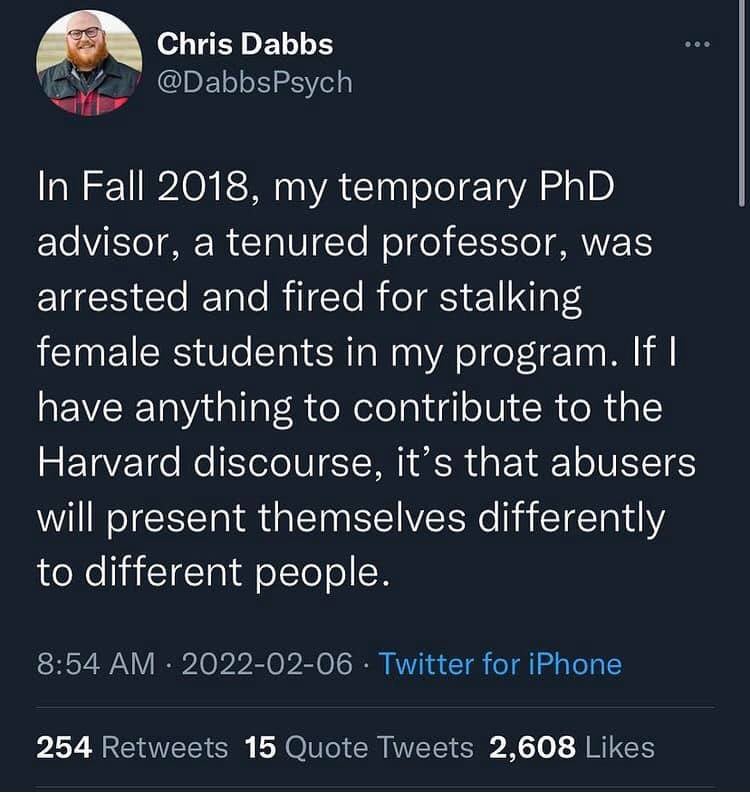
From Solnit: It’s great to see this acknowledgment. If you’re white, male, straight, older (or just adult), rich, in a position of power, cis-gender, able-bodied, etc. you may be seeing people on their best behavior and should reserve judgment about whether or not they also have worst behavior they reserve for people who they think they can get away with mistreating. Get away with because they don’t expect those other people to have a voice that others will listen to.
I have had too many powerful people seem incredulous that there is more to someone than they have encountered, and as I have become more powerful myself, I have tried to keep in mind that a lot of people have two or more faces, and I may not be shown the ugly one. Which of course makes the Harvard professors’ letter in support of a colleague accused of mistreating women students exactly that kind of oblivious born of privilege.
I wrote about this a few years back, in a Harper’s column titled “Nobody Knows,” because those who are considered nobody often know what somebodies only will if they listen to the nobodies: All the world is not a stage: if you want to make theater a metaphor, offstage, outside, or backstage are an important part of the territories. There people let down their guard or commit acts inconsistent with their public personas, or workplace, or family personas, things done in the absence of the audience for whom they perform. They do these things in the confidence that the people with and to whom they do them are people who do not matter. Servants, children, women, and people of color are among those who know the secrets—you could say that nobody knows them means that the powerful do these things in front of those who are considered nobody. Nobody knows.
Perhaps inequality makes liars of all of us; perhaps only a democracy of power leads to a democracy of information, where we accept the same truths and know each other to the same extent. But the underlings know both versions; the powerful seem to know only one, or do not know they know the other. And one of the most peculiar aspects of all this is that they often seem to operate on the sense that these things have not happened if no one else of high status knows they happened. They deceive themselves as well as others.