
Is that even a name? Well, yes, yes, it is. And let me say right here and now, I love, love, love, love, love her work. I stole an image of hers from the interweb I have used on this blog, but then lost the link to who, what, where and was so happy to recently find her again, and be able to celebrate and share this deeply gifted indigenous Canadian artist. Born on south Baffin Island, Kenojuak grew up traveling from camp to camp on south Baffin and in Arctic Quebec (Nunavik). In the late 1950’s (Kenojuak was born in 1927 and died in 2013), Kenojuak began experimenting with carving and drawing and aren’t we all luckier for that. Yes, we are.
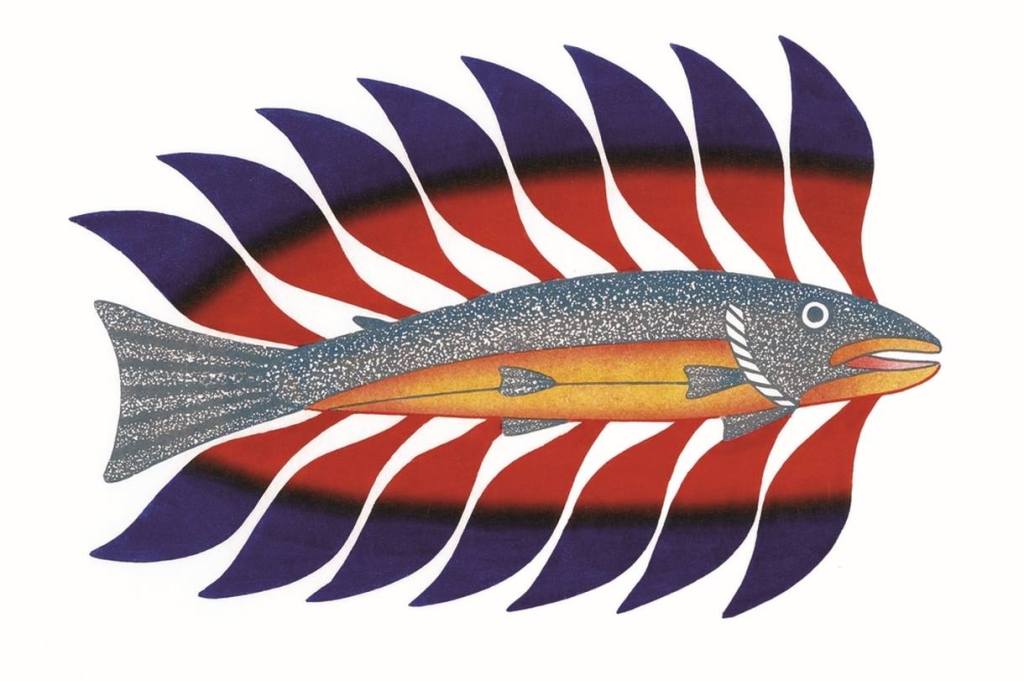
Kenojuak’s drawings were immediately celebrated once seen, as they were and main absolutely captivating; in 1961 she was the subject of a film produced by the National Film Board of Canada about her traditional life and art, a film that is still shown today in Canada. It’s only twenty minutes long, available on Youtube if the link posted below doesn’t work. In 1970 her print, Enchanted Owl (1960) was reproduced on a stamp commemorating the centennial of the Northwest Territories, and again in 1993 Canada Post selected her drawing entitled The Owl to be reproduced on their .86 cent stamp.
Kenojuak received many honors during her life as an artist. She was made a Companion in the Order of Canada in 1967, and in 1996 she received the Lifetime Achievement Award at the National Aboriginal Achievement Awards Ceremony in Vancouver, and in 2001, Kenojuak was inducted into Canada’s Walk of Fame. She was the first Inuit artist to be included (which is nuts but there y’go). Kenojuak traveled all over the world as an ambassador for Inuit art.
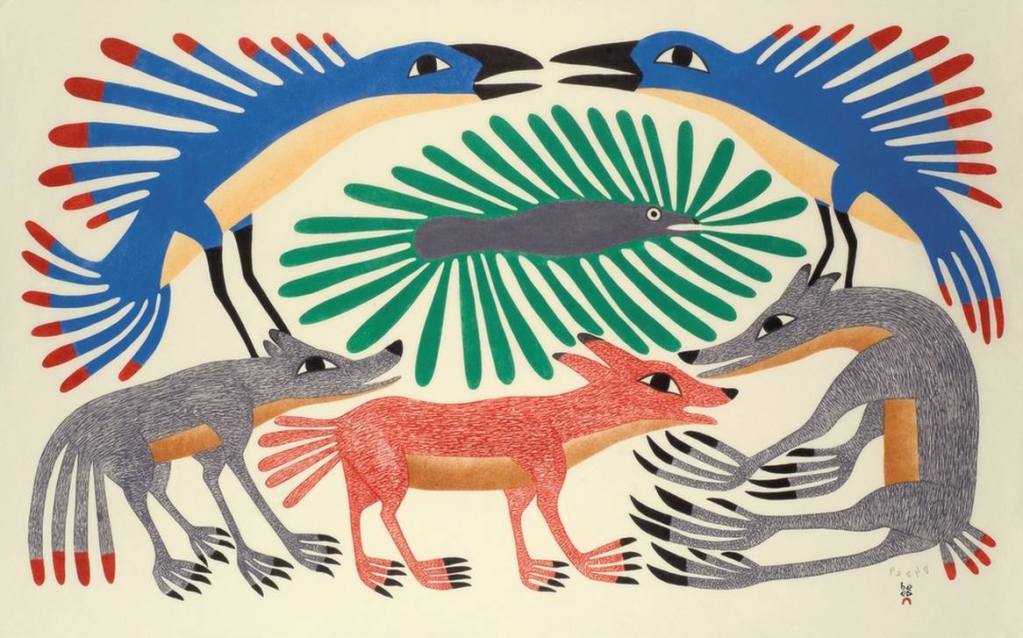
In January of 2013, after a long and illustrious public artistic career, Kenojuak died at home surrounded by family. She worked in stained glass, pencil, beads and paint – among other mediums. Her wiki page link is below, but be warned, the story of her life was one of immeasurable hardship – largely due to her being born in the early 20th century as both a female and indigenous person. Her father was murdered by Christian converts, she was forcibly hospitalized by the government having tested positive for TB, seven of her children died in childhood (she had eleven live births, adopting five other children), and all three of her husband’s pre-deceased her, one after the other, in the 1970s. Despite this, her work is full of light, love, brilliance, and beauty – as was she.
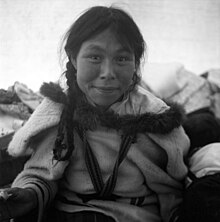
https://en.wikipedia.org/wiki/Kenojuak_Ashevak