*Yes, I read and have loved the entire Clan of the Cave Bear series, so the thought that doggies – or wolves – have been accompanying humans throughout a longer time span than previously thought makes perfect sense. I do not like living without a dog. This is not just because I love ’em, but also because I know living beside a fur baby makes me a better human, mirrors, reveals, and reports on my moods, gets me out of bed on even my worst days (which I hardly ever have anymore) and gets me outside where I remember how much I love being out and about in the beautiful, wonderful, complicated world. Except nature – the woods, the views, the river, the rain whether driving or soft – all of these ground me; all of these simplify the knotted present moment, make life settle in and down once more, prompt and nudge me (as do my fur babies) as to what actually matters, as well as reminding me just how big the world is, how small I am, and how putting one foot in front of the other is enough.
From National Geographic: While scientists have known that dogs were our first domestication relationship, before even agriculture took root, exactly how far back our best friendship goes just got pushed back another few thousand years.
Two new papers, published March 25 in the journal Nature, have compared genetics from canines found in ancient human sites across Europe, and shown that dogs were genetically distinct from wolves—and buddy-buddy with people—more than 14,000 years ago. Even before farming, dogs were a common part of life across many ancient cultures, potentially aiding in guard duty, hunting and as a part of rituals.
“Once you have dogs, these dogs are attached to human populations through time,” says Lachie Scarsbrook, a paleogeneticist at the Ludwig Maximilian University of Munich in Germany. “We call it the Swiss Army Dog. They can adapt to all these cultural roles we associate with dogs today.”
Archaeologists have uncovered canines buried alongside humans dated to 34,000 years ago. But simply something dog-like buried next to a human does not a dog make, Scarsbrook explains. “The burying of an animal alongside humans is a risky strategy to use to identify something as domestic. We know people for millennia have been burying wild animals alongside people,” he says.
Dog and wolf skeletons also can look extraordinarily alike—especially when there’s only a part of a skull or a single tooth to go on. “A lot of very, very early putative dogs, when you run the DNA on them, they actually come out as wolves,” says William Marsh, a paleogeneticist at the Natural History Museum of London. Previous studies have dated the oldest definitely-dog to around 10,900 years ago. By then, Marsh says, the “dogs are genetically very, very distinct from a wolves.” That means dogs must have been around, becoming more doggish, thousands of years earlier to the Upper Paleolithic period between 12,000 and 50,000 years ago.
When you are intelligent and beautiful you face a lot of problems. If you are beautiful and stupid, then it’s easy. – Nawal El Saadawi
I came across the above quote in my travels on the interweb, and it struck me, as a once good looking gal, as absolutely true. Beauty and intelligence together made mediocre men’s balls shrivel up into their pelvic cavities, and oh, how they hated me for it. They (mediocre men, and some not so mediocre) hated me for not being interested in them or dateable, without ever asking me on a date. They hated me for anticipated rejection, while never hitting on me. They hated me for actual rejection, after hitting on me. They hated me for using $5 words in my regular, every day speech. They hated my competence, my work ethic, my strength.
They hated me and my beauty and intelligence because they had been taught to question, deny or fear it as unacceptable, as an affront to their manhoods: “aren’t I supposed to be master/smarter one here?!” They believed that they should desire it (not me, precisely, but rather ‘it’), conquer it, and possess it; they believed that once having possessed it, they then owned it, and could control or dismiss it as sullied, used, worth less. Again ‘it’ is me, as if I were a thing, a tool for their use, their pleasure.
I will never forget that guy, on our 2nd date, doing the thing women are supposedly doing all the time (and maybe some do, but) going on and on about what value added I would be on his arm, as his attractive wife and the smart-as-a-whip mother of his smart, attractive, accomplished children. Ick.
All of which is and was ridiculous. All of which were and are unnecessary problems I faced on top of near constant sexual harassment and objectification while in my teens, 20s, 30s, 40s and even my 50s. So glad to be old, even if, at times, it sucks so bad.
How many were the years of my life that went by before my body, and my self became really mine, to do with them as I wished? How many were the years of my life that were lost before I tore my body and my self away from the people who held me in their grasp since the very first day? – Nawal El Saadawi
But who or what the hell is Nawal? She is one of those women whose lives – she had at least 9 – and accomplishments put me in touch with just how unaccomplished I am, and how easy I have had it. Full name: Nawal El Saadawi. Born in Egypt in 1931, she was an Egyptian feminist writer, activist and physician. She wrote numerous books on Islam and women, as well as others pertaining to sexuality, patriarchy, social class and colonialism. She was raised Muslim, and was educated yet, despite having relatively progressive and educated parents for the time, she underwent FMG – female genital mutilation – at age 6.
Her time as a physician helped to both solidify and amplify el Saadawi’s activism and feminism, as her patients lives – particularly when working in rural Egypt – opened her eyes as to the often dire conditions in which they lived; these women were trapped in marriages (her own “progressive” father tried to marry Nawal off at 10 years old) where they faced intense physical and psychological damage, including domestic violence, sexual abuse, coercion and marital rape.
AmericanInterviewer: What would you say to a woman in this country who assumes she is no longer oppressed, who believes women’s liberation has been achieved? El Saadawi: Well I would think she is blind. Like many people who are blind to gender problems, to class problems, to international problems. She’s blind to what’s happening to her.
For her activism and written as well as spoken views, Saadawi was imprisoned throughout the early 80s, fleeing Egypt due to further threats and intimidation in 1993, only to return in 1996. One reason Saadawi became such a prolific writer was because powerful men in both government and religious circles in Egypt were upset enough by her earliest writings as a physician to push her out of her job in public health. Y’don’t want me over there, practicing medicine? Ok, more time to make trouble, and write, speak, shout my views over here, y’sexist dopes.
From her memoir of the time she spent in prison, and now you know who she is (her wiki is additionally linked below:
Writing: such has been my crime ever since I was a small child. To this day writing remains my crime. Now, although I am out of prison, I continue to live inside a prison of another sort, one without steel bars. For the technology of oppression and might without justice has become more advanced, and the fetters imposed on mind and body have become invisible. The most dangerous shackles are the invisible ones, because they deceive people into believing they are free. This delusion is the new prison that people inhabit today, north and south, east and west…We inhabit the age of the technology of false consciousness, the technology of hiding truths behind amiable humanistic slogans that may change from one era to another…Democracy is not just freedom to criticize the government or head of state, or to hold parliamentary elections. True democracy obtains only when the people – women, men, young people, children – have the ability to change the system of industrial capitalism that has oppressed them since the earliest days of slavery: a system based on class division, patriarchy, and military might, a hierarchical system that subjugates people merely because they are born poor, or female, or dark-skinned.
Who? Never heard of her. Yet – she is the only woman to win the Medal of Honor (so far), which – in case y’didn’t know, is is the highest military decoration awarded to the U.S. Armed Forces, recognizing American sailors, soldiers, marines, airPERSONS, guardians, and coast guardPERSONS who have distinguished themselves by acts of valor. The medal is normally awarded by the President (and was infamously presented to Rush Limbaugh by Orange Menace) a.k.a. the commander in chief of the armed forces, and is presented “in the name of Congress.”
Mary Edwards Walker is also one of only eight civilians (prior to the above desecration and an even worse one after the recent death of a certain “turning points” Charlie) to receive the Medal of Honor.
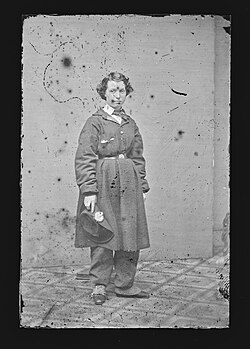
But who is this Mary chick? Lemme tell you. Born in 1832, we’ll flash forward to 1864, when a Union Army surgeon is busy working behind Confederate lines, tending to wounds in a Tennessee farmhouse. When a Confederate patrol enters, they’re confused as the surgeon is wearing trousers, but also has visibly long hair pinned up under a cap. Gasparilla! This surgeon is a woman!!! She is arrested as a spy.
That, ladies and gents, is Dr. Mary Edwards Walker, and she grew up in upstate New York just like moi.
Mary’s parents did something very unusual for the 1830s: they treated their daughters – Mary was one of five, she also had a younger brother – like sentient, intelligent beings who mattered. Again, gasparilla! Mary’s father taught her to build things and understand anatomy. Her mother taught her that any clothing designed to damage your body was a cage, not fashion. At fifteen, Mary reportedly stopped wearing a corset, creating gossip in the small town of Oswego, N.Y. Later in life, she would advocate for women’s clothing reform; I love and honor her for that alone.
Mary Edwards Walker entered Syracuse Medical College at twenty-one as one of fewer than ten women studying medicine in the entirety of America. Her fellow male students laughed at her; her professors doubted women possessed the intellectual capacity for medicine. She graduated in 1855.
Then her real fight started. Patients resisted, many wouldn’t let a woman touch them. She opened a practice with her physician husband, Albert Miller, but people walked out when they realized it was a dual practice, which, ultimately – like the marriage – failed. He was cheating on her, and when she divorced him, Mary reverted to her maiden name. In the 1860s, that decision was unprecedented, a truly revolutionary act.
Dr. Mary Edwards Walker saw opportunity with the outbreak of the Civil War, as she was smart enough to know that the Army would need surgeons, regardless of gender. She was not welcomed – in fact she was again laughed at, thereafter choosing instead to go, on her own, with her own funds, to the battlefield, which she did without pay and without permission. After the disastrous battle at Bull Run, she inserted herself into a field hospital tent whose floors were running red with blood. There, Dr. Walker worked tirelessly suturing, stabilizing, and saving lives, so much so that her male counterparts took notice; resistance to her presence was, finally, as an end.
But. Instead of hiring Dr. Walker as a physician, in 1862 the Army hired her as a nurse. Walker took it because it got her to the wounded, yet she didn’t just change bandages; she diagnosed diseases, prescribed treatments, and, most notably, she performed procedures. The same physicians and surgeons who had dismissed her began to request her assistance. Mary also adopted a modified officer’s uniform, with pants. Officers filed complaints (why is it always about the fucking clothes?!). Mary ignored them, stating, “These aren’t men’s clothes, they’re mine.” Great point.
During her service, Dr. Walker survived typhoid while also enduring constant harassment. In 1863, she became the first female U.S. Army surgeon officially on record, a triumph of sorts. But Mary couldn’t ignore the suffering on the other side of the battle lines: civilians trapped in war zones, sick children, and women giving birth without assistance. She began crossing into Confederate territory to treat patients regardless of their allegiance, and with little thought to her own safety.
On April 10, 1864 (back where we started), Confederate soldiers arrest Dr. Mary Edwards Walker, tossing her into a prison in Richmond, VA where she endured four months of starvation rations, disease, and filth, ultimately losing thirty pounds; her time in a confederate prison permanently damaged Walker’s health.
When Dr. Mary Edwards Walker was traded back in a prisoner exchange, she reported for duty the next morning. When Walker sought a retroactive brevet or commission to validate her service during the post-war period, it resulted in President Andrew Johnson awarding her the Medal of Honor in 1865. She wore it every day for the next fifty-four years, while continuing to work in public and private spaces as well as advocating for women’s rights and suffrage.
BUT. That’s not the end of the Medal of Honor story. In 1917, Congress stripped it away. Walker was eighty-four years old when the men in Congress demanded she return it. She refused, wearing it until the day she died in 1919.
It took fifty-eight years, but in 1977, a bureaucratic military man (one presumes? maybe a woman, it’s unclear) affirmatively reinstated Walker’s medal. She remains the only woman – so far – ever awarded the Medal of Honor. So, now you know.
The photo below is of Walker circa 1911. Imagine how tough she had to be, how determined, how fearless. She earned those lines and wrinkles, peeps. Walker died in 1919, at the ripe old age of 86. Rest in Power, Doc.
Try to learn to breathe deeply, really to taste food when vou eat, and when you sleep, really to sleep. Try as much as possible to be wholly alive with all your might, and when you laugh, laugh like hell. And when you get angry, get good and angry. Try to be alive. You will be dead soon enough. – Ernest Hemingway
My favorite Hemingway novel is Islands in the Sea, which title I inevitably struggle to recall despite that favored status, because while there are boats and islands in the book, it is the human connections and loss thereof that stuck and stick with me. It’s a beautiful novel, one I intend to read again to see if it will still resonate with me as it did when I first turned its pages, during the 80s, after college, when I could read anything and anyone I wanted.
How joyful beyond words I was then at the sense of freedom I had: no deadlines, no papers to write, no required reading lists!, I decided to make my way through the “big writers” of the 20th century to date. Hemingway was one. Graham Greene (love all of his novels, pretty much), Bellow (favorite: Henderson the Rain King), Roth (nope, not for me and why does he hate women so much?), Heller (Catch-22 is a work of genius), Mailer (see Roth, above), and others including what I hadn’t yet read of Doris Lessing, Erica Jong, Judith Rossner, Germaine Greer, Margaret Atwood, Alice Walker, Anne Tyler, and many more.
Hemingway was my favorite of the “great male writers”, I think, perhaps because I related to a childhood spent in the woods, or tramping along streams looking for a good spot to fish. How I longed to fish when I was a kid; for some unknown reason, it seemed romantic and wonderful. Blame Huck Finn? Tom Sawyer? Neither of which I recall reading as a child (we must’ve seen the film, though), but the image of a child in summer armed with a stick and a worm, chilling by the water’s edge in a straw hat, bare-footed and wholly at ease… very compelling.
When I finally tried it for reals, however, as a teen, the bugs and boredom – I”m supposed to just stand here?!! – drove me mad. So much for the romance of fishing.
Hemingway committed suicide at a young age having lived big, per his words above – and having lived in the shadow of his father’s suicide when Ernest was 28. Hemingway’s grandfather also took his own life, as did 2 of his siblings, and his granddaughter. There is ample evidence that they inherited a predisposition toward depression, as well as suffering with an inherited metabolic disorder known as hemochromatosis, which is – simplified – an inability to properly metabolize iron, leading to overload in the major organs of the body.
Overloads of any kind are not good (everything in moderations, folks!), and illnesses we cannot recognize as such can destabilize our mental health. How many times in my life did I blame my inner person, my thoughts or actions past or present, on what turned out to be literal physical illnesses? Girl, you sick, not crazy!
Hemingway also suffered numerous concussions and other brain injuries during his WW1 service and go all out style of living, which undoubtably added falling dominos to the pile upon which he finally succumbed to death at just shy of 62 years old. Live hard and die young? It has its appeal, as does the idea of a still lovely corpse. But. As I said at a funeral I recently attended, I’m going to live ’til I’m 130, and all of my enemies are dead, dead, dead! And I meant it. That it won’t happen is okay too.
If people bring so much courage to this world the world has to kill them to break them, so of course it kills them. The world breaks every one and afterward many are strong at the broken places. But those that will not break it kills. It kills the very good and the very gentle and the very brave impartially. If you are none of these you can be sure it will kill you too but there will be no special hurry. – Ernest Hemingway, A Farewell to Arms
*My progressive opinion column for the month of June, with my thanks for being here reading, and following along…May the whole world know peace, and healing…
My best friend from high school died of AIDs in 1993; he’s been dead almost as long as he was alive. I miss him still, deeply regretting decades of lost opportunity to create additional memories together. My best friend from college, John, died in 2024 as a result of the same disease after enduring 35+ years of every possible discomfort and illness you could imagine; his last decade was spent in a wheelchair. Despite all of his challenges, John continued to work, and to advocate for his community, family, and friends. He was also able to marry the love of his life in 2013, thanks to Obergefell v. Hodges. Mark, my high school bestie, never heard of Obergefell, never saw Will & Grace, never celebrated Pride Month or stitched a panel for the AIDs quilt to memorialize loved ones; he also never kept the promise we made to each other to marry and have kids together (how we would do that, exactly, was left for later discussion) should we not find true love or fail to talk any hot men into getting broody with us. Mark was my prom date, my drama club co-star, my favorite disco dancing, five-a.m. breakfast partner, as well as being my on again, off again roommate during the early years I spent in NYC. John was my peer theatre nerd debating the merits of practically everything while studying literature, history, speech and linguistics for four years, including running around the West End and out to the Fringe during our junior year abroad. John was a dance partner, too, in well-lit studios and dark rooms filled with 20-something energy moving to pounding beats. Coincidentally, both of these beloved men had mom’s whose first names were Beverly; both were also products of southern Baptist families. John, who graduated from high school in South Carolina, was the son of a Naval officer married for 61 years to John’s mom; Mark was the son of a Louisiana minister his mother divorced when he was in grade school. She’d had Mark when she was still a teenager, and 3 more kids in quick succession. I met his father for, I think, the first and only time at Mark’s memorial service. He might have attended our H.S. graduation, but if he did, I don’t remember him. John’s family were supportive of who he was throughout his life, even while his parents were nonplussed by their son’s sexuality, and troubled by his choice to live in New York City, that storied locus of projected dreams and fears. Mark’s mother, on the other hand, attempted to beat the gay out of him with a heavy leather belt during his adolescence; she also told him more than once that she would rather he was dead than gay, although, giving credit where it’s due, she did help nurse him prior to his death. I believe that their deaths, 31 year apart, can, in part, be traced back to the way in which each of their similar yet very different families loved and accepted them – or failed to – for who they were. Individuals live longer and happier, in other words, when they are loved and accepted, whatever their gifts or flaws, either real or perceived. I believe that human beings deserve to be loved and to pursue happiness, however they are shaped and formed, whatever their melanin levels, identities, beliefs, religion, legal status, gender, height, weight, or income – all of that regardless of however or wherever they live, or who they love. I believe this primarily because I am 100% in support of allowing others to be themselves, largely because their choices are none of my business. This necessarily includes, of course, my absolute right to be myself, which also means my ‘no thanks-ing’ other individuals’ version of their authentic selves, because permission to ‘you do you’ doesn’t include a blank friendship check re: your bigotry or phobias. From the moment he was diagnosed with AIDs, my beloved friend Mark gave up and in; he was tired, tired of fighting for years to find acceptance and love beyond the limitations of his own bone marrow belief – a belief beaten into him – that he was unworthy. John fought daily and for decades to live, choosing love and hope, because love is what he was taught. In my dreams, we three are dancing, still. I said to my soul, be still, and wait without hope For hope would be hope for the wrong thing; wait without love, For love would be love of the wrong thing; there is yet faith But the faith and the love and the hope are all in the waiting. Wait without thought, for you are not ready for thought: So the darkness shall be the light, and the stillness the dancing. – T.S. Eliot