
Nov 25, 2024
*Friedrich Neitzsche said it best, perhaps, or at least most simply, “Amor Fati – “Love Your Fate”, which is in fact your life.” Falling in love with your fate is practicing acceptance. A longer, more personal version, here in poem form by Anna Swir, translated from the Polish by Czeslaw Milosz and Leonard Nathan. Anna Swir is a very shortened version of the deceased Polish poet’s name. More info on Swir (spell check keeps making it Sir or Swit, y’gotta love it) here:
https://en.wikipedia.org/wiki/Anna_Świrszczyńska
Great humility fills me,
great purity fills me,
I make love with my dear
as if I made love dying
as if I made love praying,
tears pour
over my arms and his arms.
I don’t know whether this is joy
or sadness, I don’t understand
what I feel, I’m crying,
I’m crying, it’s humility
as if I were dead,
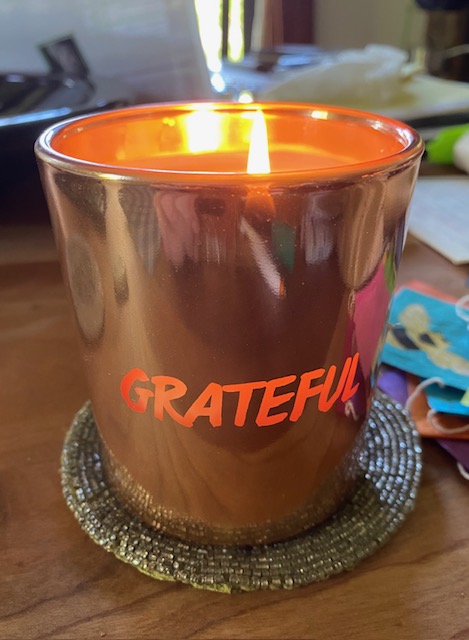
gratitude, I thank you, my fate,
I’m unworthy, how beautiful
my life.
Nov 24, 2024
*a week of gratitude posts in honor of Thanksgiving – today, a poem by Danish Lameris that I have published here previously but – who doesn’t need to be reminded re: kindness, especially from an artist worthy of support, and – post-election maybe we could get back to simple sh*t, simple virtues, simple acts and thoughts of kindness – this was first published in the NYT in 2019. https://www.danushalameris.com/about
I’ve been thinking about the way, when you walk
down a crowded aisle, people pull in their legs
to let you by. Or how strangers still say “bless you”
when someone sneezes, a leftover
from the Bubonic plague. “Don’t die,” we are saying.
And sometimes, when you spill lemons
from your grocery bag, someone else will help you
pick them up. Mostly, we don’t want to harm each other.
We want to be handed our cup of coffee hot,
and to say thank you to the person handing it. To smile
at them and for them to smile back. For the waitress
to call us honey when she sets down the bowl of clam chowder,
and for the driver in the red pick-up truck to let us pass.
We have so little of each other, now. So far
from tribe and fire. Only these brief moments of exchange.
What if they are the true dwelling of the holy, these
fleeting temples we make together when we say, “Here,
have my seat,” “Go ahead—you first,” “I like your hat.”

Nov 23, 2024
*a poem by Rose Milligan, first published in the 1990s in The Lady, a long running – since 1885 – magazine in the U.K. Based in London, it was referenced in Downton Abbey when Lady G was helping Dowager Lady G find a new maid, which makes perfect sense as it’s best known as a place to put your classified ad seeking household help, maids, nannies, and etc. Lately, it is known for holiday housing listings.
My mother hated dusting; it was one of the earliest chores my younger sister and I were assigned. I’m not a fan of doing it, either (get rid of dust-gathering stuff, hello!) – but – I also do NOT like seeing dusty surfaces, which – when the sun starts highlighting it in spring, or in fall as now as the sun tilts in through my windows at another, sharper angle – it has to go! This poem reminds me of my grandmother, because I know she would appreciate it as I do.
Dust if you must, but wouldn’t it be better
To paint a picture, or write a letter,
Bake a cake, or plant a seed;
Ponder the difference between want and need?
Dust if you must, but there’s not much time,
With rivers to swim, and mountains to climb;
Music to hear, and books to read;
Friends to cherish, and life to lead.
Dust if you must, but the world’s out there
With the sun in your eyes, and the wind in your hair;
A flutter of snow, a shower of rain,
This day will not come around again.
Dust if you must, but bear in mind,
Old age will come and it’s not kind.
And when you go (and go you must)
You, yourself, will make more dust.
Nov 22, 2024
“Women have been driven mad, “gaslighted,” for centuries by the refutation of our experience and our instincts in a culture which validates only male experience. The truth of our bodies and our minds has been mystified to us. We therefore have a primary obligation to each other: not to undermine each others’ sense of reality for the sake of expediency; not to gaslight each other. …
Women have often felt insane when cleaving to the truth of our experience. Our future depends on the sanity of each of us, and we have a profound stake, beyond the personal, in the project of describing our reality as candidly and fully as we can to each other.”
― Adrienne Rich, “On Lies, Secrets, and Silence. Selected Prose 1966-1978”
Oh yeah, I feel you on that, girl. There’s nothing more un-fun than having your sense of self, your story, your experience/s denied, automatically refuted, disfavored, ignored, dismissed, denigrated, used against you, because ‘woman’. Once, when I was ten or eleven years old, my little sister decided to gaslight me for reals, refusing to talk to or play with me because – as she put it “you’re crazy”. I don’t remember how long this went on, although I do recall one of her friends coming over during that period, and the whole act or whatever it was truly freaking that young lady out. You’re not the only one, Sally, it freaked me out, too.
More freaky still is having your actual, lived experience questioned and disappeared; this makes a person doubt themselves; how could it not? Also crazy-making is having multiple persons then believe the lie or the extension of the lie embodied in you, your madness, your over-reacting, your incorrect, mistaken, wrong, upsetting, contrary to their beliefs narrative. How dare you question him/them – how dare you?! I have often wished, when people have told me how much my mother loved me, or what a wonderful woman she was, or how every mother loves her children, that I had cigarette burn scars on my legs and arms, or the scars of a whip on my back to contradict that universally accepted truth of mother love, a truth that is simply not universally applicable.
The truth is my mother was literally driven mad by the very system she spent so much of her time upholding, and attempted to forcibly mold her three daughters into upholding and living out as well. The truth is my mother, who was brilliant and powerful in and of herself, was driven mad by the culture and religion into which she was born; this boxed her up within a set of boundaries that required her to kill her ambition, her dreams, her desires, quashing and self-murdering her native born, natural temperament. And, she was 100% on board with that killing, embraced dying to her authentic self because ‘appropriate’ and ‘acceptable’ and ‘conventional’ and ‘good Catholic’ and and ‘good daughter’ and ‘good wife’ – except – in her marrow, in the pain of her almost constant migraines, in her volatility and intensity – she raged, internally kicking and screaming, occasionally bubbling over, when her rage was projected outward at that which was closest to hand: me.
It was impossible for my mother to break free. Her chains were the family and culture she loved, betrayal was not possible, despite what that same family, religion, and culture was doing to absolutely fuck her up. It is difficult if not impossible to shake or change belief in any universally or personally accepted ‘truth’, which includes the still present ‘women are hysterical’ and less trustworthy than men by virtue of the female nature, a sexist myth and foundational building block of the patriarchy. How can women choose to be our authentic selves in a world in which we are told our own desires, ambitions, goals and even activities (women’s work, women’s interests, women’s TV, women’s sports) as well as our points of view are by definition less than.
The world, and its laws, have been designed by men to benefit men and those in power, which are – mostly – men. ‘Power corrupts, and absolutely power corrupts absolutely’ – Lord Acton. Depending on men in power, depending on anyone in power to be good, to live out the values of decency and kindness, is a risk. Even questioning men in power is a risk, because despite clear evidence of abuse, bad behavior, and illegality an entire structure and set of ingrained beliefs exist to bury allegations of same; institutions of power and the people in them will inevitably rally round, protecting the ‘principal’, whoever he (it is, inevitably, a he) is.
Women are better humans than men. We are; we’ve had to be. Maybe, one day, that will be a universally accepted truth. We can only hope. *Women (*western, privileged women) are not mad; we’re simply righteously pissed off – and in those places where women are still being denied agency, yes, women are still being driven mad, and until all women are free, none of us are. GACK.
“A feminist therapist believes that women need to hear that men “don’t love enough” before they’re told that women “love too much”; that fathers are equally responsible for their children’s problems; that no one—not even self-appointed feminist saviors—can rescue a woman but herself; that self-love is the basis for love of others; that it’s hard to break free of patriarchy; that the struggle to do so is both miraculous and life-long; that very few of us know how to support women in flight from—or at war with—internalized self-hatred.” – Phyllis Chesler, Women and Madness
Nov 21, 2024
Sheldon Whitehouse is the junior Senator from the great state of Rhode Island (junior as in newer than his senate colleague also from RI, despite being almost 70 years old); his personal lineage is heavy with wealthy businessmen and political or diplomatic types, and – as a part of his senatorial duties – he published an interesting and necessary (to this political nerd) follow-up report on the allegations against lifetime appointee (grrrrrrrr) Brett Kavanaugh (grrrrr) as a part of his work on the senate’s judiciary committee. Because I can, I have distilled the report for you, my darlings. You’re welcome!
Here it is, edited and copied directly from his report, which is linked at the end of this distillation summarizing the report (which is heavy with repetition) for your reading pleasure? Edification? Education? Enragement? Enlightenment? All of those and nothing those of us watching the Kavanaugh hearings didn’t already know in our MeToo guts, but – them’s the breaks. Please note that any references to ‘the White House’ refers to the Trump administration. Why does this matter? It matters because it’s a lifetime appointment, and because Kavanaugh is one of several appointees to the Supreme Court who has shown complete indifference to the lives and needs of women in this country, which makes perfect sense given his history. Read on…
The report’s conclusions are: First, the Senate’s reliance on the FBI’s supplemental background investigation to inform its constitutional duty to provide advice and consent on Kavanaugh’s nomination to the Supreme Court was misplaced. Multiple Senators expressly cited the supplemental background investigation’s apparent inability to uncover corroborating evidence of the allegations against Kavanaugh as a ground for voting to confirm Kavanaugh. Yet the supplemental background investigation was flawed and incomplete, as the FBI did not follow up on numerous leads that could have produced potentially corroborating or otherwise relevant information.
Second, while President Trump publicly claimed the FBI had “free rein” to take any investigative steps it deemed necessary, the Trump White House exercised total control over the scope of the investigation, preventing the FBI from interviewing relevant witnesses and following up on tips. The White House refused to authorize basic investigatory steps that might have uncovered information corroborating the allegations.
Third, although the Trump Administration and the FBI assured the Senate that the FBI’s investigation was being conducted “by the book,” they failed to disclose that there was actually no “book” at all. The FBI produced no written protocols for supplemental background investigations, saying it was merely acting as the “agent” for the White House in such matters. Although this undisclosed practice of requiring step-by-step instructions from the White House for supplemental background investigations may be appropriate for following up on discrete, relatively minor questions that routinely arise during a nominee’s initial background investigation, it was uniquely inappropriate for investigating the serious, high-profile allegations against Kavanaugh. Not only did this practice enable the Trump Administration to kneecap FBI investigators’ ability to adequately investigate those allegations, but the lack of transparency misled the Senate and the public about the investigation’s thoroughness.
Fourth, the FBI’s tip line was not used to facilitate the FBI’s supplemental background investigation into the allegations against Kavanaugh. On instructions from the White House, the FBI did not investigate thousands of tips that came in through the FBI’s tip line. Instead, all tips related to Kavanaugh were forwarded to the White House without investigation. If anything, the White House may have used the tip line to steer FBI investigators away from derogatory or damaging information.
The Senators’ oversight inquiry reveals disturbing gaps in the FBI’s supplemental background investigation process for judicial nominees—gaps that enabled the White House to undermine the Senate’s ability to reliably exercise its advice and consent responsibility with respect to the Kavanaugh nomination. While these shortcomings may be relevant only in extreme circumstances like the Kavanaugh supplemental background investigation, Senators, the FBI, and the White House should work together to correct them to avoid a similar episode in the future.
The FBI’s supplemental background investigation concluded despite credible allegations from two different women, hundreds of witness leads and tips the FBI received, and the high stakes of a life-tenured Supreme Court nomination, the FBI ultimately interviewed only ten people. According to an “executive summary” of the FBI’s supplemental background investigation issued by the Judiciary Committee majority, these people were “all witnesses with potential firsthand knowledge of the allegations.” The FBI did not, however, interview Ford or Kavanaugh—the witnesses potentially with the most firsthand knowledge—nor did it speak to other potentially corroborating witnesses who had not witnessed the events firsthand. Nonetheless, the Judiciary Committee Republicans’ executive summary concluded that the “Supplemental Background Investigation confirms . . . there is no corroboration of the allegations made by Dr. Ford or Ms. Ramirez.”
Stonewalling from the executive branch (The Trump admin.) in response to Senators’ requests for information about the FBI’s supplemental background investigation started while that investigation was ongoing. … Even following Kavanaugh’s confirmation, the Trump Administration repeatedly thwarted Senate investigators’ subsequent attempts to get to the bottom of how the supplemental background investigation was conducted. …
Only through repeated, persistent inquiries over more than a half decade did Senate investigators discover that the Trump White House controlled the scope and conduct of the supplemental background investigation, specifically engineering it to exclude evidence that could have corroborated the allegations against Kavanaugh. All the while, the Trump Administration and FBI misled the public and the Senate about the investigation’s scope, claiming the FBI had complete discretion to take all investigative steps and that it conducted the supplemental background investigation “by the book.”
Former classmates or friends of Ford, Ramirez, and Kavanaugh reported difficulty getting the FBI to respond to their outreach…After being unable to speak to anyone or after being redirected to and from FBI field offices, many people resorted to the agency’s online and telephonic “tip line.” The FBI reported receiving “over 4,500 tips, including phone calls and electronic submissions,” related to the Kavanaugh supplemental background investigation. None were investigated or even screened for indicia of credibility.
During the Kavanaugh investigation, officials at the National Threat Operations Center forwarded any tips pertaining to Kavanaugh to the Security Division. On September 29, 2018, the White House directed the FBI to treat all tips “the same way that other leads have been handled”—i.e., by forwarding them to the White House without further investigation, no matter how reliable or corroborative the tips seemed.
On those instructions, the Security Division treated tips received during the Kavanaugh supplemental background investigation as if its investigation were closed: The Security Division turned over all “relevant” tips to the White House Counsel’s Office without investigation. A Security Division official subsequently told Senate investigators that the Security Division reviewed these tips only for relevancy to Kavanaugh and to remove duplicates. On at least two occasions, Security Division officials pointed the White House to specific tips, because of the information provided or the apparent identity of the individual who provided the information. The White House did not authorize the FBI to follow up on those tips. If anything, there is a danger that the tip line was used by the White House to steer FBI investigators away from relevant or corroborative information. (Y’think?!!)
The FBI’s supplemental background investigation into the sexual-assault allegations against Kavanaugh was unreliable, not because of FBI ineptitude, but because the Trump White House tightly controlled the scope of the investigation, preventing the FBI from conducting a thorough investigation that followed all relevant leads as it would in other investigative contexts. The Trump White House strictly controlled which witnesses the FBI was authorized to interview and which leads the FBI could follow. Indeed, the Trump White House specifically declined to authorize the FBI to interview witnesses and pursue tips that might have uncovered the corroborating information some Senators later claimed was lacking.
https://www.whitehouse.senate.gov/wp-content/uploads/2024/10/KavanaughReport_final.pdf
