*A poem by Jenny George. Personally, I love bats. They are mammals, they are voracious eaters of moss-skeeters, and they get around by means of sound, which is incredibly cool. Once, when I was renovating my old house, I woke one night to three bats flying around my bedroom, which was gutted to the studs and partially open to my attic. I opened a bunch of windows and all but one of them made it out. That bat I had to get my glovies on for, opening the bathroom window, as it had got stuck in the toilet, where it was flapping around in the water, poor booby. In native cultures bats – who sleep upside down, or rather head down – represent re-birth. Re-birth.
I saw a bat in a dream and then later that week I saw a real bat, crawling on its elbows across the porch like a goblin. It was early evening. I want to ask about death.
But first I want to ask about flying.
The swimmers talk quietly, standing waist-deep in the dark lake. It’s time to come in but they keep talking quietly. Above them, early bats driving low over the water. From here the voices are undifferentiated. The dark is full of purring moths.
Think of it—to navigate by adjustment, by the beauty of adjustment. All those shifts and echoes. The bats veer and dive. Their eyes are tiny golden fruits. They capture the moths in their teeth.
Summer is ending. The orchard is carved with the names of girls. Wind fingers the leaves softly, like torn clothes. Remember, desire was the first creature that flew from the crevice back when the earth and the sky were pinned together like two rocks.
Now, I open the screen door and there it is— a leather change purse moving across the floorboards.
But in the dream you were large and you opened the translucent hide of your body and you folded me in your long arms. And held me for a while. As a bat might hold a small, dying bat. As the lake holds the night upside down in its mouth.
From George’s The Dream of Reason (Copper Canyon Press, 2018).
*my progressive newspaper column for the month of September, coming out in a regional rag August 31st. Thanks for being here, and for reading, and while dumpster-fires horrible performance at this week’s debate with VP Harris would normally end a campaign (one bad debate performance certainly ended Joe Biden’s), we cannot and must not take anything for granted in this fall’s election cycle. Their side is a cult, one whose great leader can do no wrong. (That sound you hear is my head banging my desk.) Up and down the ballot, we must vote these weirdos out. Democracy – and women’s lives – are at stake. #VoteBlue. We’re not perfect, but they’re fcking nuts.
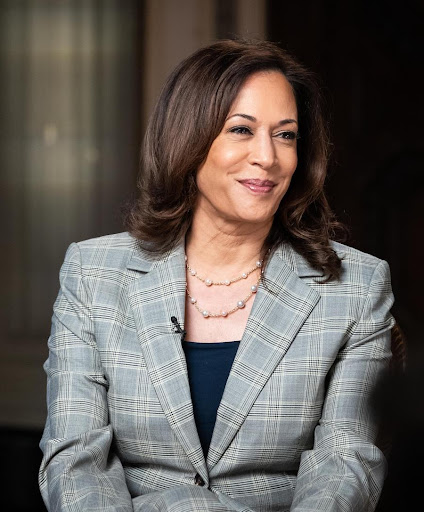
The Democratic convention is over; I’m relieved and thrilled. Once again, I’m in bed before midnight, so no more cranky, over-tired donkey. It went well, very well, from my vantage point; the speakers were of varying ability, as expected, yet the overall mood was, while serious, disciplined, celebratory, and joyous, which was terrific. Joy is a main theme of the Harris-Walz campaign, and I am up for that in a big way.
The last decade has been challenging for every American. The chaos of You-Know-Who’s administration (waking up to whacky tweets from the White House, sent at 3 and 4 a.m. – huh?!); an overdue racial reckoning; Covid 19’s confusion, upheaval, and sadness with over 1.2 million Americans dead; the violence of January 6th; immigration and refugee crises here and abroad; climate change on the march; the cruel aggression of Putin; the continuing painful saga of the Middle East. It’s been ugly, debilitating, exhausting.
Let’s choose now to turn the page, to be joyous, and get to work. Let’s elect Kamala Harris and Tim Walz. Does joy magically fix everything? No, but joy makes the burdens we face easier to bear, and that is a gift.
Best non-politician speaker at the DNC? Michelle Obama. Authentic, smart, direct, funny, and inspiring – all while being open about her dislike of politics. Can you blame her? After being hit with every grotesque slur in the books, while receiving more death threats than any other first family in history, who in her position would want to play in such a dirty game?
Michelle Obama, however, believes that this moment is too important for anyone who cares about our country to sit it out. She’s right. We all need to participate; we all have a responsibility as citizens to listen, read and research, go to trusted sources for information and, ultimately, we all have a duty to vote. Vote.
The Democratic candidate – Vice President Harris – put it best. Here is an excerpt from her acceptance speech: “America, let us show each other—and the world—who we are. And what we stand for. Freedom. Opportunity. Compassion. Dignity. Fairness. And endless possibilities.
We are the heirs to the greatest democracy in the history of the world. And on behalf of our children and grandchildren, and all those who sacrificed so dearly for our freedom and liberty, we must be worthy of this moment. It is now our turn to do what generations before us have done. Guided by optimism and faith, to fight for this country we love. To fight for the ideals we cherish. And to uphold the awesome responsibility that comes with the greatest privilege on Earth. The privilege and pride of being an American. So, let’s get out there and let’s fight for it. Let’s get out there and let’s vote for it. And together, let us write the next great chapter in the most extraordinary story ever told.”
I can get behind that, and a candidate who spoke so well, and movingly, of her origin story, her immigrant parents, her commitment to our country and defending those who are the weakest and most vulnerable among us, as well as to the ideals and values we all share as Americans, which are so much greater, and compelling, than those that divide us.
This summer I met a family of Venezuelan Americans, including a kid whose parents are old friends of old friends of mine, none of whom I’d ever met before. The parents, who immigrated in the eighties, reside in Miami, where Roberto Sr. works for the Spanish language media giant Univision, but Robert Jr. was born and raised in New Jersey. He began his political life as a child, a conservative Republican child, as many diaspora Venezuelan’s are, precociously attending the 2008 RNC convention when he was 12. At the convention, where Senator John McCain was nominated, Robertito was approached by an official delegate with what the delegate, a man in his 40s, swore was an actual copy of Barack Obama’s Kenyan birth certificate. He thought the guy was nuts, and in that moment – though I hesitate to use the word – he woke from the conservative slumber he’d been in, soon after switching his party allegiance. Now 27, he’s a college grad living NYC working for a company you may have heard of – Microsoft. He’s remained a political addict like myself, but since that gob-smacking awakening in 2008, he’s been a fervent Democrat because – his words, not mine – those guys are nuts(but, let me be clear: those guys are nuts).
If the GOP wants to appeal to a broader cross-section of Americans and stay relevant, they must wake up from the cult of personality and exclusionary politics they’ve been practicing for far too long.
In the meantime, whatever your affiliation, you too can choose joy! Vote Harris-Walz for the People.
*if you don’t follow Rebecca Solnit on social media – why don’t you? She is one of the clearest-eyed and clearest period communicators on feminism, politics, the environment, and the intersection of all of these, and more. This is yet another example of her good work synthesizing issues that matter to women and men, and yes, subscribing to The New Yorker is also a schmart move, lovies!! thanks for being here, and reading. And, checking J.D. Vance’s bullshit matters; I for one cannot wait until that guy – and the crazy conman at the top of the GOP ticket – both go TF away. #VoteBlue
A piece in the New Yorker fact-checks anti-divorce dude JD Vance’s Hillbilly Elegy (and finds out his grandmother filed for divorce in the 1950s and his grandfather did so in 1981; the couple ended up legally separated) but the really important takeaway for me was: “As no-fault divorce became the norm in state after state, domestic-violence rates dropped by some thirty per cent, suicides among women dropped by as much as sixteen per cent, and the number of women murdered by their partners dropped by ten per cent.”
In other words, feminism saves lives (including men’s; a significant portion of women’s spousal homicide is self-defense). Providing better recourse/escape routes benefits everyone, as does delegitimizing domestic violence, recognizing coercive control, and establishing that men and women are equal under the law and in every other way–in other words, that he has no right to do it.
It’s feminism that did a lot of the work to bring us no-fault divorce. Here’s a 1992 profile of one such woman:
“In her nearly 32 years as a professor at the University of California at Berkeley’s School of Law (Boalt Hall), she has cajoled, wheedled, lobbied and persuaded in her mission to use the law to end sex-based discrimination, by reputation combining clear-eyed logic and flawless legal research with impeccable manners.
“How to make trouble without being a troublemaker, that describes my style,” Ms. Kay said in an interview this week. “I think that if you are going to help build an institution, you have to be careful not to destroy it in the process.”
“Now, long after many people say they expected her to get the job, Ms. Kay, 57 years old, has been named dean of Boalt Hall, the first woman to hold the position. For the female lawyers and law professors who were her students or who know her through her book and other writings on sex discrimination, Professor Kay is a “patron saint” and “godmother,” and her appointment is a sweet victory.
“Over the years, Ms. Kay has become a leading scholar in family law and was an author of no-fault divorce legislation that has been adopted in California and other states. She has been a major force in bringing women into law schools and sending them out on graduation to use law to achieve social change.
“After graduating magna cum laude and Phi Beta Kappa from Southern Methodist University, Ms. Kay entered the University of Chicago Law School. She graduated in 1959, one of three women in a class of 109 students.”
Which is also a reminder of how profoundly feminism remade the law and how much Vance and the Republican Party preach regression to almost every form of inequality.
But we still need more feminism because as a recent editorial in the Washington Post states: “One U.S. study found women are twice as likely as men to be convicted of a crime after claiming self-defense; the odds are even worse for a woman of color.”
Likewise, restraining orders are a weak tool often not enforced against homicidal spouses intent on punishing women for leaving. Spouses who’ve often committed earlier violence that went unpunished. Feminism’s work continues.
Stolen (borrowed?) from NPR’s Fresh Air, an interview with Rachel Somerstein, who is an associate professor of journalism at SUNY New Paltz, which happens to be kinda local (only seventy minutes away, if there’s no traffic!), so – extra groovy. This interview was done during the launch of her book, Invisible Labor, published by Harper Collins and described on their website as “An incisive yet personal look at the science and history of the most common surgery performed in America—the cesarean section—and an exposé on the disturbing state of maternal medical care.” –
And worth noting that it’s not only the most common, it’s also one of the most expensive, a surgery that also leads to worse outcomes for mothers, especially mothers of color as the interview reveals.
In order to give credit where credit is due: Thea Chaloner and Joel Wolfram produced & edited this interview for broadcast. Bridget Bentz, Molly Seavy-Nesper and Carmel Wroth adapted it for the web. AND, we cannot have enough of what women go through, have endured, have experienced and continue to experience in a medical system that was created by and for men, one that still too often ignores women’s pain, self-knowledge, and history because female.
The interview, intro and transcript: When journalist and professor Rachel Somerstein had an emergency C-section with her first child, the anesthesia didn’t work. She says she could literally feel the operation as it was happening. Later, after her daughter was born, Somerstein remembers a practitioner blaming her for the ordeal.
“[They] came to my room and told me that my body hadn’t processed the anesthesia correctly, that there was something wrong with me,” Somerstein says.
Somerstein considered suing the hospital, but since neither she nor her daughter suffered long-term consequences, she was told she didn’t have a case. So instead of pouring her energy into a lawsuit, she decided to write a book. In Invisible Labor: The Untold Story of the Cesarean Section, she writes about her own experience with childbirth, as well as the broader history of C-sections.
Somerstein notes that the earliest C-sections were performed on women who died in labor or who were expected to die in labor. The intention was to give the baby a chance to live long enough to be baptized by the Catholic priest. It wasn’t until the late 1700s or early 1800s that the procedure was seen as a way to potentially save the mother’s life.
“One thing that’s so interesting about this history, to me, is that it shows that the forces promoting C-sections have always had something to do with an external pressure,” she says.
C-sections account for approximately one in three births in the United States today — despite research that shows they’re 80% more likely than vaginal births to cause serious complications. What’s more, C-sections are associated with having fewer children. Though she did eventually have a second child, Somerstein says her experience giving birth to her first definitely impacted her family size.
“I think that I would have had a third baby if I hadn’t had this birth,” she says. “I love my children so much. They are the absolute joy and sunshine in my life. I think that I wish I’d had one in between my daughter and my son and I didn’t.”
On the physician who practiced on enslaved women
[François Marie]Prevost, the slave master and physician who was educated in France and came to the United States, he practiced the procedure on enslaved women. And he did that in cases where the labor was obstructed, like … the baby wasn’t coming out. But when we look at the records of who had C-sections in the United States during this period of time of the early to mid-1800s, it’s disproportionately enslaved women because they had no agency. They couldn’t say no. … And he would do this without anesthesia.
On physicians removing women’s uteruses without their consent in the 1880s
The biggest risk at the time to people who had a C-section was the risk of infection or hemorrhage. That’s what would kill you. And by removing the uterus, that meant you’re much less likely to have an infection and to hemorrhage. So in that way, it was a good, pioneering medical development.
But even later, when there were other techniques that would conserve the uterus, known as the conservative section, some providers would still remove people’s uteruses. And there’s a few ways to read this. On the one hand, you could say it’s a horrible, patriarchal thing to take away somebody’s reproductive power without their consent or knowledge. But at the time, there was no reliable birth control, and C-sections were so dangerous to the mother’s life, you probably wouldn’t necessarily want to go through one again. And you could see from the perspective of a physician in the 1880s that he believed he was doing the right thing for his patient.
On why women of color are more likely to have C-sections in the U.S. today
The simple answer is racism. There’s nothing biological about women of color that makes them more likely to have a C-section. So that’s the most important thing to put out about these disproportionate rates. And if we break it down, that happens because of so many different kinds of racism. So we can think about, for instance, the social determinants of health. So that’s everything that shapes your health before you get pregnant, even. And, of course, during pregnancy, whether you have insurance, what kind of community you live in, how much money your family has, where you go to school.
And it includes also access to midwifery care. … When we’re talking about particularly caring for people who are low-risk in their pregnancies, [midwives are] a way to ensure a better outcome and also promote vaginal birth. … And Black women have less access to midwives than white women. And that’s not because of lack of desire. There’s not enough midwives, period, for the demand in the United States. But the gap is largest for Black women’s demand versus availability. And that is a social determinant of health. If you have no choice but to see an OB who, by dint of training, is more likely to do interventions that are more aggressive, perhaps, than a midwife who has a different kind of training and a different kind of professional ideology, then you might end up having a C-section that, with a different provider, could have been avoided.
On what childbirth was like in the 19th century when midwives were at the center of the experience
Childbirth was much more social and community oriented. I’m speaking here about free people, not enslaved women per se. But you’d be attended by a midwife. You’d be attended by the community of women in your town, the women in your family, your friends. And these were women who had a lot of knowledge about babies. … So anything from massages or helping people into positions that would help ease the baby down, singing, bringing in teas or balms.
There was food. You think about now, the majority of people in the United States have a baby in the hospital. And one thing you’re told most of the time is you can’t eat right throughout the entire birth. … And the reason is in case you need to be intubated. If you have a C-section and you need to be put under general [anesthesia], that’s why you’re told not to eat. It’s safer if you have an empty stomach. But again, at the time people would make things called groaning cakes, to eat and to share. I should say at the time, the majority of midwives were Black or immigrant or indigenous women. Today midwifery [has] transformed into a profession that is predominantly white, although that’s changing and it’s perceived as being for white women, even though midwifery is for everybody.
On the impact of her C-section
I developed PTSD. … It’s gotten a little better, but I get really nervous when I go to the doctor, and especially if it’s a new provider who I don’t know, I have a hard time trusting people in medicine. I try to remind myself of all the providers who’ve helped me before I go see somebody, because there’s so many people I’ve seen who’ve taken really good care of me and helped me and listened to me. I used to have a really hard time around my daughter’s birthday, and that’s really finally improved. She’s 8.
*This is from 2008, and is a repeat post from 2023 – written originally for a newspaper column called Confessions of a Book Addict (which I am), a column I did for several years while being a rural librarian in Upstate NY. It’s been, now, twenty-three years since that day, so much has changed, both personally and collectively. Have we learned anything? Gosh I hope so. Have I – oh my! Yes, of course, and no, not enough; it’s an on-going project.
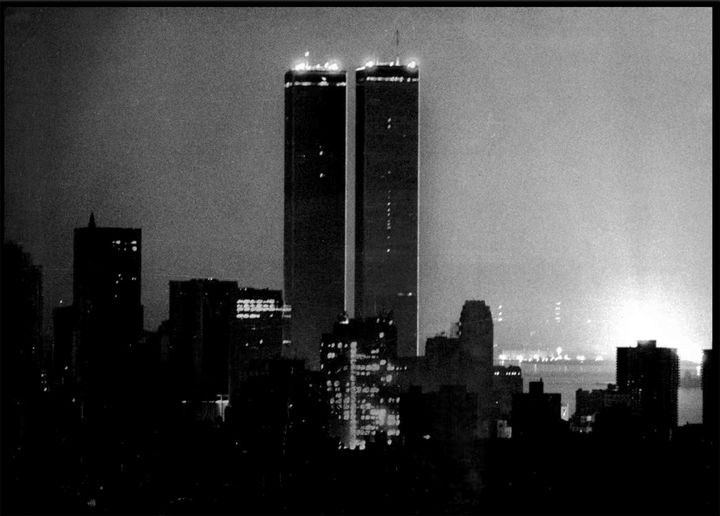
Another anniversary of 9/11 has been got through and as in years past, for me, accompanied by a deep sigh of relief. Seven years have passed since the worst and, in truth, best day I ever spent in New York City, a gorgeous fall day I suspect politicians, historians, philosopher and poets will be memorializing and attempting to contextualize long after I am gone. Why was it the best day? Because New Yorkers, and I was one for twenty-one years after my near idyllic childhood in Delaware County, behaved so well, so compassionately and with such deliberation. Everything shut down, thousands of lives were lost and thousands more of us had to get home on foot or crammed into buses after witnessing an occurrence so unprecedented and unnerving we might have had the perfect excuse for bad behavior. I was downtown, not close enough to be in danger, although too close for comfort, and everyone I met on the trek north was for once and for all open – open hearted, open minded – as if the tragedy, showing us how quickly lives end or are changed forever, stripped away every mask we had put on that morning to keep one another out. Poems were read and looked for; W. H. Auden’s September 1, 1939 – the first stanza of which, seen below, was oft quoted and seemed eerily prescient although he was, of course, thinking of a very different conflict in a very different time:
I sit in one of the dives
On Fifty-second Street
Uncertain and afraid
As the clever hopes expire
Of a low dishonest decade:
Waves of anger and fear
Circulate over the bright
And darkened lands of the earth,
Obsessing our private lives;
The unmentionable odour of death
Offends the September night.
My beloved grandmother, had she been alive, would of course have gone to her Bible, as she did every day without fail no matter the size of the crisis, large or small, or whether there was, in fact, a crisis at all. She was the wisest and best person I ever knew; her children would say she had to be having married a man as difficult as my grandfather could be, but I believe her own childhood amidst good people, farmers, innkeepers, fly fishermen and all, just over the county line in Beaverkill, N.Y., gave her a happy perspective on all of life, and a deep sense of its meaning no matter how inexplicable the events and people of any given moment might seem. I bought, borrowed or re-read books, as I always do, to get me back to a good place where I felt safe again – books about grief (On Grief and Grieving by Elisabeth Kubler-Ross was one), books about fire fighters (every one I could get), books about Islam (A Brief Illustrated Guide to Understanding Islam by I. A. Ibrahim as well as a paperback copy of the Koran I still haven’t opened), and books about hope, spirituality and forgiveness (M. Scott Peck’s The People of the Lie and The Different Drum as well as many others). I read Robert Frost and Whitman, my favorite poets, and tried not to cry every day even while I kept, for far to long, a promise I foolishly made to read all of the memorial pieces the New York Times was publishing on each and every known victim of that horrible day. One of them was my college friend Laura Rockefeller, a great person with a lovely smile who just happened to be working at Windows on the World stage managing a breakfast meeting for one of the companies in the building, a job she performed once or twice a year. Many of the books I bought were left unread; I was much too restless, as if waiting for the other shoe to fall, especially when enough time went by and we all realized no one else would be rescued from the pile. For comfort I re-read Sherlock Holmes; his certainty and brilliance were what I needed right then, not to mention the innocence of a world where planes and skyscrapers didn’t exist. But they do and although Baker Street will always be one of my favorite addresses, real life exists, good and bad, right here and now in the Catskills. I didn’t return home in ’03 entirely because of the events of September 11, 2001, but it, and Laura’s much too early death, made me want to be where I really wanted to be, which was here. Next week: a return to good cheer and more worthy non-fiction.