
Oct 16, 2023
I watched the entire four plus hours of the new Beckham documentary on Netflix, and enjoyed every minute, although let me be clear, I do not understand the intensity of fandom, be it for Beckham, The Spice Girls, Manchester United, Real Madrid, Taylor Swift, InSync (is that how it’s spelled?), Obama, Trump, or any other fan tribe. The hate, the love, the craziness of the devotion ~ it boggles my mind. That said, David Beckham is hot and in the 1990s and early 2000s he was especially so. Yum. During one of my visits to London over the past several decades, in 2000? 2001? Becks fever was at its height, and – I have to admit – I caught a bad case of it.
That visit, I was traveling with a dear friend who was five months pregnant, had developed gestational diabetes, and slept-in a lot. This meant I was on my own most mornings, when I ventured out to explore familiar and new spaces all over town. It had been several years since my previous visit to the capital city, and over twenty years since I lived and studied there as a Junior in college. It might be hard for most Americans to imagine that a highly populated, dense city like London – or any city – where daily papers are still a major feature of life; there are multiple newsstands on every corner, with competing news hawkers at all major hubs: train stations, intersections of main roads, business hubs, and more. You simply cannot ignore the cries of these (mostly) men, the photos, the headlines, the current crisis/cause/celebrity/scandal/outrage. Whatever ‘it’ is, it’s everywhere, around every corner, particularly in the center of the city, where we were staying and playing.
I was in London that visit for a week, after which we went on to Paris for a few days via the channel tunnel whiz-bang train, so much fun, such a privilege. My friend wanted to travel to these two favorite cities before becoming a mom; her husband at the time was a golf traveler, while she wanted to do museums and food, as did I (the marriage was doomed from the start, although not for those differences). After Paris, back we went to London for a few more days, then home, flying out of Heathrow into LaGuardia. At Heathrow, after more than ten days in the U.K., I was very tempted to buy one of a number of picture heavy Beckham books on offer in the brightly lit airport shops. I know I counted them; there were at least eight as I recall – at least. I leafed through them. Good gracious, he’s so gorgeous!! I need this. I might have been panting slightly. Would I be able to find these important, unique books in the U.S.? They were so over-priced it was ridiculous, but I was on vacation, FFS!
Ultimately, I decided I did not need or want any of the books. I just couldn’t see myself on the plane getting warm and fuzzy over a picture book, or unauthorized biography chock full of photos of the current hunk. I just couldn’t. Or having such a thing in my home – huh, what? Moj?!? Like a dress or heels in orange suede (those I definitely did) I’d bought on impulse and regretted from the moment I got it home – no, not this time. Plus, I remember thinking, what the fuck? How did I get here, crushed out on a British football hero? I hardly knew who this blond sports-dude was a month ago, two weeks ago! Deep breaths, move away from the display, Moj. How did I get there? It’s a one-word answer: saturation. My innocent eyeballs had been saturated by very hot images of a very hot guy. Yes, I was also in London vacationing, young-ish, single and had time on my hands, but mostly I was unable to avoid looking at photos of David Beckham – often partially clothed – every single time I stepped outside of our hotel. He really is fine, or was. He’s got so many tattoos now it’s a bit much, and in the series, other than in flashback, he keeps his clothes on all the time. Sigh. But does he look good in a suit? Fuck yeah, he does. Hubba-hubba.
Truth is, I feel for the guy and his ex-Spice wife. They were in the hot center of a media storm because they were young, famous, rich, attractive, and in love. Paparazzi in the U.K. and in Europe are dizzzzgusting. Beyond disgusting. They treat human beings like prey, and are relentless in the pursuit of any photos, anywhere, at any time. Beckham was signed play for to Manchester United when he was just fifteen years old; he was scouted by them at twelve. That’s bonkers. I inevitably feel for those who, as children, are absorbed or pushed into any organization or profession before they are capable of truly choosing for themselves. Many of these professions and institutions are simply not compatible with being a developing human being, a.k.a. a child, or with having a healthy, happy life – quite the contrary. That the two of them survived the crazy – she was drafted as a Spice Girl at twenty – is a testament to their savvy, their relationship, and their families, who come across in Beckham’s case (her family of origin is not covered in the doc) as a little crazily football mad, but loving and down-to-earth.
At the end of the day – and an overlong documentary that treats old footballers of note like famous gladiators of old: oh the glory, the swelling music, the hyperbole of the announcers and the ridiculous extreme close-ups FFS I don’t need to see their pores!! – what I came away with is that these two have learned how to control the narrative, using the media to get their needs met, and for that I say more power to them. Fisher Stevens directs, I guess – but – no one, no one is in charge of what the documentary has to reveal more than the Beckhams. Bend it like Beckham? You bet, boss. And the Boss is Becks.
Oct 15, 2023
This interview is important, as is the book (Eve, by Cat Bohannon) that it is featuring – but the article linked below is short and sweet, shorter than listening to the interview, if you feel overwhelmed as I often do, by the immense amount of available content!
From the interview/article, if even that – reading the article – feels like too much, because I thought this segment was particularly relevant:
On the differences between male and female brains
“If you manage to have two cadaver brains in your hands, you actually will not be able to tell which is male and which is female. And that’s true by almost any measure. Even if you are using microscopes, even if you are using the most careful instruments, the only way to actually do it is to sluice the whole thing down in a blender and sequence the DNA and look for the Y chromosome, because the brain is actually made of many, many different regions. And there are some typical sex differences in some features in some regions, but the differences are so subtle, and even a brain that might have a so-called female typical region would then end up having a male typical other region. You end up with a mosaicism and that means that what human brains really evolved to be is remarkably similar, more similar in many ways, both in structure and in overall functionality than they are for other mammals.”
https://www.npr.org/2023/10/03/1203208967/cat-bohannon-women-female-health-eve?fbclid=IwAR3cyseGxKN60qA5dEQ87u0JqTfazD6foVBS9zqyFm1c8ypXcvOPUstZTGQ
And if the title of this blog post confuses, here’s another pertinent quote from the article:
Bohannon says that though regulations have shifted in recent years, pharmaceutical companies are not required to go back and redo past experiments — which means “the vast majority” of prescription medicines currently on the market may not have been tested female bodies at all. This could have implications for how well they work for women, trans men and some nonbinary people.
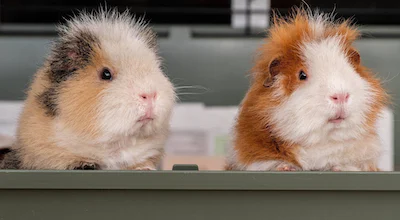
“So effectively, we’ve been guinea pigs,” she says.
*Guinea pigs, and not just in science research, but in the manner and form of all vehicular design, furniture design, tool design, architectural design – the list goes on and on. Air bags in cars and SUVs weren’t designed for the average person, including women, until 2005, leading to worse outcomes (including suffocation) when women were involved in crashes. This shit matters, in other words.
Oct 14, 2023
*Here is a part of one of numerous longer novella/novel length pieces I have been working on – in fits and starts – for over a decade, if not longer. It’s messy and so, so, sooooo overwritten, and, this winter, I want to edit and complete it. I WILL complete it. Sigh. Hopefully, I will. I intend to. LOL. Thanks for reading.
People, a lot of people I’ve met in my life, say things they don’t really mean. They’re not bad people; they don’t intend to lie or mislead, they just want to please whoever they’re talking to, or not make anyone angry or whatever. I do this, everybody does this, but mostly I try to be honest all the time, occasionally to a fault. This is because, or mostly because, of the way I was raised: by upright, uptight Methodists whose primary maxim was that one must always, always tell the truth. It’s also, probably, because of who I am, which is, in essence, bluntly truthful, perhaps even tactless at times. Perhaps? Definitely, in a world where we say we want honestly in all things and at all times, but really, truly, we appreciate, promote, and value ellipsis and evasion, all forms of dishonesty masquerading as kindness, politeness, making nice. Passive aggression. I try not to speak, often, because of this tactless blunt tongue of mine, finding safety in silence. I know I am considered reserved, snobby as well, perhaps, because I don’t gab and jammer or engage successfully in small talk, which is one of the things I dislike most in the world.
Mostly, however, I think I speak the truth stumblingly and thoughtlessly, bluntly, because of my mother, and I’m not just blaming her because that’s what people do, blame the mom, as she really did mess with my head. There was a time, several years of time, when my mother thought I was a liar; we went through – I went through, I experienced, I endured, I guess – a few really challenging years as a teenager when nothing, not even, say, “it’s cold out”, got past her without an interrogation of all terms and conditions surrounding my statement. I think she caught me lying once or being evasive. I think she might’ve been going through menopause? I wouldn’t dare ask her, even all these years later, yet I have no specific memory or idea of what triggered this particular obsession of hers – and perhaps it was even my silence, my watchful and stubborn refusal to speak – but looking back I’m not sure she ever believed me, ever. And then another time I came home later than she thought was proper, Senior year – and I was not lying about it, the why I was late – but she was so sure I was, and that this was part of a bigger pattern of lies and lying, her cross-examination of me was relentless, so much so that even when one of my small circle of friends, a girl my mother liked a whole lot more than she ever liked me, supported my story, it was still all a lie.
You get the picture. It was a nightmare, like Hitchcock’s The Wrong Man, a film I still cannot bring myself to watch for the anxiety I feel while the web of misunderstanding and helplessness tightens around the protagonist, it tightens around me too, adding to the heaviness in my chest; it’s too much for me to bear, too familiar. Maybe she was going through ‘the change’ or something else was going on I have no clue about, and that’s what made her more suspicious than she’d ever been before, and paranoid, but as I won’t ask her, it doesn’t matter, I guess. It was. It happened. It’s over. Right?
Maybe not, actually, as, after a seeming lifetime of my mother’s suspicion, I still find myself trying to be completely honest all the time. Whenever I make a statement of any kind, I rehearse what I intend to say over and over, checking for the right word or words, trying to avoid misunderstanding, which series of compensatory actions get me into a whole other sort of trouble when it turned out that no one really wants the truth. And rehearsed words sound false, you know? To most people, in most situations. I settled, while I lived at home at least, on not saying much at all. It became too hard to try and explain myself, and there was never anyone to back me up. But the conversations in my head, which are never ending, became a habit I have yet to break as I begin and continue to have explanations, explications, extrications and excuses prepared for ready use, for every single eventually. Exhausting. It’s exhausting, and a hard habit to break, impossible, maybe.
I’m telling you this because I want you to know that what I write here, what I write about this family, the Carrolls, and myself, will be imperfect and incomplete but it’s the truth, my truth as I remember things. And this much I know to be absolutely, totally 100% true: having the Carrolls move in next door to me – to my family – changed my life. They changed me. They changed me and my life in ways good and bad and profound and silly but mostly, overwhelmingly, they changed me in ways profound and good. I fell in love with them all. I loved the Carrols, I loved them. I did then and I do now. I dream about them, not as often as I used to, and in these dreams I try, always, to get to them, to catch up to them – whether by foot, bike or by car – sometimes even on a sled, through winter snow drifts rising up to my shoulder on the street where we, both the Carrolls and my family, lived, although at other times I’m following on an unknown city street, or on a back road in my home town where they are forever ahead of me, striding or rolling away, laughing. Not unkindly, but because that’s how I remember them, always laughing in jest and in fun – yet wholly out of my reach, which makes sense as they were all good athletes and drivers, skiers and bike riders, moving confidently, quickly through space and time. I was and am a so-so athlete at best, and a much more cautious mover and driver, whatever the mode of transport. But I am getting ahead of myself now, and of my story, which is a love story like all the best tales, though I don’t aspire to write it as well as those who have captured love and its many and varied journeys successfully and beautifully. I simply hope to do this love justice. And them. I hope to do them justice, the Carrolls, to write them fairly and with all the love I feel and all the wonder and pain, because of course loss is a part of love, and I have lost them, they are lost to me, except what I keep inside. Maybe by writing I will recover them, in some essential, substantial way? Maybe. Perhaps.
And I want to, need to, write about them, the Carrolls, and by writing about them and that time in my life, I can maybe, perhaps, free myself of longing for their presence and for, for what – childhood? Yes, childhood, in a way – but also, and mostly, for remembered joy in the fall, in falling in love, discovering a family and culture so different from my own, one where passion was a constant – passion for life, for sports, for music, for books, dogs, frogs, kittens, barbequing – for anything and everything in which they were interested. A family where I was completely accepted and liked and even loved as I believe they loved me; I hope so. No, I know they did. As for me, I adored them all. How not to fall in love with all of that, and them?
I remember reading a book once where a woman went abroad and felt immediately at home – accepted and loved by the people of the country despite an initial language barrier. Even the fact that she spoke Spanish or French or whatever it was, at the high school level, didn’t matter; they laughed with and praised her attempts at fluency and welcomed her wherever she went, gifting her with oranges (naranjas?) and other treats of the area she was visiting.
It was a delicious fantasy but that was how the Carrolls were with me, or so it felt to me then. And so I begin. I wish I were a better remember-er and writer as failing to do them justice bothers me before I even start. Help me, oh you Gods and Goddesses of love and all that is good and great in the world!! Help me. Help me.

Oct 13, 2023
Their names were Stephanie, Steven, Michelle (Melanie?) and – one other I also can’t remember exactly, but it might be Steven as well, spelled Stephen. It was the seventies, a long time ago; the photo album we had, a size of a man’s fist covered in turquoise blue, with their names and dates of arrival and departure, an album just for our four foster babies, was a casualty of the post-mortem clean-out of my father’s house. My mother was three years dead by that point. Who wants this? No one. No one. Now, I think about those adoptees having zero record of their first days and months on earth, no photos of themselves as newborns, but – too late. One of the boys was with us until shortly past his first birthday; what must that transition have been like for him, going from our house to his adoptive home, bing-bam-boom? I think about him, about them all, occasionally, hoping they’re okay. Did they let him keep his first name?
At the time, my mom was yearning for control over her pre-teen and teenaged children, control she would never have again (if she’d ever had any to begin with), and so, as an alternative to that, let’s get us some foster babies! She loved babies, up until about twelve months old. My dad acquiesced in the foster baby plan, as he generally did when my mother wanted to take an action regarding ‘the children’ or children and family related questions. He loved babies, too, and children in general; my dad liked people. My mother preferred babies up to or around twelve months old, skipping ahead to well-behaved, intellectually gifted male teenagers aged fourteen or older. Make that sixteen.
How did we – my parents’ actual children – feel about their foster children? We didn’t talk about it, amongst ourselves (the kids), or as a family. It was something that happened, and we were expected to be enthused, to help, or at least not to get in the way. In truth, we were not a ‘we’ in this, or anything else, we four Mueller kids; my brother was encouraged to do baby things, was expected to be funny and sweet and paternal in a nurturing way, like my dad, all of which he was, including as a parent with two kids of his own years later. My sisters were also encouraged to coo and purr in a maternal haze, changing diapers, burping, and otherwise performing baby-care in support of our mother. I changed a few, maybe four or five, diapers during this adventure in fostering, learning as well how to feed and burp, but – typically for our household – I was pointedly discouraged from having much contact with any of the foster babies. This was communicated to me by my mother, as I was never, in her estimation, a real girl. Or, something like that. I didn’t like babies, I didn’t like pink, I wasn’t feminine, I didn’t have normal maternal instincts – only, I did like pink, I did love babies, I had normal maternal instincts, I was as feminine as any other girl, but my mother was very opinionated and in her opinion, I was less than, and not naturally interested in things women were expected to be interested in, or something like that. And, being my mother, and, reputably, the smartest woman in town, she had to be right, or at least maybe, possibly know something I did not about myself.
Once I was safely out of the house, always a goal for my mom, her personal light at the end of the tunnel, there were no more babies in her life until my sisters starting popping them out, coming to grandma’s house post-deliveries to stay for a week, or two, or even three, taking advantage of my mom’s baby-sitting, laundry, and cooking along with her complete inability to set limits or say no, we’re getting old, babies are a lot. Even before this time, I had decided that I would never have a child, unless I had a partner who was one-thousand five-hundred percent supportive, and even then, the chances were very, extremely low. I would not risk doing to a child what my mother had done to me: make me feel unwanted, unloved, in the way. I would never fill another human being with my darkness, as she had with me, simply because I was there, the timing was bad, and she hadn’t wanted children herself. All children should be wanted. No child should be given away. Children are not, ever, at fault for the choices of their parents. All I wanted as a child was for my mother to be happy, and then she would be nice to me.
Later, around seven or eight, I realized it wasn’t going to happen, but oh! To have a mother that loves you! How fine that must be. That chooses you by adoption, or keeps you and keeps you safe, loving you up either way. How fine.
Oct 12, 2023
I listen to a lot of political podcasts; politics is my sports league, my hobby, my passion and my love among numerous other loves (I’m not a complete freak). Of the pods I like to follow, I listen to two that feature Republican and Conservative political pundits, as well as former GOP pundits, those who left the party – and good for them – due to the rise of Orange Nero. I do this because, while I cannot make myself listen to pro-Dumpster Fire ‘news’ or pods, I want to get a bead on what the other side is thinking, because bottom line they are at heart, bone marrow deep, still Republicans, like my brother who also left the GOP when Orange Aspic became the nominee. The GOP is forever my brother’s – and these pundits, chosen tribe, their team, their philosophical soul-match, and they all wait with bated breath for the team to come to its collective senses. Good luck with that, bro.
One of the pundits I like to follow specializes in running focus groups of different types of registered voters (Blue, Red, & unaffiliated) all over the country, and I am very interested in those conversations, as talking to actual voters, relying on first person accounts, really matters – especially given our divided electorate and the spread of mis-and mis-information, including by professional spinners of political nonsense. And, during one pod posted shortly after after the Supreme Court made its expected but still horrible decision striking down the use of race, a.k.a. affirmative action, in college admissions, this person used the following phrase, which raised my hackles, ‘the soft racism of lowered expectations’; she was, with those words, describing as ‘soft racism’ the program, the philosophy, the legal and administrative structure of Affirmative Action. First of all, there is no fucking thing as soft racism. Racism is racism, and it is evil, vile, stupid, wrong, not soft or friendly. This reminded me of a back and forth between my Tennessee born and bred cousin wherein he statted that his dad wasn’t ‘a mean racist’. There is no such thing, cuz. No. Such. Thing.
Conservatives, like this focus group running chick, have been very adept at finding language to re-frame their actual racism, like putting a soft-focus lens on a camera to make the old guy coming soon to a screen near you look forty(ish) again. Am I 99.9% sure she’s a racist who doesn’t think she’s a racist? Yes, yes I am. Racism is baked into the system, baked into all of us from childhood, and she is a well-off white woman who has benefitted from that system; she grew up in central Pennsylvania, went to college in central Ohio, and has been, her entire life, surrounded by a majority of white people, all within a system that was built by and continues to preference white people, a system that includes her work in coded racist GOP politics over the last twenty-five years. So yes, yes, I’m sure.
Affirmative action was not instituted, codified, or created in any way, shape, or form because of or in reaction to lowered expectations for people of color, although racists sure do think POC are less capable and intelligent, among other outrages (unless you’re Obama, in which case you’re demonstrably smart but unfit because ‘born in Kenya’). Affirmative action was established as a potential and partial fix, a step in the right direction taken in reaction to the reality of racism, a reality that, until the late sixties, seventies and even the eighties, meant that most colleges and universities actively rejected applications from students of color, however qualified they might have been. Sure, Harvard, Yale, Princeton, Stanford, and other top institutions admitted at least ‘a’ black man, possibly even a handful, during the 19th and early 20th centuries, but I doubt even this ‘soft-racism’ promoting former GOP operative would say three admissions per decade – or less – had an outsized (if any) impact on the trajectory of an entire class of persons who were in fact being actively excluded and discriminated against as a matter of accepted policy. Ditto the admission of women.
Affirmative action was a remedy in part, a single small step, an imperfect policy like the system that created a need for it, and was applied (and is to this day) to the hiring of federal contractors, the awarding of federal contracts, in employment wherever federal funds are involved, and more, yet affirmative action is more visible, and vulnerable, as a piece of the college application process. Established initially by JFK in 1961 because the system overwhelmingly favored white employees, contractors and etc. and, at the college level, favored white students, especially wealthy students and legacy admissions (and FFS people, they still do!), affirmative action was a positive way to address exclusion, i.e. you shall use the race of applicants as one of several or many qualities that are a plus toward admission; race will be an added reason to consider acceptance, a flag in a positive sense on an applicant’s file, in the same way a red negative flag excluded even the brightest students of color simply for their race, zip code, and other nonsensical information having nothing to do with excellence, potential, or expectation, either low or high.
And why should affirmative action – race as a series of positively considered qualities in an application process – continue? Because even if accepted by the institutions of higher ed., barriers to attendance exist that cannot be addressed via policy or the law: hidden biases, a lack of tutoring in the application or college selection process, the challenge of distance and travel costs, lack of family support, being the first generation to go to college, as well as – among still other challenges – students and families lacking the sophistication needed to navigate the financial aid nightmare that is modern college admissions. There is a reason Felicity Huffman and other rich celebs cheated to get their not-so gifted kids into top tier schools, just as there is a reason she and others were given a wrist slap as punishment for same. Privilege protects privilege, like prefers like, and in a system that is to this day overwhelmingly staffed, administered, and led by white men, affirmative action still has an important role to play.
Soft racism my cottage cheese ass. Actually, that’s a terrible phrase to use; my cottage cheese ass exists, soft racism does not. Racism is racism is racism, even if you’re smiling while in the act of, Ms. Sarah.
