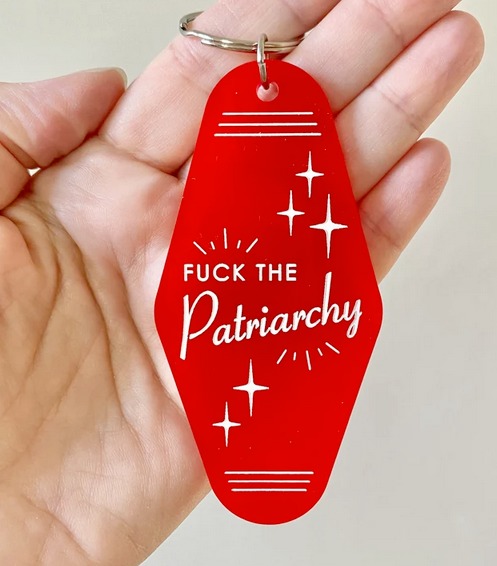
*from author Marla Rose (not her real name, or rather a shortened version for the internet)
What a small resting place in a subdivision says about our past and why it’s a cautionary tale for the future.
On Sunday, I was feeling that familiar invigoration I can always rely on in early autumn, as the leaves are just on the verge of changing and households start displaying their Halloween decorations. I convinced my son and husband that we should drive out to Geneva, IL, a quaint, verdant river town in the western suburbs of Chicago, about 45-minutes west of us. We trek out here a few times a year to take in the riverwalk, enjoy the boutiques, and breathe in the fresh air. On Sunday, I got that urge again and my guys were on board so we charged our phones, packed our drinks, and set out. Just before we left, thank goodness, I remembered that there was a place there that I wanted to see in person, one that had not been on our itinerary before.
It was the tiny cemetery of 51 graves on what was once part of the 94-acre property of the Illinois State Training School (ISTS), also known as the State Industrial School for Delinquent Girls or the Illinois State Training School for Delinquent Girls (among other appellations), which was in operation from 1894 until 1977 (Moj here: 1977 FFS). Just outside the gates of the now-demolished institution you fill find this small cemetery, improbably nestled between and behind two large homes in an affluent subdivision called Fox Run.
I had heard of the cemetery before here and there and seen some photos of the spare, old gravestones. I also knew that the cemetery was in an unlikely setting but that didn’t stop me from wondering if our GPS had failed us as we drove around cul-de-sacs and saw children riding their bikes and walking dogs in a decidedly residential setting. When my maps program said we had arrived and we were, in fact, between two large, manicured lawns, I stepped out to look around but I was doubtful. Where would it be? After walking around a bit more, I saw the iron fence and called out for my husband and son, still in the car, to join me.
Somehow or another, this was it.
We walked over to the fence, first passing a plaque, which reads, “Beginning in 1894, this land was used by various government agencies as a center for ‘wayward girls’. The colonial-style cottages, service buildings and fences are gone, but these 51 graves remain. These graves are a testimony that they are no longer wayward but home with their Creator.” The plaque ends simply: “May God’s peace be with their souls.”
The first thing I noticed after walking through the gate was how uniform the simple concrete markers were, bringing to mind photos I have seen of the rough gravestones for the Civil War dead. The next thing I noticed before I began looking at the stones was a tall, utterly majestic oak tree, her branches offering a quiet green canopy for us, over much of the cemetery. The acorns crunched under our shoes, the only sound in the cemetery.
At first when I saw gravestones with boys’ names, I was confused because I knew this was an institution for girls, but then I noticed how long they were alive: these markers were for babies or newborns, and are clustered together in one section of the cemetery. Other gravestones, possibly for their mothers, are buried near one another in another section; these gravestones indicate that age 20 is about the oldest of the dead, which makes sense as ISTS was an institution specifically for minors, ranging in age from as young as ten, to the age of eighteen, although some were younger and many were a little older. Most had been sent because they were suspected of being sexually active or were pregnant; later research found that more than seventy-four percent of inmates were incarcerated at ISTS, which could house up to 400 girls at a time, for reasons of “immorality,” the unspoken code for pregnancy, sexual precociousness or suspected sex work. As the plaque at the cemetery references, they were “wayward” girls, wayward enough to have been convicted in juvenile court.
In the mental and physical examination records I later researched, it was noted that some were disobedient, others were described as feeble-minded, which could mean anything from a speech impediment to being terrified of their interrogators. Some were deemed to be incorrigible. Some were found have unpredictable mood swings. Some there had been convicted of truancy. Some were labeled as sexual deviants, a code for lesbians or even non-virgins. Many were runaways from abusive homes. Most were willful. All had been found guilty of violating society’s norms for girls. All of these young children were poor.
Middle class and wealthy girls who ran afoul of societal norms weren’t given a free pass, but they weren’t sent to institutions like this one.
I have no doubt that some of the girls incarcerated at ISTS over its eighty-plus year history were indeed mentally ill, or genuinely needed help, but that was not what the institution or even society offered at the time. Ophelia L. Amigh, a one-time Civil War nurse who was superintendent of the institution for 16 years, ruled with an iron fist until she was ousted due to vaguely-worded controversies in 1910. To reinforce the obedience to the matrons, girls deemed rebellious or sexually active with each other were sent to the hole (solitary confinement), subjected to “hydrotherapy,” which meant having their bodies repeatedly dunked in cold water; there were well-worn straps and a riding crop, as well as a chair built by the institution’s carpenter, much like a stock from the Puritan days, where the person in it only were able to have their head poking out. They lived in small cells with just a cot and a barred window; I call them inmates intentionally.
Many committed to ISTS ran away and were returned; many ran away and were never found. Some like 20-year-old Sadie Cooksey died by electrocution on the third rail of the nearby railroad line as they attempted to flee.
There is also the unavoidable cautionary tale of this burial ground. All were indigent, all were society’s outcasts, most were teenagers or babies. Some were Black and kept in segregated cottages, others were mentally ill and abused. All were prisoners without resources or recourse, and there were some for whom this hellhole was an actual step up from the abuse they faced at home.
While the institution has been bulldozed and an affluent subdivision has been planted over it, and the cemetery certainly looks like something from a bygone era, is the ISTS really just a sad old chapter of our history? With many mostly red states legislating more control over the bodies of pregnant people, with the prevalent attitude in conservative circles that if a woman “just kept her legs closed,” she wouldn’t be in this kind of trouble, with the rightwing mentality of coercion and cruelty against those outside their circle of concern, is it really that far in the past? With each eroding step away of the painfully slow and hard-fought gains we have made as a society for people with uteruses, for people with mental illness, for people of color, I couldn’t help but see this frozen-in-time cemetery as a quite plausible reality for our future. This is the ‘rosy’ past to which forced-birthers want to return.
In 2023, pregnant people in red states are endangered and at growing risk of dying in labor, hemorrhaging, contracting serious infections and being forced to carry non-viable fetuses to term even if it costs them their own health or lives due to laws that would be perfectly at home when the School for Wayward Girls was constructed and running (it was only four years after Roe v. Wade was enacted that the institution closed.) Today’s “wayward girls” have to travel in secrecy to other states, whether or not they can afford it, to terminate their pregnancies. They are told to wait in hospital parking lots until they are on the brink of death with blood loss before they can get the medical attention they deserve. Today, people in states where abortion is outlawed who want or need to end their pregnancies, and those coming to their aid, have a dangerous and fraught landscape to navigate, one that is becoming more and more reminiscent of the Underground Railroad than anyone should be comfortable accepting.
What would the residents of this cemetery, the girls who were never afforded basic freedoms and rights, think about how much progress we have made, only to have these freedoms and rights wrenched away, eroded, reversed? I can only imagine how sad these girls — victims of a bigoted, unjust and sexist society — would be at learning of our country’s regression, driven by a relative few tyrannical ideologues, putting so many disadvantaged women and girls at risk. I think if we can do anything to honor these girls and their babies, we need to strive to be on the right side of history, and if we find ourselves on the side of cruelty, coercion, and oppression, we must course correct as fast and as fully we can.
We have to recognize that the cemetery at the Illinois State Training School is not an aberration but a reminder of happens when rights are denied and the lives of our most vulnerable — people of color, people with disabilities, people who are poor, LGBTQ people, people who have had their reproductive systems weaponized against them — are most threatened. Please join the fight for bodily autonomy and personal rights. Anyone who denies rights and freedoms, who values fetuses over actual human beings here on Earth, is squarely on the wrong side of history.
And to the buried dead of the Illinois State Training School, you are seen. I see you. We see you, we are fighting for you and we will not forget you. We are also fighting for ourselves and each other.
Obviously, all faith traditions are idiotic – a friend in the sky, really? Obviously, as well, I am not familiar with all faith traditions and should or could show some humility in discussing same – but – fuck that. Men created most religions in their own image to suit their own needs, and no one conned a bigger con than the founder of the Church of Jesus Christ of the Latter Day Saints. Joseph Smith – what a classic con man, and Brigham Young was a pretty good con artist, too. Like L. Ron Hubbard of Scientology fame, these men created a religion and set themselves at its head, and somehow managed to get people to follow them. It’s astonishing – but – there are people who love being led, for who knows what reason or reasons (it’s so hard making decisions, and adulting!or, hey, we get to have how many wives – an added value Brigham thought of, the horny brother fucker?!!), and thus, another fucking idiot religion is born.
From the Mormonism wiki page: historian, Sydney E. Ahlstrom, wrote in 1982, “One cannot even be sure, whether [Mormonism] is a sect, a mystery cult, a new religion, a church, a people, a nation, or an American subculture; indeed, at different times and places it is all of these.” Yup.
The article inked above is yet another example of what a dumb-ass religions does to dumb down women, who – within that religion – are brought up to believe that men lead and women follow. This inculcation of misogyny is harming women and girls, training them to distrust their own fucking guts, leading to all kinds of abuse as per the article because DUMB ASS SHEEP. I feel for these women – but what, exactly, were they thinking – yes, yes, of course he (Tim Ballard, the inspiration for the film Song of Freedom, which I missed, intentionally) is a classic con artist and groomer, but – showering with or fucking the guy to prove to traffickers what exactly? How stupid are you?! Thanks to Mormonism, really fucking stupid.
More from wiki: Joseph Smith said the Book of Mormon was translated from writing on golden plates in a reformed Egyptianlanguage, translated with the assistance of the Urim and Thummim and seer stones. He said an angel first showed him the location of the plates in 1823, buried in a nearby hill. With the assistance of Martin Harris, an early follower, Smith began dictating the text of the Book of Mormon on April 12, 1828. Although translation was interrupted by persecution, Smith’s continued employment in order to support his family, and Harris’s loss of 116 pages, the Book of Mormon manuscript was finished in June 1829. Smith said the plates were returned to the angel after he finished the translation. During the time Smith said he possessed the plates, 15 people were allowed to witness their existence.The Book of Mormon claims to be a chronicle of early Israelites who left the Near East and traveled to the Americas. The book begins c. 600BC with the departure from Jerusalem of the family of the prophet Lehi at the urging of God, and their sailing c. 589 BC to the Americas. It records the people of the Americas as having had a belief in Christ hundreds of years before his birth, their witnessing his personal visitation to them after his resurrection, and eventually losing Christianity after generations of wars and apostasy. The Book of Mormon and continuing revelations would be the means of establishing correct doctrine for the restored church. Smith, Oliver Cowdery, and other early followers began baptizing new converts in 1829 (***when Smith would’ve been all of twenty-three or four years old) and formally organized in 1830 as the Church of Christ. Smith was seen by his followers as a modern-day prophet.
Golden plates? Travel to the Americas where – huh – they lived for centuries before melting into the Native population, I guess? How stupid are you people, believing this shit? Very. Mitt Romney is a nice guy, seemingly, but if you buy any or all of this shite, you have suspended disbelief to such a point you could be sold almost any bag of goods, including more rot. Religion is an opium of the people, said Karl Marx, and I’ll add that it’s an expensive, time consuming distraction from the exploitation of the same masses by the self-selected masters of each and every race that is being sold a sky pal as a necessary belief and way into ‘heaven’. No, just no.
The R.A. (resident advisor) I had on my floor freshman year at college (6th floor, Haven Hall, also known as the toilet bowl) was a little thing, no more than five foot two, if that, and she had a Dorothy Hamill haircut, which didn’t really suit her, even though she had similar thick dark hair – but who was I to say anything? She was a Junior, and over twenty; I had just turned eighteen five weeks earlier, and was a hot mess. Still I couldn’t help but notice that she didn’t have Hamill’s joie de vivre, grace, or athleticism; on her it was more of a helmet than a style, you know? Still, not my place to say anything, if I’d been able. This was the first time I’d been away from home for more than two weeks, and that was for Girl Scout camp over a decade before college, a camp where I was surrounded by other pre-teens from my region of the Catskills and further west, toward Binghamton. I wasn’t happy at camp, either, but there wasn’t any booze, drugs, or boys to further complicate my emotional weather at good ol’ Camp Skanatati. And camp was – camp. I always preferred the outdoors to being inside with my family, unless I could bury myself in a book, in winter, when there often weren’t any other choices.
I became a little sister at a frat that first semester, Phi Psi, mostly to get free booze and meet people, I think, and maybe I rushed that frat with a friend? I always think I did this, rushed Phi Psi with a friend, but if I did that friend is lost to memory. I suspect she might’ve been that other person I also was at the time, the avatar or hidden twin of myself, always watching what I did, standing aside, waiting for the other shoe to drop, or kick me in the face. That entire year passed in a blur, but I still remember them, the girls I knew but lost touch with after that first semester and difficult year: Marisa from New Jersey (boy-mad, bad skin, shaped like a pear), Kathy from Buffalo (hair like a frizzed out bird’s nest, deeply in love with Elvis, who died that fall). I also remember a thin, quiet girl who seemed palpably miserable even though we never spoke; she was a sophomore in an all-girls dorm mostly filled with freshman (you chose this?), across the hall from my cramped double. She had a single room with a view. We all noticed that she arrived back to the dorm after the holidays, on Sunday nights or early Monday mornings in a limo. She was a Carrier, as in the Carrier Corporation and soon-to-be Carrier Dome, which was built to replace Archbold Stadium. My class would be the first to use the Dome for our graduation in 1981; Al Haig spoke, and some of us stood and turned our backs. I stood and showed my back but then sat down to listen because that was the thing to do, I thought, be both defiant and polite enough to listen. I remember Michelle, too; she was my roommate and had a boyfriend named Joe Hotung whose family was rich-y-rich, like in the film Crazy Rich Asians. He was at Amherst? Dartmouth? Michelle was a lovely girl from Hong Kong where her dad had been a diplomat; she died in the early nineties of liver cancer. Michelle Champeau.
The resident advisor – whose name I don’t remember – was a Christian, and white as fuck. She dressed in casual Christian, most often wearing skirts, with darkly colored tights and flats, very occasionally donning khaki pants, paired with buttoned to the chin long-sleeved blouses, and sweaters that were not very tight, if you get my drift as in nothing form fitting. I don’t remember ever seeing her wear red, or purple, but she might’ve. Cross of gold prominently displayed around the neck. Chrissy? Debbie? Susie? Tina? Whatever it was, I don’t recall, but I do remember her asking me to stop by her room for a chat. She said it had been noticed, by her and by others, how much drinking and partying I was doing, and that I had on more than one occasion been sick to my stomach, as well as blacking out, perhaps? Were there any troubles at home I wanted to talk about? This was years before I would ever admit my home life or childhood was anything other than perfect, and the idea – she asked – that Dick and Dot might be getting a divorce, thus the reason for my blackout drinking, was ludicrous. I might even have laughed in that sincere girl’s face. I was hungover, or drunk, and very possibly high when I stopped by for this chat. Nope, no divorce, no issues at home, perfect family, perfect childhood, ideal, really, the envy of everyone in town. Perfect town, too. Small town U.S.A. Gotta love it!
Shit, though. Was my drinking that noticeable? Was I drinking more than I had in high school? If so, not by much. And other than that first semester, I made the Dean’s List consistently all four years. Being able to succeed while seriously fucking oneself up is a learned skill, one I’d got my scout badge in early.
If you were an R. A., you had free housing. But housing and meals were all I had, my parents had, to pay for. I was there on a full academic scholarship, and was determined – no, I was programmed to do well, because education was a value in that house, the one she worried about, that short, simple Christian girl. Doing well in class, being smart, was something I found easy – unlike almost everything else – except maybe bowling and fooling people, mainly myself.
I was friends, good friends, for a while with this girl named Tracey; she lived on another floor in the toilet bowl, but we drifted apart, when she – and my roommate Michelle – joined sororities, a world that I found dismayingly gross, narrow, and materialistic. I wondered, too, who among the girls I knew had told Miss Whatshername R.A. about my boozing it up. Had I really blacked out or passed out drunk in such a noticeable way? More so than any other girl on my floor? Still, someone must’ve said something to her. This made me suspicious, and angry. Just because you’re paranoid doesn’t mean they’re not out to get you. Late in the first semester that year I made friends with a girl who was in several of my core classes; she became a dear, close friend, thanks be fate, or destiny, whatever. We’re still friends, and for that, I am thankful. I felt the R.A. watching me that year, after our chat, and resented it. I recognized even then that she was just trying to help, doing her job, but in hindsight I know – I know – that there were girls with more serious issues on that dorm, girls with abusive, controlling boyfriends, girls with obvious bruises or injuries, girls puking their guts out in the bathroom every day after every meal (I thought it was the flu, it was not), girls obviously starving themselves to death, or nearly, as had my older sister – but she was worried about me, doing what all-American girls do – booze and dry hump guys in frat houses? Sheesh.
My roommate’s brother – her twin – shot himself that semester, somewhere in suburban Maryland or Virginia; did that troll of an R.A. with her fucking prayer group (you’re all invited, every Wednesday, Friday, and Sunday night!!) ever talk to Michelle about that? Michelle and I became close that year, but she never said anything much about it, to me anyway. When you’re young, nothing seems like the bump in the road it obviously is, the road sign to pending difficulty, the red flag, the hump you will never quite get over, until it hits you years later, in the middle of the night or amidst a fight with a family member, how you felt, how lonely and lost and scared and always, always trying to get it right. God forbid you should say, to anyone, how it really was, how much you struggled, when your entire modus operandi is strength, intelligence, and humor. What a show! Strength, intelligence, and humor. And silence. The thing is, I thought the R.A. was asking me to chat with her about religion (no thanks, sweetie), or to offer me the chance to be an R.A. in future myself. Now that, that is funny.
A recent photo of Diego, the giant fur baby (he is just 18 months old) in my living room, which used to be a place of quiet calm, clean and neat – and now is covered with DOG, dog toys, pieces of dog chews and treats (that’s what vacuums are for, dahlink. sigh), and all the shite he brings into the house on his curly-ass hair. That’s his favorite toy, a blue dinosaur, on the floor. We play daily with the toy. He likes me to chase him around the downstairs, but if I stick with it, I can get him to bring it back to me while I sit my arse in a chair, tossing it in the air, where he tries and occasionally succeeds in catching it. He’s a good boy. Almost all the time. Sometimes. Mostly.
(right now he is watching me type, sitting under the dining table, the toy resting between his two gigantic front paws. I know he wants to play – can I escape my fate… no, no I cannot. sigh.) <3
There is so much to write, think, and feel about regarding recent revelations of the grooming and sexual abuse of girls at my alma mater, my tiny little K-12 school, I’m almost overwhelmed. A community conversation has been started that is long overdue, and much needed; I feel relief and unsettled in almost equal measure. There are actual consequences in the works for actions taken by male predators for the first time in over fifty years, and the joy I feel in that single aspect of these series of events is incredible, and deeply emotional. There is also the increasingly long list of the most recent victims of the outed and ‘on administrative leave’ English teacher by way of his former student’s HuffPost Personal essay, again linked below this post, because it can and should be read and re-read, it’s that powerful and good. I could also spend an hour or more musing upon how wonderful it is that the written word of a student who was groomed and abused has and is being used to take down her writing teacher- abuser? Now that – that is pretty damned karmic and wonderful.
The girls, the women – are suffering, because anytime you bring up the abuse, or another victim comes forward, it awakens the event of abuse in practically any and every other victim. And, they are speaking out and reaching out. I know this because a few, not all, are reaching out to me, and I am listening to them, reaching out in turn. This is a way to heal, and to get justice. Justice.
But I won’t talk about those aspects of this nightmare-cum-day-mare here, today. Instead I want to address the blame game, which is on-going, as old as time itself, and is making me fucking nuts when I check in occasionally on comments on the original HuffPost piece, as well as online in other spaces, and in conversations I have had in the community at large. The perpetrators are to blame. Period. Full stop. The perpetrators are to blame. Period. Full stop. The perpetrators are to blame. Period. Full stop. Anyone who looked the other way knowing what was going on is complicit but not, ultimately, responsible for the actions of these men. Tragically for us all, most individuals will look the other way when courage is required; these look-away-ers are moral cowards, and I despise them, but they are still not to blame. Complicit, yes; responsible, no.
The victims are not, ever, to blame (why did you get in the car, asked one male commenter, who was quickly schooled, yay). The parents of the victims are also not to blame. Repeat: the parents of the victims are also not to blame. Sexual predators are usually highly intelligent, selective about who they victimize, why, and when, choosing a moment when they are aware that tensions at home are already high, the family has broken down, or is in crisis, all of which they learn because small town, conversations in school with students, family, or other teachers, journal writing assignments, etc. They groom entire families, institutions, and communities, relying on convention and conventional thinking as protection, which thinking leads to the generally accepted truth that students are safe with and around their teachers, which they mostly, overwhelmingly, are – but – not always. Conventional thinking says he’s a good Catholic or Presbyterian or…, and married, or is a good local guy everyone knows and likes, or that his wife is so attractive he wouldn’t do such a thing, that he’s just really close to, or great with, teenagers, especially the girls, that they’re just friends. Conventional thinking in our culture also endows teenaged girls with Lolita tendencies (such horseshit) or the intelligence and maturity to handle themselves in whatever situation they find themselves (also horseshit).
The wives are also not to blame. The wives are also not to blame. The wives are also Not. To. Blame. They live in a society and culture that tells them to love their men with all their might, and that to love unconditionally is the model and method. These women were and are chosen by their predatory husbands for their ability to love and look the other way, for their inability to see what’s going on right in front of their noses, for their adherence to convention and conventional belief (he would never! but we have so much sex!). The wives are also groomed, and – often and often – they are stuck. One of the men who assaulted me the summer I turned eighteen had three children under six years old at home at the time; she was on leave from her teaching position, and they were both Catholic. The rumor around town was that I was having a consensual relationship with this man, when I was seventeen and he was thirty-four or five. Yick. She treated me like the enemy, which I found bemusing and weird; she had been my middle-school math teacher, not very good (she could not control our class), but a decent person, I thought. I also thought they were both old and that he was gross (that greasy blond ponytail, abundant gut spilling over his belt, and walrus-style mustache), and when one of my mom’s friends told me the rumor we were ‘doing it’, I was equal parts stunned and nauseous. Never. Blech. Even if I had felt safe, loved, and respected enough to report the assault (I did not, and was not), or others of his victims had come forward, would she – his wife, the math teacher – have believed it, or ever considered leaving him, with a clutch of kids at home? Never.
Maybe if we were more honest about the intricacies of love, of marriage or of the very pertinent financial nature of many unions, the construct of finance and equity, routine and conformity. Maybe if we were more honest about family and convention, the structures that underpin most marriages, and relationships. Divorce is expensive. Painful. I just finished Maggie Smith’s (the poet, not the Dowager Countess of Grantham) excellent memoir, You Could Make This Place Beautiful, which was instructive in the above, although I’ve seen and hand-held women friends going through it; it’s never, ever easy. Maybe if we were more honest about male desire, their full-on penis brains, and the flawed nature of much of humanity, especially men, especially men, especially men – who, in a patriarchy, are told and shown in a thousand ways from childhood that their wants, desire and aspirations are more important than the needs and desires of women and girls. Maybe if we were more honest about power differentials, in all settings, and the nature of sexual abuse, which – rape included – is always about power, not simply a case of hard-ons gone wrong, or unmet desires ‘at home’.
The perpetrators are one-hundred percent to blame for their actions, and we are all to blame in a culture that sexualizes children, girls especially, and normalizes relationships between young girls and older men. We are all to blame if we don’t say, at the very least, what’s up with that, those two, what’s going on there? Asking questions, particularly of the girls who are not in any way to be blamed, questions like: hey, are you okay, or – you know you can tell me anything, no judgement, right, or – is he, this much older man, pressuring you in sexual contact? There are many reasons why female children are drawn into relationships with older men, number one again – these men, these inevitably older men, are narcissistic, immature predators, grooming their victims, seducing them with attention and praise. But – we must also acknowledge that our institutions and policies, our laws and biases, are designed to protect perpetrators and the institutions they have created and run, while undermining women and girls’ ability to function safely and authentically in the world. If you feel powerless, if your society and culture, your family and religion, all tell you – subtly or out loud – that you are less than, or even just less safe, less capable than your brother, your male classmates (death by a thousand cuts, implicit biases in classrooms, living rooms, kitchens, boardrooms, clubs and on teams), why would you not cling to a man who seems powerful, if only by way of his having a car, a house, a credit card, and an ease you have never felt while moving through the world? Respect, even; they have respect, which you know you don’t because – why? Because GIRL. Often these predatory men are the most respected, most visible members of a community. Community, small town community in particular, can really work both ways, protecting and exposing you – it depends on who the community consists of, and who makes the rules. The rule makers have been – for a dozen millennia – men. Let’s change that, eh? And place the blame where it belongs, on the men, the men, the men who do these things and every single system they exploit to get away with it. Let’s change those, too. #SmashthePatriarchyAlready