Oct 25, 2025
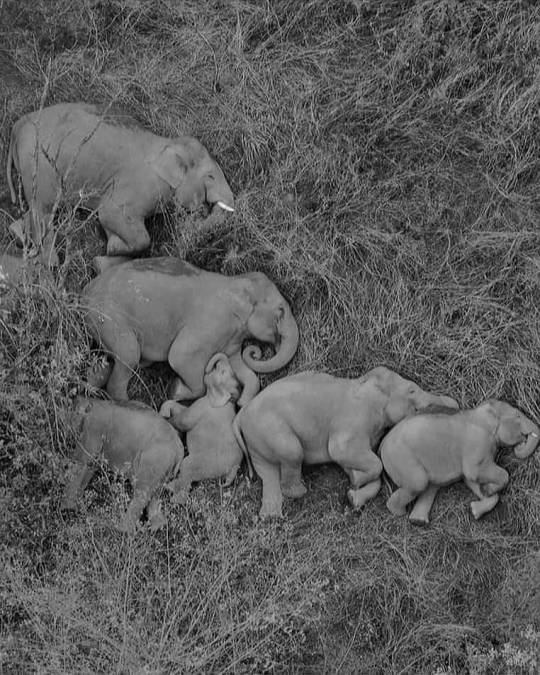
*a poem by Loryn Brantz
The world needs a mother to give it time-outs (sanctions)
The world needs a mother to take away its toys (weapons)
The world needs a mother to say that’s enough (ceasefires)
The world needs a mother to pull this thing right over
The world needs a mother because if we keep letting
insane baby-men run this ship
It’s not going to last very long
is it
*Amen, sister. More on Brantz here https://en.wikipedia.org/wiki/Loryn_Brantz
Oct 24, 2025
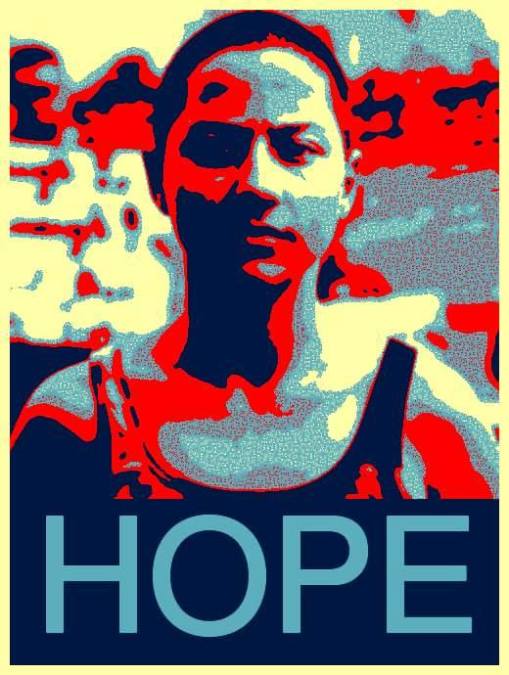
*a very short piece from my favorite magazine, The Sun, which I read when it appeared in 2013, and come back to whenever I want or need a good cry (you’ve been warned). written by Brian Doyle, and sadly just as topical as it was twelve years ago. more about The Sun below.
Early one morning several teachers and staffers at a Connecticut grade school were in a meeting. The meeting had been underway for about five minutes when they heard a chilling sound in the hallway. (We heard pop-pop-pop, said one of the staffers later.)
Most of them dove under the table. That is the reasonable thing to do, what they were trained to do, and that is what they did.
But two of the staffers jumped, or leapt, or lunged out of their chairs and ran toward the sound of bullets. Which word you use depends on which news account of that morning you read, but the words all point in the same direction — toward the bullets.
One of the staffers was the principal. Her name was Dawn. She had two daughters. Her husband had proposed to her five times before she’d finally said yes, and they had been married for ten years. They had a vacation house on a lake. She liked to get down on her knees to paint with the littlest kids in her school.
The other staffer was a school psychologist named Mary. She had two daughters. She was a football fan. She had been married for more than thirty years. She and her husband had a cabin on a lake. She loved to go to the theater. She was due to retire in one year. She liked to get down on her knees to work in her garden.
Dawn the principal told the teachers and the staffers to lock the door behind them, and the teachers and the staffers did so after Dawn and Mary ran out into the hall.
You and I have been in that hallway. We spent seven years of our childhood in that hallway. It’s friendly and echoing, and when someone opens the doors at the end, a wind comes and flutters all the paintings and posters on the walls.
Dawn and Mary jumped, or leapt, or lunged toward the sound of bullets. Every fiber of their bodies — bodies descended from millions of years of bodies that had leapt away from danger — must have wanted to dive under the table. That’s what they’d been trained to do. That’s how you live to see another day. That’s how you stay alive to paint with the littlest kids and work in the garden and hug your daughters and drive off laughing to your cabin on the lake.
But they leapt for the door, and Dawn said, Lock the door after us, and they lunged right at the boy with the rifle.
The next time someone says the word hero to you, you say this: There once were two women. One was named Dawn, and the other was named Mary. They both had two daughters. They both loved to kneel down to care for small beings. They leapt from their chairs and ran right at the boy with the rifle, and if we ever forget their names, if we ever forget the wind in that hallway, if we ever forget what they did, if we ever forget that there is something in us beyond sense and reason that snarls at death and runs roaring at it to defend children, if we ever forget that all children are our children, then we are fools who have allowed memory to be murdered too, and what good are we then? What good are we then?
*the Sun is an ad free, prose, poetry, fiction, non-fiction, photography, humanity celebrating magazine that I have been reading it for over 3 decades, at least. it’s arrival in my mail box (there is a digital edition, as well) is a highlight every month, and I dare you to read Readers’ Write (a monthly segment of tiny themed pieces from their readers), and not have your mind and heart blown open. I DARE YOU. 😉 the cost of a subscription is minimal, so, y’all, pls consider subscribing, with my thanks... https://www.thesunmagazine.org/subscribe

Oct 23, 2025
*Given by HRC on 9/5/1995. It has been so long since I saw this and read it, I thought I’d check it out once again, and share it with y’all. Noting that it’s the 4th – only 4, FFS – such conference even while women make up half the world’s population and give birth to 100% of it. Sigh. I have edited this for length, but the entire talk can be found at the link below, or on Youtube: https://www.americanrhetoric.com/speeches/hillaryclintonbeijingspeech.htm
I would like to thank the Secretary General for inviting me to be part of this important U.N. 4th World Conference on Women. This is truly a celebration, a celebration of the contributions women make in every aspect of life: in the home, on the job, in the community, as mothers, wives, sisters, daughters, learners, workers, citizens, and leaders.
It is also a coming together, much the way women come together every day in every country. We come together in fields and factories, in village markets and supermarkets, in living rooms and board rooms. Whether it is while playing with our children in the park, or washing clothes in a river, or taking a break at the office water cooler, we come together and talk about our aspirations and concern. And time and again, our talk turns to our children and our families. However different we may appear, there is far more that unites us than divides us. We share a common future, and we are here to find common ground so that we may help bring new dignity and respect to women and girls all over the world, and in so doing bring new strength and stability to families as well.
By gathering in Beijing, we are focusing world attention on issues that matter most in our lives — the lives of women and their families: access to education, health care, jobs and credit, the chance to enjoy basic legal and human rights and to participate fully in the political life of our countries.
There are some who question the reason for this conference. Let them listen to the voices of women in their homes, neighborhoods, and workplaces. There are some who wonder whether the lives of women and girls matter to economic and political progress around the globe. Let them look at the women gathered here — the homemakers and nurses, the teachers and lawyers, the policymakers and women who run their own businesses. It is conferences like this that compel governments and peoples everywhere to listen, look, and face the world’s most pressing problems. Wasn’t it after all — after the women’s conference in Nairobi ten years ago that the world focused for the first time on the crisis of domestic violence? (!!!!!!)
What we are learning around the world is that if women are healthy and educated, their families will flourish. If women are free from violence, their families will flourish. If women have a chance to work and earn as full and equal partners in society, their families will flourish. And when families flourish, communities and nations do as well. That is why every woman, every man, every child, every family, and every nation on this planet does have a stake in the discussion that takes place here.
The great challenge of this conference is to give voice to women everywhere whose experiences go unnoticed, whose words go unheard. Women comprise more than half the world’s population, 70% of the world’s poor, and two-thirds of those who are not taught to read and write. We are the primary caretakers for most of the world’s children and elderly. Yet much of the work we do is not valued — not by economists, not by historians, not by popular culture, not by government leaders.
At this very moment, as we sit here, women around the world are giving birth, raising children, cooking meals, washing clothes, cleaning houses, planting crops, working on assembly lines, running companies, and running countries. Women also are dying from diseases that should have been prevented or treated. They are watching their children succumb to malnutrition caused by poverty and economic deprivation. They are being denied the right to go to school by their own fathers and brothers. They are being forced into prostitution, and they are being barred from the bank lending offices and banned from the ballot box.
Those of us who have the opportunity to be here have the responsibility to speak for those who could not. As an American, I want to speak for those women in my own country, women who are raising children on the minimum wage, women who can’t afford health care or child care, women whose lives are threatened by violence, including violence in their own homes.
I want to speak up for mothers who are fighting for good schools, safe neighborhoods, clean air, and clean airwaves; for older women, some of them widows, who find that, after raising their families, their skills and life experiences are not valued in the marketplace; for women who are working all night as nurses, hotel clerks, or fast food chefs so that they can be at home during the day with their children; and for women everywhere who simply don’t have time to do everything they are called upon to do each and every day.
Speaking to you today, I speak for them, just as each of us speaks for women around the world who are denied the chance to go to school, or see a doctor, or own property, or have a say about the direction of their lives, simply because they are women. The truth is that most women around the world work both inside and outside the home, usually by necessity.
We need to understand there is no one formula for how women should lead our lives. That is why we must respect the choices that each woman makes for herself and her family. Every woman deserves the chance to realize her own God-given potential. But we must recognize that women will never gain full dignity until their human rights are respected and protected.
Our goals for this conference, to strengthen families and societies by empowering women to take greater control over their own destinies, cannot be fully achieved unless all governments — here and around the world — accept their responsibility to protect and promote internationally recognized human rights. The international community has long acknowledged and recently reaffirmed at Vienna that both women and men are entitled to a range of protections and personal freedoms, from the right of personal security to the right to determine freely the number and spacing of the children they bear. No one — no one should be forced to remain silent for fear of religious or political persecution, arrest, abuse, or torture.
Tragically, women are most often the ones whose human rights are violated. Even now, in the late 20th (*21st) century, the rape of women continues to be used as an instrument of armed conflict. Women and children make up a large majority of the world’s refugees. And when women are excluded from the political process, they become even more vulnerable to abuse. I believe that now, on the eve of a new millennium, it is time to break the silence. It is time for us to say here in Beijing, and for the world to hear, that it is no longer acceptable to discuss women’s rights as separate from human rights.
These abuses have continued because, for too long, the history of women has been a history of silence. Even today, there are those who are trying to silence our words. But the voices of this conference must be heard loudly and clearly:
It is a violation of human rights when babies are denied food, or drowned, or suffocated, or their spines broken, simply because they are born girls.
It is a violation of human rights when women and girls are sold into the slavery of prostitution for human greed — and the kinds of reasons that are used to justify this practice should no longer be tolerated.
It is a violation of human rights when women are doused with gasoline, set on fire, and burned to death because their marriage dowries are deemed too small.
It is a violation of human rights when individual women are raped in their own communities and when thousands of women are subjected to rape as a tactic or prize of war.
It is a violation of human rights when a leading cause of death worldwide among women ages 14 to 44 is the violence they are subjected to in their own homes by their own relatives.
It is a violation of human rights when young girls are brutalized by the painful and degrading practice of genital mutilation.
It is a violation of human rights when women are denied the right to plan their own families, and that includes being forced to have abortions or being sterilized against their will.
If there is one message that echoes forth from this conference, let it be that human rights are women’s rights and women’s rights are human rights once and for all. Let us not forget that among those rights are the right to speak freely — and the right to be heard.
Women must enjoy the rights to participate fully in the social and political lives of their countries, if we want freedom and democracy to thrive and endure. It is indefensible that many women in nongovernmental organizations who wished to participate in this conference have not been able to attend — or have been prohibited from fully taking part.
Let me be clear. Freedom means the right of people to assemble, organize, and debate openly. It means respecting the views of those who may disagree with the views of their governments. It means not taking citizens away from their loved ones and jailing them, mistreating them, or denying them their freedom or dignity because of the peaceful expression of their ideas and opinions.
Now it is the time to act on behalf of women everywhere. If we take bold steps to better the lives of women, we will be taking bold steps to better the lives of children and families too. Families rely on mothers and wives for emotional support and care. Families rely on women for labor in the home. And increasingly, everywhere, families rely on women for income needed to raise healthy children and care for other relatives.
As long as discrimination and inequities remain so commonplace everywhere in the world, as long as girls and women are valued less, fed less, fed last, overworked, underpaid, not schooled, subjected to violence in and outside their homes — the potential of the human family to create a peaceful, prosperous world will not be realized.
Godspeed and thank you very much.
Oct 22, 2025
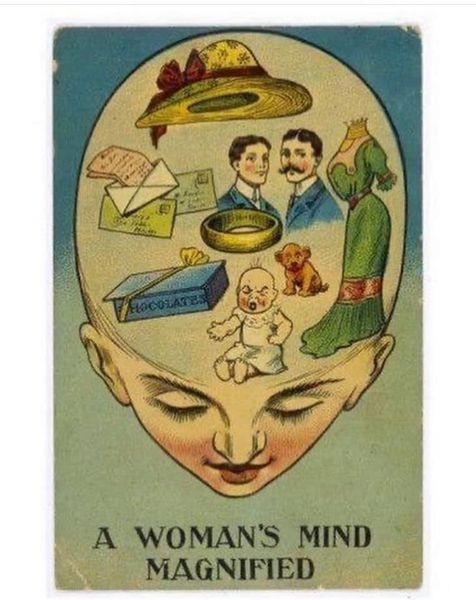
*I found this on the internet, with no attribution, and the many comments on the original post were an affirmation that indeed, I am not alone in having a difficult, cruel, annihilating mother, a woman who told me (and only me of her 4 kids) that she did not want any children. She was willing to have her first 2 – my older brother and sister – because my dad very much wanted to be a father. But then, along I came, numero 3 – the worst thing that ever happened to her, the ruination of her life, she said – followed 18 months later by my little sister, who at least freed her from more babies – or, GOD FORBID, using birth control of any kind as a good little Catholic. How? My mom’s docs removed her uterus and an ovary as – they admitted this to my dad – a form of birth control after the 4th C-section my mom had in 5.5 years.
*The choice to become a parent or not is one of the most impactful we can make in our lives. Raising a child doesn’t end at 16 or 18 or 21; it goes on for the life of the parent. Actively, consciously choosing not to have children also goes on until death, as does the stigma (childless woman? good lord what’s wrong with you?! you must be miserable, have no purpose, be a lesbian, etc. etc. ad nauseam); it’s choice I made and affirm joyfully, because I love my life. If I had met a great, amazing, funny, sexy, smart guy (was I asking too much LOL) who wanted to actually, seriously co-parent with me, okay, I might’ve gone along and sprouted a few kidlettes – but it didn’t happen, and that’s good too, because the patience it takes to be a good parent – not my strongest suit, TBH.
*And, yes, I had a horribly cruel and unkind mother. My concern about being in any way like her did require me to think twice and three, five, eighteen times before taking any step toward being a parent. Not all women want to be mothers. Not all women should be mothers.
The anonymous post:
There is a heartbreak that follows many daughters through life. The heartbreak of wishing for a mother who feels safe, kind, and loving, while facing the reality she will never be that person.
A daughter grows up imagining her mother as her closest ally, yet when that bond is missing, the ache stays long after childhood has ended.
Some daughters spend years trying to earn what should have been natural. They speak gently, avoid conflict, work hard to be the “good daughter,” and hope that effort will finally be enough.
Each attempt feels like building a bridge that collapses as soon as they step on it, leaving them with the same emptiness they started with.
The world repeats that family means everything, but for them family feels like a place where love is always out of reach. That contradiction cuts deep, leaving them loyal yet disappointed, present yet unfulfilled, smiling in public while carrying pain in silence.
The wound does not fade with age, it shows up in friendships, relationships, and the way they see their own worth.
Others often fail to understand, because they cling to the belief that mothers always love their children. When your reality proves otherwise, those words feel like salt on an open wound.
The truth is that this kind of bond leaves scars that shape the way you trust, the way you love, and the way you protect yourself from further pain.
There are daughters who would give anything to call their mother without fear of judgment, dismissal, or conflict. They look at their phone and wish for a simple, gentle exchange, the kind that feels easy and real.
Their grief deserves compassion, because it takes immense strength to mourn the absence of love from someone who is still alive, someone who still shows up at family gatherings, yet withholds the warmth you spent your entire childhood chasing.
Through that grief, some daughters begin giving themselves the love they once begged for in unreturned hugs, unanswered cries, and moments when their pain was dismissed as if it did not exist.
They learn to sit with the little girl inside who still aches, speaking the words she always needed to hear, wrapping her in comfort that finally feels safe.
They learn to protect the parts of themselves that once felt unprotected, setting boundaries that should have been there and showing patience where judgment once lived.
That choice becomes survival, and survival turns into something greater than just holding on. It becomes rewriting the story that once left deep pain.
From that survival grows strength, proof they are stronger than the silence, the criticism, and the distance that shaped them.
With that strength they create a love that heals, a love that belongs to them completely, a love powerful enough to break the cycle. (*we certainly hope so, anyway)

Oct 21, 2025
When I was a child looking
at my parents’ lives, you know
what I thought?
I thought
heartbreaking.
Now I think
heartbreaking, but also
insane. Also
very funny.
*from Meadowlands, 1996, by Louise Gluck. I have posted this here before but I love it so much that every single time I come across it (it’s saved on my computer – ‘What’s this again? Oh.’) I fall in love with it all over again. My parents had many flaws, and my mother was in many, many ways a horror show; she disliked me from the moment I was surgically removed from her abdomen (actually, before that), but gosh they loved one another, and gosh my dad was funny. They were funny together, when I wasn’t put, shoved reluctantly, in the middle, the problem, the other woman. Heartbreaking. Insane. And very, very funny because heartbreakingly insane. Funny because love and madness and family are a mystical, magical brew, if you get out alive.
A psychic in San Francisco once told me that I would not have survived had it not been for my sense of humor. Y’think?
I know. Amor fati.
Oct 19, 2025
*a poem from Adrienne Rich, and the last stanza – which I have italicized – seems particularly appropriate to the times in which we are living. More on Rich, who died in 2012, here https://en.wikipedia.org/wiki/Adrienne_Rich
Despair falls:
the shadow of a building
they are raising in the direct path
of your slender ray of sunlight
Slowly the steel girders grow
the skeletal framework rises
yet the western light still filters
through it all
still glances off the plastic sheeting
they wrap around it
for dead of winter
At the end of winter something changes
a faint subtraction
from consolations you expected
an innocent brilliance that does not come
though the flower shops set out
once again on the pavement
their pots of tight-budded sprays
the bunches of jonquils stiff with cold
and at such a price
though someone must buy them
you study those hues as if with hunger
Despair falls
like the day you come home
from work, a summer evening
transparent with rose-blue light
and see they are filling in
the framework
the girders are rising
beyond your window
that seriously you live
in a different place
though you have never moved
and will not move, not yet
but will give away
your potted plants to a friend
on the other side of town
along with the cut crystal flashing
in the window-frame
will forget the evenings
of watching the street, the sky
the planes in the feathered afterglow:
will learn to feel grateful simply for this foothold
where still you can manage
to go on paying rent
where still you can believe
it’s the old neighborhood:
even the woman who sleeps at night
in the barred doorway — wasn’t she always there?
and the man glancing, darting
for food in the supermarket trash –
when did his hunger come to this?
what made the difference?
what will make it for you?
What will make it for you?
You don’t want to know the stages
and those who go through them don’t want to tell
You have four locks on the door
your savings, your respectable past
your strangely querulous body, suffering
sicknesses of the city no one can name
You have your pride, your bitterness
your memories of sunset
you think you can make it straight through
if you don’t speak of despair.
What would it mean to live
in a city whose people were changing
each other’s despair into hope? –
You yourself must change it. –
what would it feel like to know
your country was changing? –
You yourself must change it. –
Though your life felt arduous
new and unmapped and strange
what would it means to stand on the first
page of the end of despair?
